
Livraison le jour même ou le lendemain

Qualité garantie

Débloquez vos offres de bienvenue: Livraison GRATUITE | Jusqu'à -80 % | 30 jours d'essai gratuits à JoyPlus
Téléchargez l'application
A wobbly chair leg, a broken mug handle, a piece of decorative trim coming unstuck… When faced with a small repair, the default reflex is often to reach for an extra-strong glue. Yet, once in the DIY aisle, you can quickly find yourself drowning in a sea of tubes, cartridges, and syringes, all with varying promises. The risk of leaving with an unsuitable product that won't hold up over time is very real. Choosing the right glue isn't guesswork: it's a matter of method and a clear understanding of your needs.
As a Product Expert at Joybuy, my role is to help you make sense of it all. Let's forget the marketing jargon and focus on what truly matters. Here's a breakdown of the pitfalls to avoid and the criteria that make all the difference for a lasting repair.
The adhesives market is saturated with products that claim to be universal, but whose limitations can quickly turn into a waste of time and money.
For a successful bond, don't just rely on the "extra-strong" label. Three technical parameters are decisive.
The true strength of a glue lies in its chemistry. Each product family has its own area of expertise:
A successful bond is one that lasts. Make sure the glue is suitable for the object's environment:
Rather than a generic list, we have matched specific solutions to real user profiles.
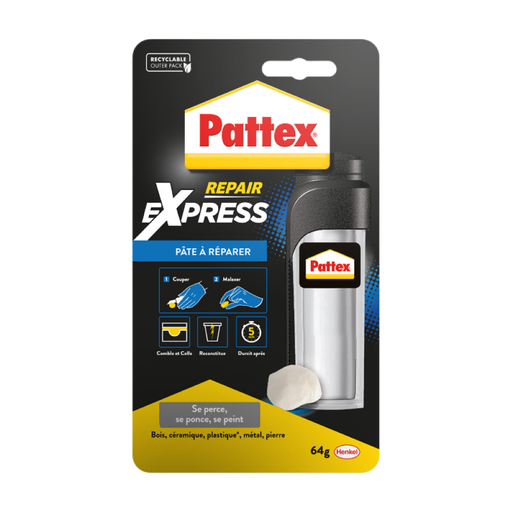
Why we chose it: Ideal for those looking for an all-in-one solution for small, everyday repairs. Its malleable texture allows you to glue, fill a hole, or rebuild a missing piece on wood, metal, ceramic, and many other materials.
This repair putty is not a "universal" liquid glue. Its function is clear: to repair and rebuild. It prevents the typical failures of a liquid glue that would drip or be poorly applied.
Its versatility (gluing, filling, rebuilding) and its ability to be sanded and painted after 24 hours for a flawless finish.
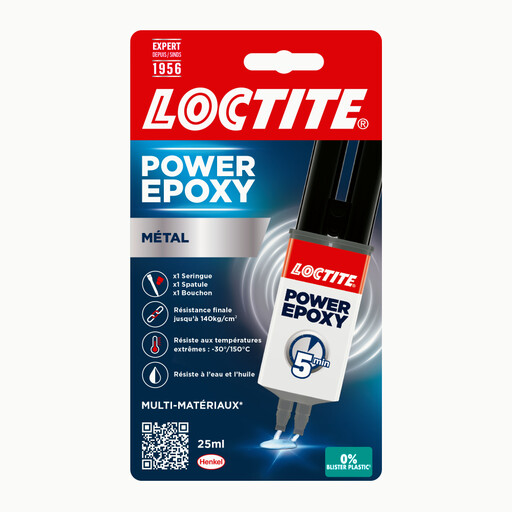
Why we chose it: Perfect for demanding repairs on all metals (iron, steel, aluminium, copper...). Ideal for structural bonds, mechanical parts, or for filling imperfections on a metal surface.
This is a specialised metal glue, not a generic product. It avoids the trap of a "universal" glue that would be too weak to withstand the mechanical and thermal stresses specific to metals.
Its ability to be drilled, filed, and sanded after just 4 hours of drying, which allows for a perfect finish and makes the repair virtually invisible.
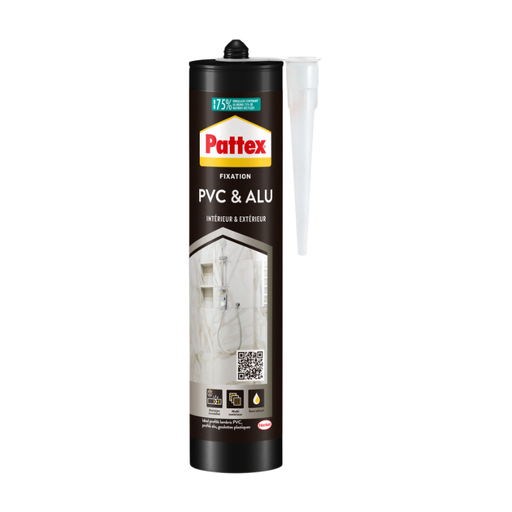
Why we chose it: For renovation or fitting projects that require fixing heavy items without drilling: PVC panelling, electrical trunking, skirting boards, wall tiles... Its cartridge format is suitable for large surfaces.
This construction adhesive is designed for vertical application and heavy loads. It avoids the mistake of using a liquid glue that would drip and fail to provide the immediate hold required for this type of work.
Its high bonding strength (up to 25 kg/cm? according to the manufacturer) and its indoor/outdoor versatility thanks to its good resistance to humidity and temperature variations.
Discover our complete selection of products that meet our strictest performance and safety criteria.
Excellent question. It's important to distinguish between two stages:
Not at all, but it does require a bit of method. The principle is simple: mix equal parts of the resin and hardener until you get a uniform colour. Many products, like the LOCTITE Epoxy glue, come in syringes with an auto-mixing nozzle that greatly simplifies the process. The only constraint: you have to act fairly quickly, because once mixed, the glue begins to harden.
No, and this is an important selection criterion for a neat finish. This capability is generally reserved for repair putties and certain epoxy glues, especially those formulated for metal. If the final appearance of your repair is important, always check for mentions like "paintable," "sandable," or "drillable" on the product's packaging or technical data sheet.