
Livraison le jour même ou le lendemain

Qualité garantie

Débloquez vos offres de bienvenue: Livraison GRATUITE | Jusqu'à -80 % | 30 jours d'essai gratuits à JoyPlus
Téléchargez l'application
Fixing a decoration, a lightweight mirror, a skirting board or a floor covering without reaching for the drill is especially handy – particularly if you’re renting. But not all rolls sold as extra-strong double-sided tape are created equal. An adhesive designed for paper will never replace a mounting tape, and a model intended for outdoor use won’t necessarily be suitable for a painted wall.
Before you place an order, it’s best to avoid three common pitfalls:
For a decorative fix on glass, metal, tiles or smooth plastic, a transparent double-sided adhesive helps preserve the look of your installation. On a painted wall, though, make sure the paint is sound and sufficiently robust.
Porous surfaces – such as certain raw woods, rendered walls or plaster – require more care. A no-nails, no-screws fixing tape may adhere unevenly here. In this case, test it first on a small, inconspicuous area.
For a rug or carpet, choose an anti-slip tape for rugs and carpets, or a model specifically designed for floor coverings. Its width and removal method often differ from those of a wall-mounting tape.
The width determines the contact surface area. A 19 mm roll works well for many narrow mountings, while a 50 mm strip will distribute pressure better under a skirting board or a floor covering.
Also compare:
Stated load capacities are reference values, obtained under specific conditions. For a heavy item, use several strips, distribute the weight and avoid fixings above a walkway area.
An outdoor double-sided tape must withstand temperature changes, humidity, rain and sometimes UV rays. For sealing or roof repairs, a double-sided bitumen tape will be more suitable than a transparent wall tape.
Before applying, clean the surfaces with an appropriate product, let them dry completely, then press firmly for several seconds. Avoid areas subject to permanent immersion, unless the manufacturer explicitly allows it.
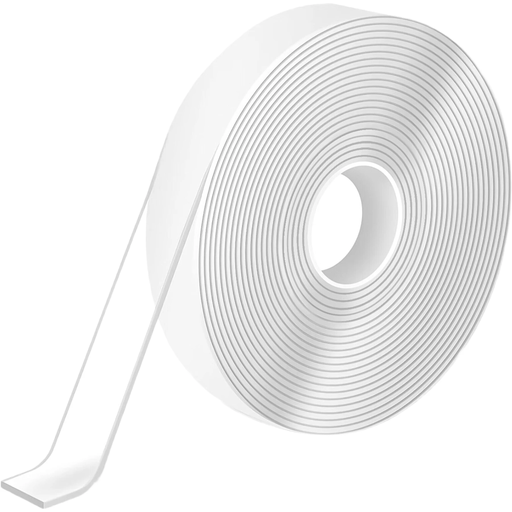
Why this choice suits this profile: Its 3-metre roll is enough for small decorating, organising and DIY projects around the home, the office or the car.
The listing mentions a removable, washable and reusable design. That means you can avoid buying several rolls for temporary installations. Still, test removal on a discreet area first.
Acrylic gel, dimensions of 0.2 cm x 1.3 cm x 300 cm and water-cleanable as stated by the manufacturer.
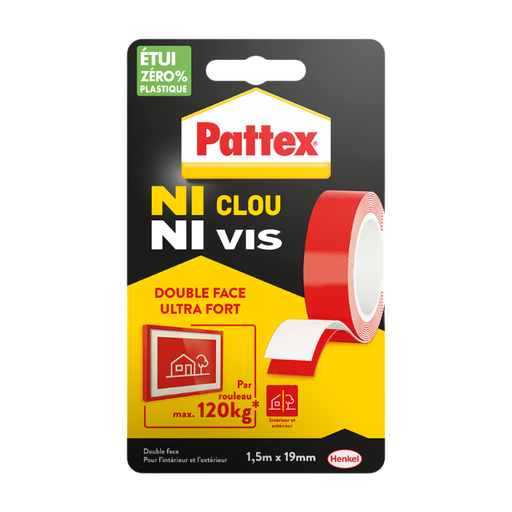
Why this choice suits this profile: It’s suitable for demanding mountings on various surfaces, indoors and outdoors, where the fixing needs to stay discreet.
The listing specifies compatible surfaces and reminds you they must be clean, dry and degreased. The stated load capacity – up to 120 kg – should be interpreted based on the installation conditions.
1.5 m x 19 mm roll, stated instant adhesion and compatibility with glass, metal, wood, stone and certain plastics.
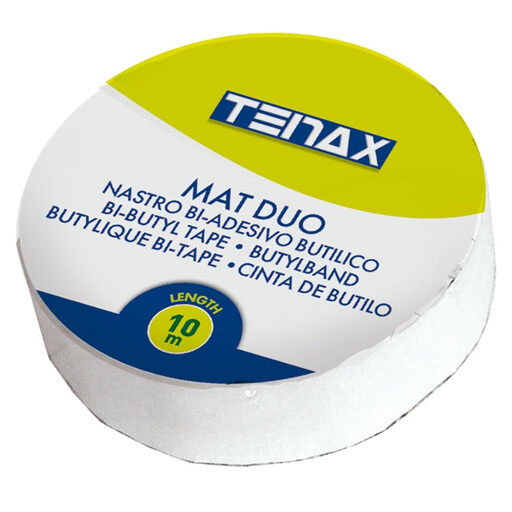
Why this choice suits this profile: Its 10-metre format is aimed at repairs, sealing and regular maintenance work, particularly on a roof or in the garden.
This product isn’t a simple wall tape: its bitumen base is designed for bonding, sealing and water protection.
5 cm width, 10 m length and resistance to weather, UV rays and temperature changes according to the product listing.
We’ve compiled a complete, real-time selection of products that meet these demanding criteria, in line with European safety regulations.
For skirting boards and floor coverings, also look at wide references designed to cover a regular surface. An adhesive for skirting boards and floor coverings isn’t chosen the same way as a versatile mounting tape for fixing a picture frame.
A wall or transparent model can work on hard, clean and perfectly dry paint. Always test it first: removal can pull off old or poorly adhered paint. For a lightweight item and a temporary installation, a removable adhesive will generally be more suitable than a permanent one.
It depends on the product’s design. References intended for outdoor use generally state resistance to moisture, UV and weather. However, they shouldn’t be used in a permanently submerged area unless the manufacturer specifically says so.
The holding time varies depending on the surface, the load, temperature fluctuations, humidity and UV exposure. Careful application, a properly prepared surface and well-distributed weight all contribute to a long-lasting fix. Regularly check installations that are subject to vibration or placed at height.