If you’re short on space for frozen food, choose a chest freezer for larger stocks if you have enough floor space, or an upright model if you want to find and sort frequently used items easily. A compact model is suitable for a limited amount of extra storage; if you’re also replacing your main appliance, a large fridge freezer may be worth considering instead. Before choosing, compare the usable capacity with the space available, installation requirements, annual energy consumption and stated power-cut storage time.
Who is each type best for?
How much you need to store, how often you access your food and how much space you have will all influence your choice of a separate freezer.
Households that stock up in bulk
If you buy in bulk or freeze large portions, look at the usable capacity, the shape of the interior and the stated power-cut storage time. UFC-Que Choisir distinguishes chest freezers in particular for their storage capacity.
People who use frozen food every day
If you open the appliance frequently, easy-to-navigate storage may matter more than a large, open compartment. Compare the drawers or baskets, the stated noise level and the defrosting method of the model you’re considering.
Households with limited installation space
In a small kitchen or a home without a utility room, start by measuring the space and the room needed to open the appliance. Then check the ventilation requirements and ambient temperature range in the manual, especially if you plan to install it under a worktop or in an unheated room.
What sets the different types apart?
First, work out whether you’re short on space for frozen food alone, or for fresh food too. For a separate freezer, start with what you need to store and where the appliance can operate.
Chest freezer
Consider one: for large stocks or bulky items, if you have enough floor space and can access the freezer from above.
The trade-off: finding food at the bottom and organising a large compartment takes more effort. UFC-Que Choisir highlights the large capacities available with this type.
Upright freezer
Consider one: if you use frozen food frequently and want to sort it into accessible compartments.
The trade-off: allow enough space to open the door and pull out the drawers; check that they can accommodate your bulkiest items.
Compact freezer
Consider one: if you only need a little extra storage and have limited space available.
The trade-off: storage capacity is more limited. If you plan to install it under a worktop or build it in, follow the model’s specific dimensions and ventilation requirements.
Large fridge freezer
Consider one: if you also need to replace your main appliance and want more space for fresh and frozen food.
The trade-off: compare the freezer compartment’s capacity separately from the total capacity: it may still be too small for your stocks.
| Factor |
What to check |
Who it matters to |
| Capacity and larger items |
Compare the usable capacity and shape of the interior with the food you plan to store. |
If I buy in bulk or store large containers, I want to know they’ll fit without relying solely on the stated capacity in litres. Around 29% of consumers would prioritise this storage capacity above all else. |
| Access and maintenance |
Look at the drawers or baskets and the model’s defrosting method. |
If I often take food out of the freezer, I want to find each item without having to empty part of the appliance. Easy access would be the priority for around 29% of consumers. |
| Size |
Measure the appliance and the space, allowing for the door to open and the clearances specified by the manufacturer. |
With a small kitchen, I first need to know whether the appliance can be installed and opened as it should be. This would be the top priority for around 21% of consumers. |
| Installation location and power cuts |
Check the permitted ambient temperature range and the stated storage time in hours. |
If the room could get cold or my stocks would be difficult to manage during a power cut, I want to know the model’s limitations. Around 21% of consumers would prioritise these operating and storage conditions. |
What should you watch out for before buying?
-
Choosing based only on the capacity in litres
A chest freezer has room for bulky items, but takes up floor space and you access the food from above. An upright freezer makes it easier to organise your food, provided its compartments suit what you need to store.
Measure the installation space and the room needed to open the appliance, then check that the interior layout suits your bulkiest and most frequently used items.
-
Assuming any model will work in a garage
The permitted ambient temperature varies by appliance. Beko and Whirlpool state that certain specific models can operate at temperatures as low as −15 °C, but this feature does not apply to all their freezers.
Check the room temperature throughout the year and compare it with the instructions for the model you choose. Also follow its ventilation requirements and keep it away from heat sources.
-
Confusing storage time, freezing capacity and volume
The stated storage time tells you how long food will stay frozen during a power cut; freezing capacity, expressed in kg/24 h, refers to fresh food being frozen. Neither tells you how much space is available, which is what usable capacity measures.
Compare all three figures separately, taking into account the size of your stocks, how much fresh food you freeze and how much a power cut would affect your household.
-
Overlooking ice build-up and everyday access
A chest freezer with a basket and an upright freezer with drawers don’t offer the same access to food. The cooling system also determines the defrosting tasks specified by the manufacturer.
If you open the appliance frequently, look at its storage layout and check the manual to see whether it uses static cooling, Low Frost or No Frost, and what maintenance is required.
Brands to consider, depending on the model
These brands offer different types of freezer. The features and limitations below apply to the models specified, not to each brand’s entire range.
Beko
Beko offers upright and chest freezers, with features that vary by model.
- Beko states that its RFNM200T40WN upright freezer can operate at ambient temperatures as low as −15 °C.
- For installation in a cold room, check this temperature range on the specific model’s product page; it does not apply to the whole brand.
Bosch
Bosch offers, among other models, freestanding and integrated upright freezers, worth considering if you want to organise food vertically.
- Bosch lists No Frost functionality on its GSN33VWEP upright freezer and provides the usable capacity and stated storage time for this model.
- Check the features, dimensions and space needed to open the drawers for the model you choose.
Whirlpool
Whirlpool offers chest and upright freezers, including some models designed for specific installation conditions.
- For its W3RHS19DW chest freezer, Whirlpool states a capacity of 198 L, a storage time of 41 h and operation at ambient temperatures as low as −15 °C.
- These figures apply to this model: compare them with the specifications of the model you’re actually considering.
Extra freezers available on Joybuy
These models give you a choice of separate freezers: upright models for organising food, chest freezers with easy top access and a compact option for a small amount of extra storage. Compare their capacity with your needs before checking the installation requirements for each model.
 Image unavailable
Heinrich´s, 161 L No Frost upright freezer, stainless steel
Worth considering if you want to store your supplies in an upright model. The title lists a capacity of 161 L, No Frost operation, a reversible door and an energy rating of C.
Check the dimensions, clearances and permitted ambient temperature for your chosen location. Also check the annual energy consumption and stated storage time if these are important to you.
View on Joybuy
 Image unavailable
COMFEE' RCU60WH2(E), 60 L upright freezer, white
Consider this model if you need 60 L of extra storage in an upright format. The title mentions a reversible door and an energy rating of E.
Confirm the interior layout of the version being sold, then check the dimensions and required clearances, annual energy consumption and ambient temperature range.
View on Joybuy
 Image unavailable
CHiQ JR99DWE, 99 L chest freezer, white
This 99 L chest freezer could suit your needs if you’re happy to access it from above. The title mentions a removable basket, a sliding lid and an energy rating of E.
Allow enough room to open the lid and check the product page for annual energy consumption, storage time during a power cut and the permitted ambient temperature.
View on Joybuy
 Image unavailable
TCL CF182EWE0FR, 140 L chest freezer
Worth comparing if you want 140 L of storage in a chest freezer with top access. The title lists a basket, a counterbalanced lid and an energy rating of E.
Measure the space available for the freezer and its lid. Also check the model’s annual energy consumption, storage time, freezing capacity and ambient temperature range.
View on Joybuy
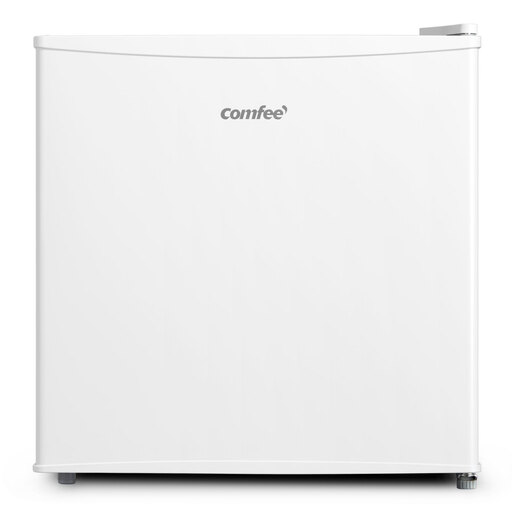 Image unavailable
COMFEE' RCU40WH2(E), 31 L mini freezer, white
This 31 L model is better suited to a small amount of extra storage than to large stocks. The title lists a reversible door, an energy rating of E and annual energy consumption of 147 kWh.
Measure the space and check the ventilation requirements and permitted ambient temperature before choosing this compact model.
View on Joybuy
Frequently asked questions
Can you install any freezer in a garage or cellar?
No. Permitted temperatures and installation conditions depend on the model. Compare the room temperature with the range in the manual and follow the ventilation instructions. Beko and Whirlpool state that certain models can be used at temperatures as low as −15 °C; don’t assume another appliance can do the same.
When should you plug in a freezer after delivery?
Follow the waiting time and set-up instructions in your model’s manual. For appliances covered by its installation guidance, Electrolux recommends waiting at least 4 hours before plugging in, levelling the appliance and leaving it to run empty before filling it. Check the instructions for your specific model.
Which figures should you compare for everyday freezer use?
Compare the stated annual energy consumption in kWh/year, usable capacity and noise level, then check the storage time if keeping food frozen during a power cut is important to you. The energy rating helps you read the label, but check separately that the capacity and installation conditions suit your needs.


