Who is this option for?

Households preparing several portions

You regularly freeze a variety of meals and want to find a portion without having to move everything else out of the way. How easy it is to organise and access your food matters just as much as the stated capacity.

Households stocking up

You store food or prepared dishes in different sizes and can set aside some floor space for them.

Households short on space

You’re looking for extra freezer space but need to weigh up a compact freezer against the freezing capacity of a fridge freezer.

What should you compare?

Upright freezer

Choose this if: you often take out different portions and want to organise them in drawers.

Keep in mind: drawers and compartments can make it harder to store bulky containers.

Chest freezer

Choose this if: you’re stocking up and have enough floor space and clearance to open the lid.

Keep in mind: you may need to move food on top to reach items at the bottom.

Compact under-counter or table-top freezer

Choose this if: you need extra capacity but don’t have room for a tall or wide appliance.

Keep in mind: check that the capacity and drawers suit your containers; this isn’t a model for bulk storage.

Fridge freezer

Choose this if: you also need to replace your fridge and only need a modest amount of freezer space.

Keep in mind: the appliance’s total capacity isn’t the same as the capacity of its freezer compartment.

What matters to you What to check Who it matters to
Storage capacity Compare the usable capacity of the freezer compartment alone with the containers and portions you usually store, and check the appliance’s dimensions. If I store large quantities, I want enough capacity without choosing an unnecessarily large appliance. Around 26% of consumers prioritise having plenty of storage.
Organisation and access Check whether the drawers suit your portions, or whether the baskets and storage areas in a chest freezer fit the way you use it. UFC-Que Choisir describes the open space inside a chest freezer, which has no fixed shelves or drawers. When I take out different portions, I want to find them without moving too much food. Around 26% of consumers prioritise organisation and access.
Location and temperature Measure the available space and clearance for opening the door or lid. If the room might get cold, check the ambient temperature range specified for the exact model. Liebherr says the Fd 1404 Pure is suitable for temperatures down to −15 °C. If space or room temperature limits my options, I want to rule out models that aren’t suitable for the location. Around 21% of consumers prioritise finding an appliance that suits their installation space.
Adding another appliance Compare the capacity allocated to freezing and the annual energy consumption shown on the label. ADEME points out that a freezer runs continuously. I’d rather avoid buying another appliance if my current one already meets my needs. Around 16% of consumers prioritise avoiding an unnecessary appliance.
Storage time during a power cut Check the storage time stated for the specific model and how it is measured before comparing figures. If I’m concerned about a power cut, I want to check the stated storage time without mistaking it for a guarantee under real-world conditions. Around 11% of consumers put this criterion first.

Mistakes to avoid

  • Choosing a large fridge freezer based only on its total capacity

    The fridge capacity doesn’t tell you how much room is available for frozen food. For example, Bosch lists 400 l of fridge space and 108 l of freezer space for the KGN56XLEB.

    Compare the usable capacity of the freezer compartment with the portions you want to store.

  • Putting a chest freezer in a cold room without checking the model

    The permitted ambient temperature range varies by appliance. A feature listed for one model doesn’t apply to every freezer.

    Check the manual and operating temperatures for the exact model, and make sure there’s enough clearance to open the lid.

  • Assuming an open interior means easy access to every portion

    With a chest freezer, you may need to move food on top to reach items at the bottom. Conversely, drawers in an upright freezer can limit the space available for large containers.

    Choose based on how often you take food out and the size of your containers, not just the number of litres.

  • Assuming reduced frost means no defrosting

    Technology described as reducing frost doesn’t necessarily mean you’ll never need to defrost the appliance manually.

    Check the technology and care instructions for the model you choose, then follow the manual.

Brands to consider by type

Bosch

Freestanding upright freezers and fridge freezers to compare based on the storage you need and the capacity actually available for freezing.

  • Bosch lists a 366 l capacity, removable fittings and No Frost for the GSN58AWCV upright freezer.
  • For the KGN56XLEB fridge freezer, Bosch lists 108 l of freezer space compared with 400 l of fridge space. These specifications apply to these specific models.

Whirlpool

A chest freezer worth considering if you need plenty of storage and have enough floor space.

  • Whirlpool lists a capacity of 371 l, three baskets and 36 h of storage time during a power cut for the W3RHS37EW1.
  • The open interior of a chest freezer can make it less straightforward to reach food at the bottom. These details don’t apply to every model from the brand.

Liebherr

Table-top and chest freezer models to consider, particularly if the room where you’ll install the appliance can get cold.

  • Liebherr lists a capacity of 107 l and suitability for ambient temperatures down to −15 °C for the Fd 1404 Pure table-top model.
  • This capacity is suited to extra storage. Check the operating and frost-reduction features of each model.

Electrolux

An option to consider if you’re planning to install your freezer in a built-in niche rather than as a freestanding appliance.

  • Electrolux’s French product information lists a capacity of 98 l and static Low Frost cooling for the LUB3AE88S built-in freezer.
  • Low Frost doesn’t mean you’ll never need to defrost the appliance. Check the care instructions for this model.

Freezers available on Joybuy

These Joybuy options include an upright freezer and chest freezers in different capacities. Compare them based on the portions you store, the access you want and the space available.

Heinrich’s 161 L upright freezer, energy class C

Heinrich’s 161 L upright freezer, class C

The upright design and separate compartments could suit you if you want to organise individual portions.

The Joybuy product listing gives a capacity of 161 L, three drawers, two bins and a No Frost function; the stated energy class is C.

View on Joybuy

TCL CF182EWE0FR 140 L chest freezer with basket

TCL CF182EWE0FR 140 L chest freezer

This chest freezer could suit you if you want open storage with a basket for separating some foods.

The Joybuy product listing gives a capacity of 140 L, one basket, a counterbalanced lid and energy class E. As with other chest freezers, you may need to move food on top to reach items at the bottom.

View on Joybuy

AUCMA 291 L convertible chest freezer

AUCMA 291 L convertible chest freezer

Its stated capacity could suit a household looking for more storage, with enough room to accommodate a chest freezer.

The Joybuy product listing gives a capacity of 291 L, a removable basket, a five-level digital control and energy class E. It describes an appliance that switches between fridge and freezer modes; check which mode suits your needs.

View on Joybuy
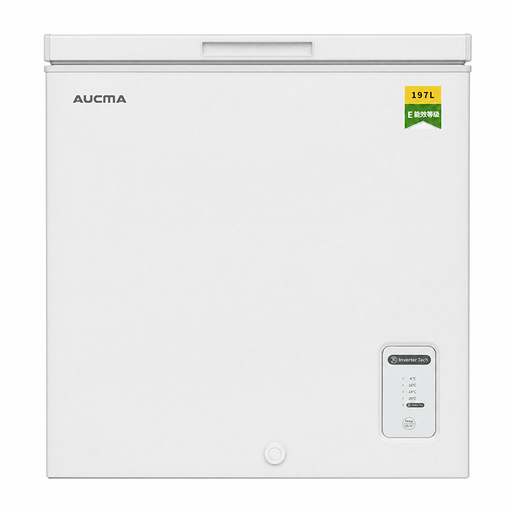
AUCMA 197 L convertible chest freezer

AUCMA 197 L convertible chest freezer

This chest freezer could suit you if you’re looking for a mid-sized storage option with a basket to keep some foods separate.

The Joybuy product listing gives a capacity of 197 L, a removable basket, a five-level digital control and energy class E. You may need to move food on top to reach items at the bottom.

View on Joybuy

CHiQ JR99DWE 99 L chest freezer with removable basket

CHiQ JR99DWE 99 L chest freezer

Its stated capacity makes it worth comparing with your needs as an extra freezer, rather than as a large storage option.

The Joybuy product listing gives a capacity of 99 L, a removable basket, a sliding lid and a freezing capacity of 4,5 kg/24 h.

View on Joybuy

Frequently asked questions

Can I put a freezer in an unheated garage?

It depends on the model and how cold the garage gets. Check its operating temperature range and manual. Liebherr says the Fd 1404 Pure is suitable for temperatures down to −15 °C, but this doesn’t apply to all freezers.

Does a frost-reduction function mean I won’t need to defrost the freezer?

No. A function described as reducing frost doesn’t necessarily mean the appliance will never need defrosting. Liebherr says SmartFrost reduces frost build-up in the Fd 1404 Pure, while Bosch lists No Frost for the GSN58AWCV. Check the technology used in the model you choose and follow its care instructions.

How can I compare the running costs of a freezer?

First compare the kWh/year figures for the models you’re considering, then apply your own electricity tariff over the same period. ADEME points out that a freezer runs continuously; your bill will depend in part on your tariff and how you use the appliance.

Does the energy label help when comparing freezers?

Yes. For appliances covered by the label, it provides a consistent basis for comparison and includes information such as annual energy consumption. The European Commission says the EPREL register provides information about models covered by European energy labelling.

Does freezing make food safe if it wasn’t stored properly beforehand?

No. According to Anses, domestic freezing at −18 °C stops bacteria from multiplying, but most microorganisms survive. Maintain the cold chain and follow Anses guidance on freezing and defrosting food: choosing a particular freezer type doesn’t replace these precautions.