People who prepare meals in advance
If you regularly store portions, containers and bags of food, easy-to-reach compartments can help you find what you need without rummaging through a deep chest.


For easy access to prepared meals, choose an upright freezer with compartments. If you need to store bulky items, consider a chest freezer instead, provided you have enough room to open it and reach the bottom. Whichever type you choose, check the installation dimensions, the ambient temperature range the model can handle, its power-cut storage time and its annual energy consumption before you buy.
If you regularly store portions, containers and bags of food, easy-to-reach compartments can help you find what you need without rummaging through a deep chest.
If you buy in bulk or need to store bulky items, compare the usable capacity with the floor space available and consider how easy it will be to reach food at the bottom.
For an appliance under a worktop or in an alcove, dimensions aren’t the only consideration: you’ll also need to account for the door or lid opening and the ventilation requirements for the model.
First, choose between the easy-access compartments of an upright freezer and the open storage space of a chest freezer. Then check that the model you choose will fit in the room you have in mind. UFC-Que Choisir highlights these two formats, along with capacity, power-cut storage time and climate class, as key points to consider.
| Criterion | What to check | Consumers it matters to |
|---|---|---|
| Meal organisation | Number and style of drawers or baskets; access to the compartments. | I want to find my portions quickly without moving all my food around. Around 40% of consumers would put easy everyday access at the top of their list. |
| Storage capacity | Net capacity in litres and the space needed to open the appliance; freezing capacity in kg/24 h if you often freeze fresh food. | If I’m storing bulk buys or bulky food, I need plenty of storage space above all. Around 30% of consumers would make this their priority. |
| Installation room | Minimum and maximum room temperatures, the model’s climate class and its ventilation requirements. | In an unheated cellar or garage, I need an appliance that can operate at the temperatures the room actually reaches. Around 20% of consumers would prioritise this compatibility. |
| Size and space | Appliance dimensions, door or lid opening clearance and alcove dimensions for a built-in model. | If the freezer needs to fit under a worktop or in an existing unit, the available space limits my options. Around 10% of consumers would make a compact size their main priority. |
An appliance may fit where you plan to put it but not make it along the delivery route. Or there may not be enough room to fully open its door, lid or drawers.
Measure the route in, the space for the appliance and the clearance needed to open it. Then check the ventilation clearances in the model’s instruction manual.
The ambient temperature range an appliance can handle depends on the model. Low-temperature operation advertised for some models isn’t available across every freezer from the same brand.
Compare the room temperature throughout the year with the model’s climate class and any additional guidance from the manufacturer for that specific model.
Two freezers may have different capacities and be designed for different uses. The energy rating letter doesn’t tell you everything, so check their annual energy consumption and other specifications too.
For freezers of a similar type and capacity, compare their kWh/year, noise level in dB, stated power-cut storage time and dimensions.
A built-in freezer needs to fit a specific alcove and installation plan. You can’t work out its ventilation requirements from its external dimensions alone.
Before ordering, check the alcove, fixings, ventilation and door opening against the installation diagram for the exact model.
If the alcove isn’t compatible, you may need to modify the unit or installation could be more complicated.
Worth considering if you’re looking for an upright freezer with drawers or one that can be installed in a cold room.
Compare its upright and chest freezer formats to find the best fit for how you want to store and access your supplies.
Worth considering if you’re looking for a built-in freezer and already know the dimensions of the unit and alcove.
These models include a small upright freezer for limited spaces, an upright model for organising portions and chest freezers with open storage space. Compare their format and capacity with your available space and how you like to access your food.
 Image unavailable
Worth considering as a compact extra freezer if space is limited. Measure the space and clearance needed to open it before you buy.
This freestanding model has an adjustable temperature, a reversible door and an E energy rating, as stated in its product title. If you plan to keep it in a cellar or garage, check its ambient temperature range and annual energy consumption.
 Image unavailable
An upright freezer is a good choice if you’d rather organise meals in compartments than store everything in an open chest.
The product title lists drawers, a reversible hinged door, a temperature setting range of −14 °C to −22 °C and a C energy rating. This temperature setting range doesn’t tell you the ambient temperature the appliance can handle. Check its climate class and dimensions for your chosen location.
 Image unavailable
Consider this if you’d prefer a small chest freezer with a removable basket to keep certain items close to hand.
The product title lists an adjustable thermostat and an E energy rating. Make sure you have room to access it from above. The product details specify manual defrosting when the frost exceeds 5 mm. Check the permitted ambient temperature before installing it in an unheated room.
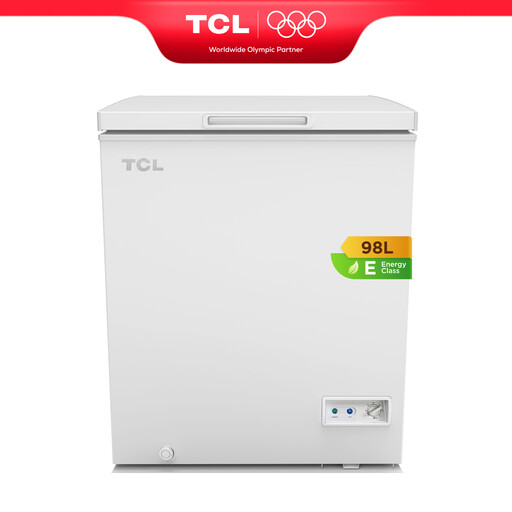 Image unavailable
This compact chest freezer could work well for extra storage if the top-opening lid suits your space.
The product title lists a basket, a counterbalanced lid, adjustable temperature and an E energy rating. Measure the available space and check the model’s climate class for the room you have in mind.
 Image unavailable
Worth considering if you need more storage than a compact chest freezer offers and have enough room to lift the lid.
The product title lists a counterbalanced lid, adjustable temperature and an E energy rating. If a basket is important for organising your food, check what’s included in the box. Also check the permitted ambient temperature range for the room you plan to use it in.
No. Check the ambient temperature range specified for the exact model and compare it with the temperatures in your garage. Beko France states that some models with Freezer Guard can operate down to −15 °C, but this feature isn’t available on every freezer.
Follow the waiting time specified in your appliance’s instruction manual before plugging it in. For example, Electrolux recommends waiting at least four hours in its installation instructions. Also check the guidance for ventilation and keeping the appliance away from heat sources that applies to your specific model.
Check their annual energy consumption in kWh/year on the energy label or product page, bearing in mind the capacity and format you need. The energy rating and noise level are also useful points of comparison, but the rating letter alone won’t tell you the annual energy consumption.