For large batches and enough floor space, consider a chest freezer. If you often need to find individual portions, an upright model may be a better fit. For a small top-up in a tight space, compare under-counter models. If you also need to replace your fridge, consider a fridge freezer, checking its freezer capacity separately. In every case, measure the space and access, then check the energy consumption and ambient temperature range of the model you choose.
Which format suits your household?
Households that freeze portions in advance
If you regularly take out prepared meals and small bags of food, the compartments in an upright freezer make it easier to find what you need. For just a few extra items, an under-counter model may be enough; check the capacity of its compartments.
Gardeners and households storing large batches
A chest freezer is worth considering for home-grown produce, bulk buys or bulky food, provided you have room for it and can access the lid. Baskets or boxes can make it easier to find items at the bottom.
Households with limited space
An under-counter freezer can provide a modest amount of extra capacity if its dimensions, door clearance and ventilation suit the space. If your fridge is short on space too, consider replacing it with a fridge freezer and compare the capacity of each compartment.
What should you check before choosing?
Start by thinking about what you’ll store and how often you’ll need to access it. Then check that the format you’re considering can be installed and used in the room you have in mind.
| Consideration | What to check | What you need |
|---|
| Capacity and format |
Compare freezer capacity, not the total capacity of a fridge freezer. According to UFC-Que Choisir, chest freezers generally offer more space than upright models; however, compare the capacities of the specific models you’re considering. |
For home-grown produce or bulk buys, I want enough space for the size of my batches. For just a few portions, I’d rather not buy a larger appliance than I need. |
| Access to food |
Look at the layout of the drawers or baskets and the space available for bulky items. A chest freezer opens from the top, so check how easily you can reach food at the bottom. |
I often take out small portions, so being able to separate and find them matters just as much as the stated capacity. |
| Installation |
Measure the width, depth and height, delivery access routes, and the clearance needed for the door or lid. For an unheated cellar or garage, check the ambient temperature range permitted for the exact model. |
The available space may point me towards an upright, under-counter or chest freezer. I also need to be able to open it once it’s in place. |
| Energy use and maintenance |
Compare annual energy consumption and energy ratings across appliances of a similar type and capacity. The European Commission says the EPREL product database provides further information about a model; check its defrosting system separately. |
The freezer will run continuously, so I want to know how much energy it uses. I shouldn’t assume that No Frost alone guarantees lower energy consumption. |
| Cold chain |
Check the stated storage time in the event of a power cut and whether the appliance has any temperature alerts. ANSES explains that at −18 °C, freezing stops bacteria from multiplying, but most microorganisms survive. |
If I freeze prepared meals, I need to maintain the cold chain before and after storing them. A large capacity won’t make up for poor food storage. |
What mistakes should you avoid?
-
Choosing the capacity before measuring the space
A chest freezer may offer the capacity you want, but it might not fit through a doorway or leave enough room to lift the lid.
Measure the appliance, delivery access routes and the space needed to open it before comparing capacities.
-
Assuming any freezer will work in any garage
Whether a freezer can be used in a cold room depends on the model, not just its design. Liebherr and Beko state that certain specific models can be used at temperatures down to −15 °C; this doesn’t apply to their other appliances.
Check the ambient temperature range specified for the exact model you’re planning to install.
-
Confusing No Frost with low energy consumption
No Frost is a feature for managing ice build-up; it doesn’t tell you how much energy a freezer that runs continuously will use.
Compare the annual energy consumption and energy label of models with similar capacities, then check their maintenance requirements.
-
Relying on freezing to make up for food being stored too long
ANSES points out that most microorganisms survive freezing. A freezer is no substitute for maintaining the cold chain.
Freeze portions soon after preparing them, and follow the appropriate instructions for each food when defrosting.
A few examples from well-known brands
These manufacturer examples show some of the formats and features you can compare. Each detail applies to the model named, not to every product from that brand.
Liebherr
The range includes chest and upright freezers, as well as fridge freezers, making it useful for comparing extra storage with replacing your fridge.
- Liebherr lists a capacity of 497 L for the CFe 2500 chest freezer and 238 L for the FNe 5006 upright freezer.
- FrostProtect is stated to work down to −15 °C for the CFe 2500. Check the permitted temperature range for any other model intended for a cold room.
Bosch
The GTV15NWEB is an example of an under-counter freezer for a small top-up, rather than a large stock-up.
- Bosch lists a capacity of 83 L and dimensions of 850 × 560 × 580 mm for this model.
- Before choosing this format, compare its 83 L capacity with the actual size of the batches you want to store.
Beko
The RFNE448E55W upright freezer is an example to consider if you need a large capacity in a vertical format and are thinking of installing it in a cold room.
- Beko lists a capacity of 404 L and an energy rating of C for this model.
- The stated ability to operate down to −15 °C with Freezer Guard applies to this specific model; it doesn’t apply to every Beko upright freezer.
Whirlpool
The WHFF 6403 W4E upright freezer is another example of a large-capacity freezer in a vertical format.
- Whirlpool lists a capacity of 404 L, a width of 70 cm and a noise level of 38 dB for this model.
- Consider its energy rating of E alongside its annual energy consumption and the dimensions of the space, rather than comparing it on its own with appliances in different formats.
Extra freezers available on Joybuy
These options include small and medium-capacity chest freezers, a small upright freezer and an upright model. First choose the format that suits your food and available space, then compare the models in that category.
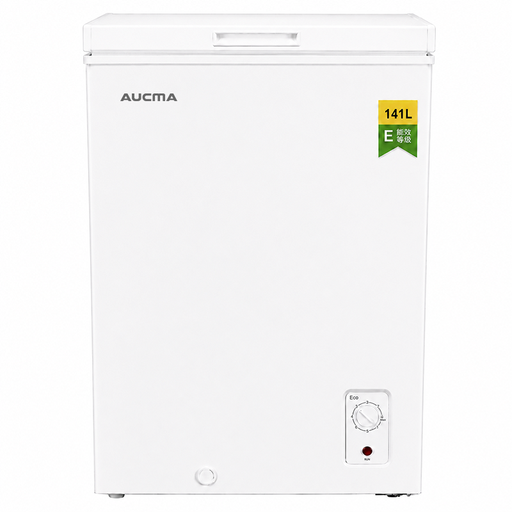 Image unavailable
AUCMA — 141 L convertible chest freezer
Consider this chest freezer for extra storage if a top-opening design suits you. The product listing states a capacity of 141 L, a removable basket, fridge and freezer modes, and an energy rating of E. Check the ambient temperature range before installing it in an unheated room.
View on Joybuy
 Image unavailable
TCL CF182EWE0FR — 140 L chest freezer
This chest freezer could suit you if you need extra storage and have room to open it from the top. The product listing states a capacity of 140 L, a storage basket, a counterbalanced lid and an energy rating of E. Check its annual energy consumption and ambient temperature range for the space you have in mind.
View on Joybuy
 Image unavailable
COMFEE' RCU60WH2(E) — 60 L upright freezer
Its compact capacity is suited to modest extra storage, with separate space for portions. The product listing states a capacity of 60 L, three drawers, a reversible door and an energy rating of E. Measure the space and check the clearance needed before placing it under a worktop.
View on Joybuy
 Image unavailable
Heinrich´s — 161 L No Frost upright freezer, stainless steel
An upright freezer is a good fit if you want to keep food separate and access it regularly. The product listing states a capacity of 161 L, drawers, No Frost and an energy rating of C. Check its overall dimensions, door clearance and annual energy consumption before choosing a spot for it.
View on Joybuy
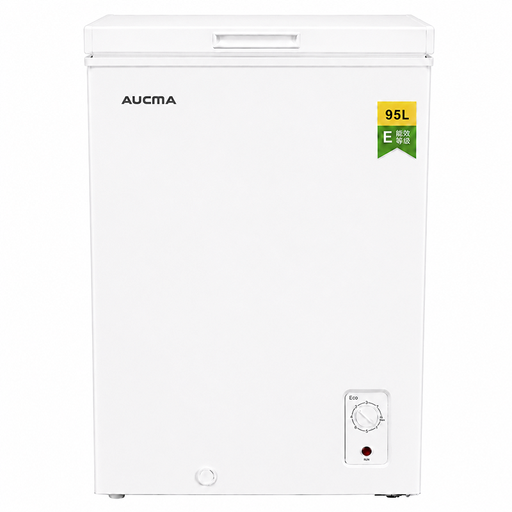 Image unavailable
AUCMA — 95 L convertible chest freezer
This chest freezer has a stated capacity of 95 L, making it better suited to modest extra storage than a large stock of home-grown produce. The product listing mentions a removable basket, fridge and freezer modes, and an energy rating of E. Check that the capacity, top-opening design and permitted ambient temperature suit your needs.
View on Joybuy
Frequently asked questions
Can I put any freezer in an unheated garage?
No. Check the ambient temperature range specified for the exact model and compare it with the conditions in your garage. The stated ability to operate down to −15 °C for certain Liebherr and Beko models doesn’t apply to other models.
Which capacity should I compare if I’m considering a fridge freezer?
Compare the freezer compartment capacity separately from the fridge capacity. The total capacity of a fridge freezer includes both sections, so it doesn’t represent the space available for your frozen food.
Does freezing make food that has been stored for too long safe to eat?
No. ANSES says that at −18 °C, bacteria stop multiplying, but most microorganisms survive. Maintain the cold chain before freezing and when defrosting meals.
What should I compare on a freezer’s energy label?
Compare the energy rating and annual energy consumption of models with a similar format and capacity, then consider noise levels and features that matter for your installation. The European Commission says you can find detailed information about the relevant models in the EPREL product database.
How can I get rid of my old freezer?
The French Ministry for Ecological Transition says you can take an electrical appliance to a collection point or recycling centre, return it to a retailer, or give it to a social enterprise. Check the retailer’s collection arrangements before arranging delivery.


