Households that stock up
If you buy in bulk or store large packs, compare usable capacity, floor space and how easy it is to reach food at the bottom. Que Choisir points out that capacity alone does not determine how convenient a freezer is to use.


To add extra frozen-food storage, choose an upright freezer with drawers if you want to find and separate portions easily, or a chest freezer if you store bulky packs and have enough space. A compact model may suit you if you only need a little extra capacity; replacing a fridge-freezer only makes sense if its freezer capacity meets your needs. In every case, check the location and annual energy consumption: ADEME reminds us that a freezer runs continuously.
If you buy in bulk or store large packs, compare usable capacity, floor space and how easy it is to reach food at the bottom. Que Choisir points out that capacity alone does not determine how convenient a freezer is to use.
If you regularly freeze prepared meals, consider how the compartments help you separate portions and check that your containers will fit in the drawers. Anses also offers advice on storing frozen food.
If you need a little extra capacity in a small kitchen, under a worktop or in an unheated room, measure the space and check the permitted temperatures for the specific model. Liebherr’s guidance shows that suitability for cold conditions varies by model.
Choose this if : you freeze portions and want to find food stored separately.
Check : drawers make it easier to organise food, but their shape may limit the size of packs you can store.
Choose this if : you store bulky shopping and have enough floor space to open the lid.
Check : the baskets and layout, as food at the bottom may be harder to reach.
Choose this if : you need a little extra capacity and its size is sufficient for the food you plan to store.
Check : a table-top model documented by Liebherr measures 85 × 60 × 60,7 cm and has a capacity of 92 l; check the required clearances before installing it under a worktop.
Consider this : if you also need to replace your fridge and the freezer capacity of the new fridge-freezer is enough for your stock.
Check : the total fridge-freezer capacity is not the same as the space available for frozen food.
Before comparing models, decide what matters most to you: capacity, access, location or energy consumption. The percentages below show the proportion of consumers associated with each priority in this breakdown.
| What matters to you | What to check when buying | Who it matters most to |
|---|---|---|
| Usable capacity | List the food you plan to store and its packaging, then compare usable capacity, compartments and external dimensions. | If you buy in bulk, you need enough room for the packs without losing sight of the space the freezer will take up. Consumers who prioritise capacity account for around 29 %. |
| Access and storage | Compare drawers, removable bins, baskets and how easy it is to reach items stored at the bottom. | If you often check your supplies or freeze portions, easy-to-browse storage may matter more than an open chest. Consumers who prioritise access and organisation account for around 23 %. |
| Room suitability | Measure the space and the clearance needed to open the door or lid. Que Choisir’s glossary gives temperature ranges of 10–32 °C for SN, 16–32 °C for N, 16–38 °C for ST and 16–43 °C for T; check the instructions for the specific model. | If the appliance will be kept in an unheated room, compare the ambient temperatures with those permitted for the model. Consumers who prioritise suitability for their chosen location account for around 18 %. |
| Energy consumption | Compare the kWh/year shown on the labels of models suited to the same needs, then apply your own electricity price per kWh. ADEME reminds us that a freezer runs continuously. | If you keep the appliance plugged in all the time, annual energy consumption is an important factor in your choice. Consumers who make this their priority account for around 18 %. |
| Freezing fresh food | Compare the stated freezing capacity in kg/24 h with the amount of fresh food you plan to add; follow the instructions when using any fast-freeze function. | If you regularly freeze freshly prepared food, also check that your containers fit in the compartments. Consumers who prioritise this use account for around 12 %. |
The fridge and freezer sections are separate spaces. Replacing an appliance that still meets your needs may therefore fail to solve a shortage of space for frozen food.
Before choosing between a new fridge-freezer and a separate appliance, compare the capacity of the freezer section alone with the amount you want to store.
Whether an appliance can operate in a cold room depends on the model, not on whether it is a chest freezer. Liebherr states that the CFd 2505 Plus has FrostProtect down to −15 °C, but this feature should not be assumed to apply to other models.
Check the likely temperatures in the room and compare them with the climate class and limits stated in the product details and instructions for the model you are considering.
The energy rating does not replace the annual consumption figure in kWh. The capacity you choose also matters, and actual consumption depends on factors including how and where you use the freezer.
Compare the kWh/year figures for models suited to a similar storage need, then estimate the cost separately using your electricity tariff.
An open chest offers flexibility, but reaching products stored underneath may mean moving other food first.
Before buying, check that the baskets and dimensions suit the packs you usually store. If you often check your supplies, compare the layout with an upright model’s drawers.
The range includes chest and drawer-style upright freezers, which you can compare based on the storage layout you need.
The brand offers chest and compact table-top freezers. Check the room-temperature requirements for the model you choose.
The GSN54EWCV upright freezer has a compartmentalised layout worth considering if organised access matters to you.
The range includes models described as convertible chest freezers, which may be worth considering if you want to switch between modes of use.
This selection brings together upright and chest freezers to give you extra, separate freezer capacity, from a little additional storage to room for larger stocks.
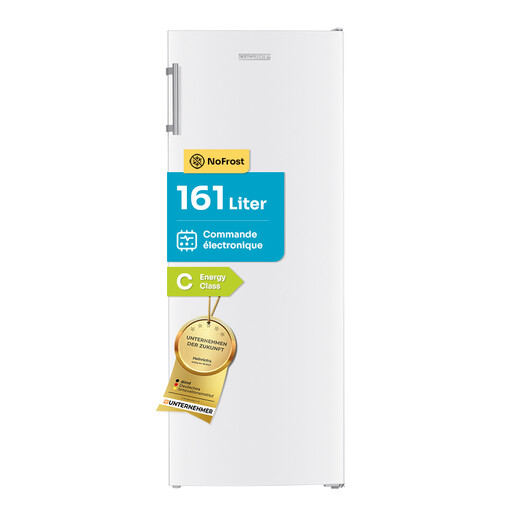 Image unavailable
A vertical design with several storage compartments may suit you if you want to keep frozen food organised.
The product details list a capacity of 161 L, No Frost, a reversible door, an LED display and energy class C.
 Image unavailable
A chest freezer can provide separate extra storage if you have enough room for the lid and the appliance itself.
This model is listed with a capacity of 140 L, a basket, a counterbalanced lid and energy class E.
 Image unavailable
Its stated capacity may suit you if you need plenty of freezer storage and have a suitable space for it.
The product details list a capacity of 291 L, energy consumption of 226 kWh/year, a removable basket and energy class E. The fridge and freezer modes can be switched between, but not used at the same time.
 Image unavailable
This compact model may suit you if you need a little extra capacity and its size is right for the amount of fresh or frozen food you plan to store.
The product details list a capacity of 99 L, a freezing capacity of 4,5 kg/24 h, a removable basket, a sliding lid and energy class E.
 Image unavailable
A compact upright model may suit you if you want to separate a few types of food and 60 L is enough for your needs.
The product details list three compartments, a freezing capacity of 6 kg/24 h, a reversible door, dimensions of 44,5 × 47,5 × 84,5 cm and energy class E.
Compare the minimum and maximum temperatures in the room with those permitted for the model you have chosen. Que Choisir’s glossary gives temperature ranges of 10–32 °C for SN, 16–32 °C for N, 16–38 °C for ST and 16–43 °C for T. If the room may fall below 10 °C, check that the model is specifically stated to work at lower temperatures; Liebherr lists FrostProtect down to −15 °C for the CFd 2505 Plus.
Check the kWh/year figure on the energy label and multiply it by your electricity price per kWh to estimate the annual cost. This calculation cannot guarantee your actual consumption, which depends on factors including how and where you use the freezer. ADEME reminds us that a freezer runs continuously.
Yes. Anses recommends freezing food as soon as you buy or prepare it rather than waiting until its use-by date is close. It explains that freezing food at home at −18 °C stops bacteria from multiplying, but most micro-organisms survive. Defrost food in the fridge, in the microwave using the defrost setting, or quickly by cooking or reheating it. Do not refreeze food once it has been defrosted.
The statutory guarantee of conformity applies to a new product sold by a business to a private individual, and you have two years to make a claim under it. The Ministry of the Economy distinguishes this guarantee from any additional commercial or manufacturer’s guarantee.
Yes, when the new appliance is replacing the old one: Service Public states that the retailer must take back the equipment free of charge, including for online purchases. You should not assume this “one-for-one” take-back applies if you are adding a freezer without replacing an appliance.