
Livraison le jour même ou le lendemain

Qualité garantie

Débloquez vos offres de bienvenue: Livraison GRATUITE | Jusqu'à -80 % | 30 jours d'essai gratuits à JoyPlus
Téléchargez l'application
Whether you're plugging in a computer at the office, a tool in the garden, or a simple lamp in the corner of your living room, the extension cord is an accessory so common its importance is often overlooked. However, making the wrong choice can not only damage your devices but, more importantly, pose a safety risk. Our mission: to help you cut through the marketing jargon and find the perfect solution for your specific needs.
Before you grab the first model you see, beware of these three common pitfalls that can turn a simple purchase into a costly mistake:
To avoid these traps, simply check a few key technical specifications that will ensure your safety and the longevity of your equipment.
The most important information to look for on an extension cord is a series of letters and numbers like 3G1.5?mm?.
The type of sheathing is also crucial. A H05VV-F cable is suitable for indoor use. For outdoor or jobsite use, a H07RN-F neoprene rubber cable is mandatory: it is much more robust, resistant to abrasion, oils, and weather, making it ideal for an outdoor extension cord or a jobsite reel.
The IP rating indicates a device's level of protection against solid objects (first digit) and liquids (second digit).
Beyond the basic standards, certain options improve everyday convenience and safety:
Instead of an endless list, here are concrete solutions for specific user profiles, chosen for their relevance and compliance with safety standards.
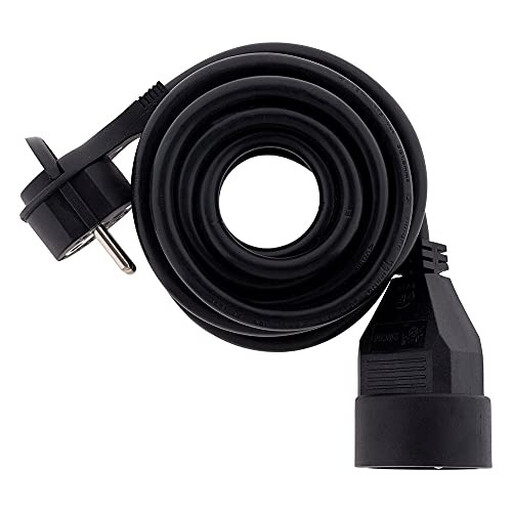
Why we chose it: Perfect for interiors where every centimetre counts. Its flat plug allows you to place furniture (sofa, bookshelf) flush against the wall without pinching or damaging the cable—a common and dangerous problem.
Its HO5VV-F 3G1.5 mm? cable is perfectly sized for common household appliances (up to 3,680 W), eliminating the risk of overheating from an undersized cable.
Its ultra-flat plug is a simple and effective solution for optimising space and securing connections behind furniture.
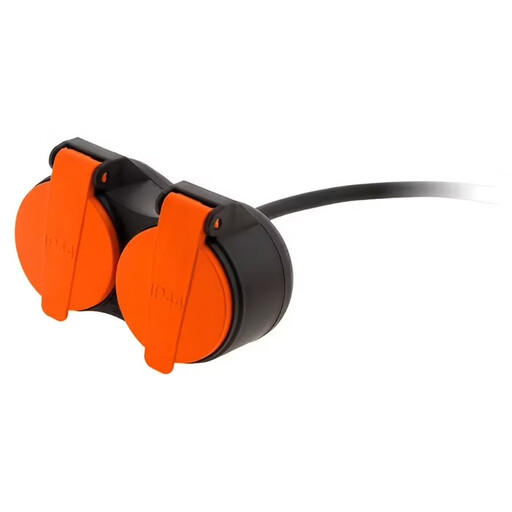
Why we chose it: For safely plugging in a lawnmower, hedge trimmer, or pressure washer. Its 10m length provides good freedom of movement for medium-sized gardens.
It directly addresses the outdoor use pitfall with its IP44 certification and robust H07RN-F cable, ensuring protection against water splashes and excellent durability.
The protective flaps on the sockets and its bright orange colour for maximum visibility are safety details that make all the difference in the field.
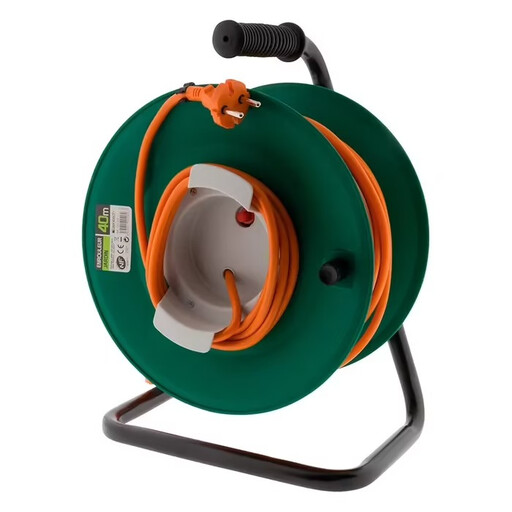
Why we chose it: A rugged jobsite reel built for heavy-duty use. Its 40-metre length and metal stand provide stability and convenience for powering tools across a large work area.
It includes a thermal circuit breaker, the essential protection that cuts power in case of overheating (especially if the cable is not fully unwound), preventing any fire risk.
The combination of a sturdy metal stand, an ergonomic carrying handle, and a long cable length makes it a reliable and durable work tool, NF certified.
We have curated a complete selection of products that meet these strict selection criteria and French safety standards.
The golden rule: choose the shortest possible length that meets your needs. The longer a cable is, the greater the voltage drop and the higher the risk of damaging it (or tripping over it). A 10m extension cord is a good compromise for the garden, while 3 to 5 metres are usually sufficient indoors.
This practice, known as "daisy-chaining," is strictly advised against by electrical safety standards. Chaining power strips together significantly increases the risk of overloading the first wall outlet, which can lead to overheating and fire. Always opt for a single power strip with enough outlets for all your devices.
Check two essential points: the IP rating, which must be at least IP44, and the cable type, which must be H07RN-F (neoprene rubber sheath). This information is required to be printed on the packaging and often on the cable itself. An indoor extension cord (IP20, H05VV-F cable) should never, ever be used outside.