
Livraison le jour même ou le lendemain

Qualité garantie

Débloquez vos offres de bienvenue: Livraison GRATUITE | Jusqu'à -80 % | 30 jours d'essai gratuits à JoyPlus
Téléchargez l'application
An extendable garment rail on wheels can save precious space in a bedroom, utility room or small home. It can also serve as an extra wardrobe for seasonal clothes, laundry to dry, or a temporary display. But be warned: some models quickly lose stability or become difficult to move once the load increases.
Before choosing a rolling clothes rail, check three points that marketing often glosses over: the genuinely usable capacity, the stability of the wheels, and the space it takes up once the rail is extended.
The maximum load stated by the manufacturer usually refers to a static load, spread evenly across the whole structure. It doesn't guarantee that the rail can be moved easily with that same load.
Thick coats, jackets or suits put more pressure on the bar than a row of lightweight shirts. For regular use, allow a safety margin and spread your hangers across the full length of the rail.
A very wide telescopic clothes rail can become unstable if its base is too narrow or if clothes are bunched on one side. Swivel castors make it easier to move, but they need to lock when the rail is in place.
On uneven flooring, delicate wooden floors or thick carpets, pay close attention to the quality of the wheels and whether brakes are fitted. Always set the rail up on a level surface and avoid overloading it.
The minimum width doesn't necessarily reflect the space you'll need day to day. An extendable rail can gain several tens of centimetres once opened. So measure the walkway, the distance to the bed or door, and the available height.
In a narrow bedroom, an adjustable model will often be more practical than a fixed rail. In a shop or utility room, a long hanging length might, on the other hand, become the priority.
Steel is a common choice for a sturdy clothes rail. Look at the stated thickness of the tubes, the quality of the joints and the shape of the base. Lower bars can hold a few boxes, but they don't replace a proper shelf designed to support a heavy load.
Here are the details to compare:
A large-capacity clothes rail isn't chosen by length alone. Also check its depth and height, especially if you plan to hang long coats.
An extendable design can suit several uses:
Four swivel castors make it easier to move from room to room. Two lockable castors can then hold the structure in place. This feature is particularly useful when the rail is loaded or positioned near a walkway.
Before first use, tighten every fixing and check that the castors turn freely. To move a loaded rail, push it by the lower frame rather than by the telescopic bar.
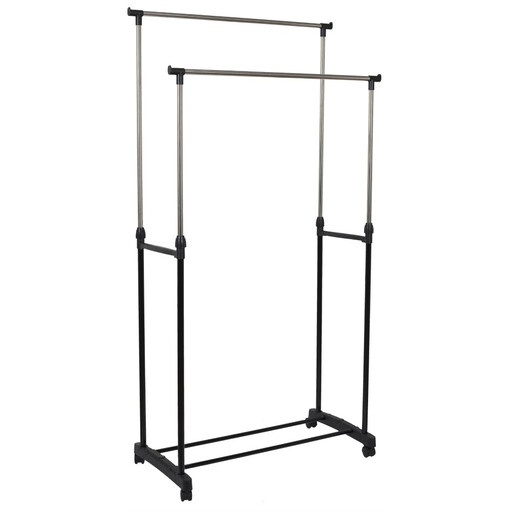
Why this choice suits this profile: This double rail is a good first solution for organising clothes in a bedroom, utility room or small home. Its castors let you move it around easily as needed.
The listing mentions the castors and recommends locking them when that function is available. It also reminds you not to exceed the recommended load.
A metal frame, a hanging bar and built-in castors. Assembly is required and should be done on a stable surface.
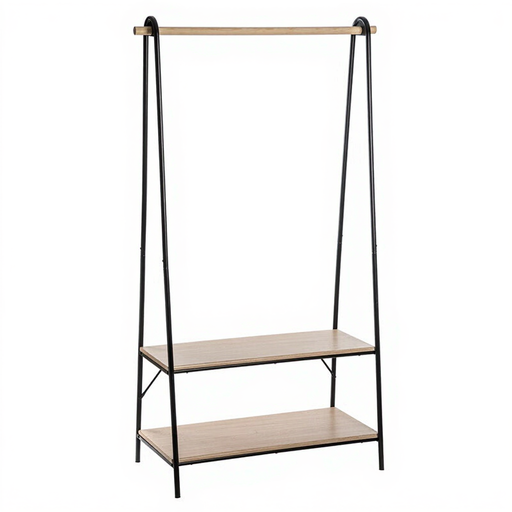
Why this choice suits this profile: This model combines a steel frame, a pine bar and two MDF shelves. It's aimed at those looking for a more decorative solution for a bedroom, dressing room or retail space.
Its dimensions and maximum load of 40 kg are stated in the product listing. This clarity prevents it being used as a professional rail for particularly heavy garments.
Two shelves, a 120.5 cm hanging bar and FSC-certified wood according to the information provided. Assembly takes around 30 minutes.
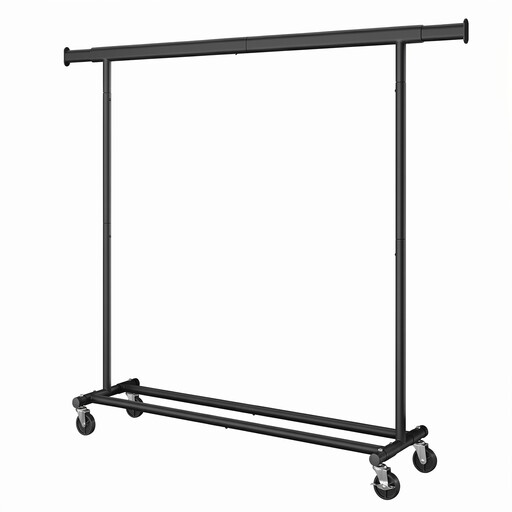
Why this choice suits this profile: With its adjustable width from 160 to 200 cm and a stated maximum static load of 150 kg, this model is suitable for a large extra wardrobe, a shop or frequent textile use.
The listing distinguishes between the adjustable width, static load and lockable castors. This information lets you compare the stated capacity with the space available and your intended use.
A steel frame, four swivel castors (two lockable), lower bars and tool-free assembly according to the description. Width: 160 to 200 cm.
We've put together a full selection, updated in real time, of products that meet these demanding criteria as well as European safety regulations.
After assembly, check the following points:
When storing the rail, fold the rail back following the manufacturer's instructions. Keep it away from heat sources and persistent damp to reduce the risk of damage to the metal.
Set it up on a flat floor, spread the hangers across the whole bar and engage the castor brakes when available. Avoid loading it until you've checked that every joint is secure.
The weight depends on the model. Listings may state 40, 100 or 150 kg static load, but this value should be understood as applying to an even distribution. For frequent moving, a lighter load reduces the strain on the castors and fittings.
Yes, provided you measure its folded and extended width, depth and height. An adjustable-width model can offer a clothes rail on wheels while still allowing room to move around.