For an everyday espresso at home, start by choosing a system that suits you in terms of how it works, its consumables and the maintenance involved. Capsules and pods make preparation simpler, a portafilter requires more hands-on effort, while a grinder means you can avoid pre-measured portions. Que Choisir highlights the trade-off between the upfront cost of a grinder and its cost per cup. To compare your options, also consider how much coffee you drink, the space available and descaling.
Who are these options for?
Regular coffee drinkers who keep an eye on running costs
If you make coffee often, compare the cost of the machine with the cost of coffee and maintenance over the same period. Que Choisir highlights this trade-off in particular for machines with a grinder.
People short on time and space
You want a single-serve coffee maker that takes little effort and doesn’t take up too much worktop space. In that case, the machine’s dimensions and portion system deserve as much attention as how easy it is to use.
People happy to maintain their machine
You’re able to make cleaning and descaling part of your routine. The hardness of your water and how often you make coffee will guide your maintenance schedule, in line with the instructions for your chosen model.
Which everyday factors matter?
When choosing between capsules, soft pods, a portafilter and a grinder, start with your main requirement, then consider what each system adds to your daily coffee-making routine. Each percentage below refers to the consumers who put the stated need first.
| Factor |
What to check |
Consumers concerned |
| Running costs |
Compare the machine, the coffee you use and maintenance costs over the same period, based on the number of cups your household makes. |
When coffee is part of my day several times over, I want to know whether a higher initial investment could bring down the cost per cup. Around 33% of consumers would put running costs first. |
| Ease of use and size |
Measure the space available and compare the steps needed to make a cup. |
With little time or a small worktop, I prioritise simple single-serve preparation. This would be a priority for around 27% of consumers. |
| Manual preparation |
Check which coffee the portafilter takes, what accessories you’ll need and how to clean it after use. |
I’d rather handle the coffee myself than rely on a capsule system, even if it takes longer. Around 20% of consumers would prioritise this freedom to prepare coffee their own way. |
| Portion format |
Check which capsule or pod formats the machine accepts and whether they’re available where you usually shop. |
For portion-based preparation to be genuinely convenient, I need to be able to get hold of the right format easily. Around 20% of consumers would put compatibility and availability first. |
What to look out for
-
Assuming all capsules will fit your machine
According to Que Choisir, most capsule machines are limited to one type of capsule. A simple way to make coffee is less appealing if the format doesn’t match what you usually buy.
Check which system the specific model accepts, then make sure you’ll be able to get hold of its capsules or pods.
-
Comparing machines without counting the coffees you’ll make
For everyday use, the upfront cost and ongoing spending have different impacts depending on the system. Que Choisir notes the trade-off between a grinder and pre-measured portions, but there’s no single consumption level that suits every household.
Compare the options over the same period, taking into account how much coffee you drink, the coffee itself and maintenance products.
-
Putting off descaling
Limescale can affect how a frequently used machine works. Que Choisir and De'Longhi note that water hardness and frequency of use influence how often maintenance is needed.
Find out how hard your water is, then follow your machine’s alerts and the descaling instructions in its manual.
-
Throwing all capsules away the same way
The material a capsule is made from affects how it should be sorted. In France, ADEME advises putting aluminium or plastic capsules in the recycling bin for paper and packaging.
Check what material your portions are made from, and find out the local guidance for other materials.
Brands to consider
There are no brands to feature in this section.
Machines to suit the way you make coffee
These models show three ways to make espresso at home: with a bean grinder, using capsules or with a portafilter. Compare how they work and the consumables they use before choosing one to fit your daily routine.
 Image unavailable
Philips EP2230/10 Series 2200 LatteGo, gloss black
A grinder machine to consider if you regularly make coffee from beans rather than using pre-measured portions.
The model name indicates that it comes with the LatteGo system. Allow room for grinder maintenance and check how much worktop space you’ll need.
View on Joybuy
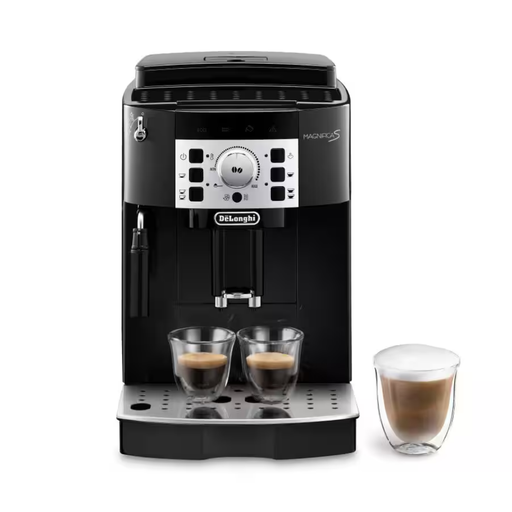 Image unavailable
DE'LONGHI Magnifica S ECAM22.140.B, black
This automatic machine with a grinder is suited to a household that wants to make coffee from beans regularly without using capsules.
Before setting aside space for it, check its dimensions and the cleaning and descaling steps listed in the manual.
View on Joybuy
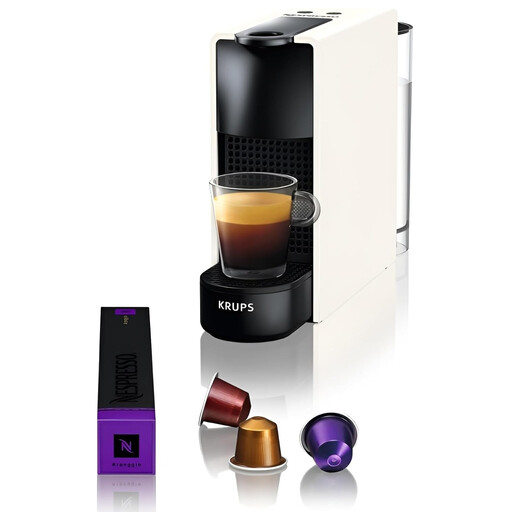 Image unavailable
KRUPS Nespresso Essenza Mini, white, 0.6 L
This capsule machine is for anyone who prefers single-serve portions and wants to avoid the hands-on steps involved with a portafilter.
The product name indicates a 0.6 L water tank and a power rating of 1,200 W. Check the exact capsule format it accepts before choosing your consumables.
View on Joybuy
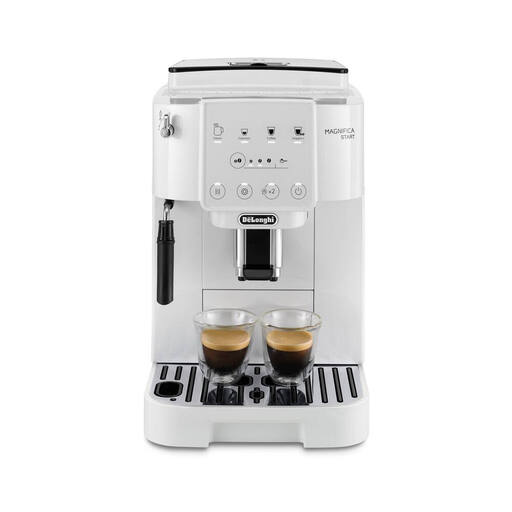 Image unavailable
DE'LONGHI Magnifica Start ECAM220.21.WW, white
This machine with a grinder is another option for making coffee from beans every day, without needing to buy capsules.
To compare it with other grinder machines, consider how much space it takes up and what maintenance steps are required in the manual.
View on Joybuy
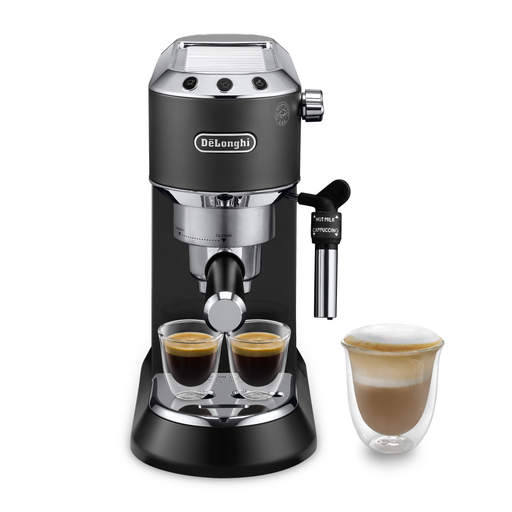 Image unavailable
DE'LONGHI Dedica Style EC685.BK, black
This portafilter machine is suited to anyone happy to prepare and clean their coffee by hand rather than relying on capsules every time. The product name indicates a rated pressure of 15 bar.
The stated water tank capacity differs across the information associated with this model, so confirm it before you buy. Also check which filters and coffee formats you plan to use.
View on Joybuy
Frequently asked questions
How many coffees do you need to make for a grinder to be worthwhile?
It depends on how much coffee you drink and which machines you’re comparing: the same number of coffees won’t give every household a clear answer. Que Choisir notes that the cost per cup is lower with a grinder than with espresso pods, in return for a higher upfront investment. Compare the two options over the same period, including maintenance.
How often should you descale an espresso machine?
Follow any alerts and the instructions for your model: how often you need to descale depends on water hardness and usage. Que Choisir gives an average guide of every two to three months, while De'Longhi recommends different intervals depending on the machine and how it’s used.
Can you use any capsule or pod?
No. Check which format the machine you’re considering specifically accepts. Que Choisir says that most capsule machines only take one type of capsule; a similar shape doesn’t mean it’s compatible.
How should you recycle coffee capsules in France?
For aluminium or plastic capsules, ADEME advises putting them in the recycling bin for paper and packaging. If you use another material, check the guidance for that type of consumable and the collection arrangements in your area.
What should you do with a broken or replaced espresso machine?
First, consider having it repaired if possible. If you’re getting rid of it, ecosystem offers a tool to help you find a collection point for electrical equipment.


