Busy daily coffee drinkers with limited space
If you mainly want a quick cup, a compact appliance and minimal preparation, compare capsules with soft pods. Then check the cost and availability of compatible consumables.


Start by choosing the coffee system and level of maintenance you are happy to take on day to day: capsules for quick, compact preparation; soft pods for a simple long coffee; a portafilter for greater control over extraction; or a bean-to-cup machine for automated coffee made from beans. For frequent use, Que Choisir states that the cost per cup of a bean-to-cup machine can be two to three times lower than that of a pod espresso machine, although this type of machine requires more maintenance.
If you mainly want a quick cup, a compact appliance and minimal preparation, compare capsules with soft pods. Then check the cost and availability of compatible consumables.
If you are happy to measure, tamp and clean the machine after use, a portafilter gives you greater control over preparation. Manual and automatic machines involve different levels of hands-on work.
A bean-to-cup machine is ideal for households that want to choose their beans and prepare a drink at the touch of a button, while accepting that it requires more maintenance. In its guide to bean-to-cup machines, Que Choisir reports a lower cost per cup than pod espresso machines.
Start with how often you prepare coffee, then compare the consumables, maintenance tasks and the space you actually have available around the machine.
| Priority | What to check | Your needs |
|---|---|---|
| Everyday speed | Compare the steps required before each coffee, the number of cups that can be prepared and the recipes actually offered by the model. | I want to prepare a cup without a lengthy routine in the morning, even when several people use the machine. |
| Consumables and running costs | Identify the format accepted, the number of portions per pack and the cost based on your weekly consumption. For bean-to-cup machines, compare this with using coffee beans. | I want to be able to plan my coffee spending and avoid discovering after purchase that the system requires a format that does not suit my habits. |
| Maintenance | Check access to the water tank, coffee-grounds container, drip tray and milk-system components. Also consult the descaling steps set out in the instructions. | I can accept regular maintenance, but I want to know which parts need cleaning and how often before I choose. |
| Noise and size | Measure the depth, clearance beneath cupboards and the space needed to fill the water tank. For a bean-to-cup machine, look for tests covering noise and vibration levels. | My machine must fit on the worktop and remain suitable for an open-plan kitchen, a shared home or early-morning preparation. |
A small appliance does not tell you how much capsules or pods will cost over the weeks and months. Que Choisir states that these consumables are considerably more expensive than coffee beans or ground coffee.
Before buying, compare the number of portions, compatible format and your usual number of cups per week with a ground- or bean-coffee solution.
Ongoing costs depend on the consumable you choose, how often you use the machine and which formats are available.
For bean-to-cup espresso machines, cleaning, descaling, noise levels and vibration vary between models. Que Choisir assesses them separately in its testing protocol.
Read the instructions before choosing: check access to the containers, the parts that need cleaning, how the milk system is managed, descaling requirements and independent noise data where available.
Maintenance may require time, descaling products and, depending on the model, consumables specified by the manufacturer.
With a portafilter machine, the user fills and tamps the coffee before cleaning the components after use. An automatic bean-to-cup machine reduces these steps for each cup, but does not offer the same level of hands-on control.
Choose a portafilter machine if you want to learn and control the preparation process; choose a bean-to-cup machine if you prefer coffee made from beans with fewer repeated steps.
A machine chosen for cappuccinos or for a stock of pods already kept at home may not be suitable if the model does not accept the right format or lacks the expected equipment.
Check the model’s product page for the drinks available, how milk is prepared, which components need cleaning and the exact capsule or pod format accepted.
De’Longhi offers manual portafilter espresso machines and bean-to-cup espresso machines on the French market, making it a useful reference when comparing these two preparation methods.
Philips is worth considering for households choosing between Senseo soft pods and a bean-to-cup espresso machine.
Nespresso represents the capsule route, with Original and Vertuo systems sold in France.
These Joybuy options cover soft pods, capsules and portafilter machines for preparing coffee regularly at home.
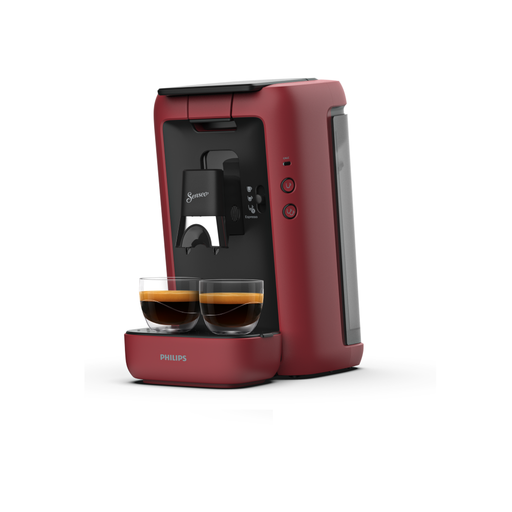 Image unavailable
A pod-based option for a household wanting to prepare one or two cups quickly.
Advertised features include a 1.2 L water tank, three recipes, adjustable spout, automatic shut-off and descaling reminder.
The title mentions capsules, while the description specifies SENSEO pods: confirm the accepted consumable format before buying. The noise level is not stated.
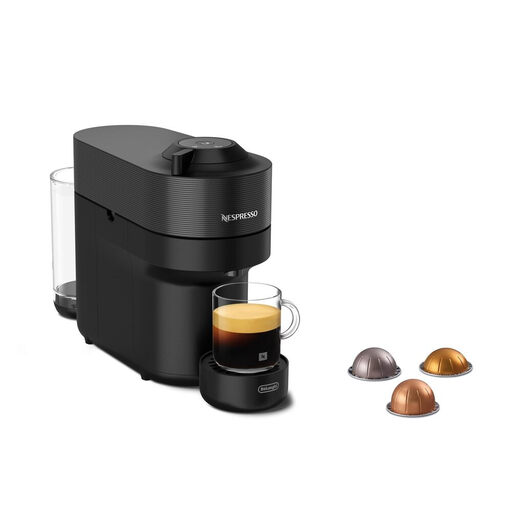 Image unavailable
This capsule machine is suited to one-touch preparation on a limited worktop.
Compatible with Vertuo capsules, it has a 0.6 L water tank, a container for eight used capsules and five advertised cup sizes from 25 ml to 230 ml.
Check the availability of Vertuo capsules based on your usual consumption. The noise level and precise descaling steps are not stated.
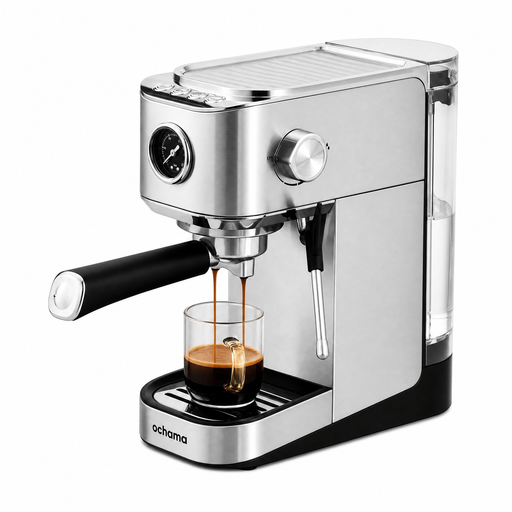 Image unavailable
A portafilter solution for people who are happy to take a more hands-on approach to preparing their espresso.
Advertised features include a removable 0.9 L water tank, pressure gauge, cup warmer, steam wand and removable parts.
Filling, tamping and cleaning are still required. Check the filters, included accessories and descaling procedure before buying.
 Image unavailable
This compact model is designed for people who mainly drink espresso or lungo without manual dosing.
It has a removable 0.6 L water tank, two programmable volumes, a stated 25-second heat-up time and dimensions of 8.4 × 33 × 20.4 cm.
The machine uses the Nespresso Original system or compatible capsules. Its container holds six used capsules; check that this capacity suits the number of users.
No. A capsule machine may be more affordable to buy, but you also need to factor in the cost of the capsules. Que Choisir estimates that the cost per cup of a bean-to-cup machine can be two to three times lower than that of a pod espresso machine, so compare the coffee system with your actual consumption habits.
Look for tests or measurements covering noise levels and vibration during grinding, rinsing and coffee dispensing. Que Choisir assesses these parameters for bean-to-cup machines, including with a sound-level meter.
Yes, descaling is part of regular coffee-machine maintenance. For a bean-to-cup espresso machine, follow the model’s instructions: De’Longhi states that the frequency depends in particular on the hardness of the local water.
Use the recycling information shown on the product, packaging or accompanying documents to identify the appropriate disposal option. France’s Ministry for Ecological Transition states that this information can direct you to a collection point, shop, recycling centre or bin, depending on the product.
No, disposal guidance depends on the product and the instructions displayed. In France, follow the recycling information shown on the box or product rather than relying on a general rule based solely on the term “compostable”.