Households looking for quick coffee every day
You mainly want to press a button, keep the appliance compact and avoid complicated settings. Start by comparing capsules and soft pods based on the consumable format, availability and ongoing cost.


Start by choosing according to your preparation routine, the steps you are happy to carry out every day and the coffee system you want to use in the long term. Capsules and pods prioritise simplicity, while a portafilter gives you more control over the preparation. A bean-to-cup machine is best suited to households willing to keep on top of maintenance in return for choosing their own beans.
You mainly want to press a button, keep the appliance compact and avoid complicated settings. Start by comparing capsules and soft pods based on the consumable format, availability and ongoing cost.
You want to choose your ground coffee or beans and have more control over the result in the cup. A portafilter involves more hands-on preparation, while a grinder automates more of the process.
A bean-to-cup machine is worth considering if the freedom to choose your beans and reduce individual portions matter more than the initial purchase price, and if you are happy to follow a maintenance routine.
Que Choisir identifies four types of espresso machine: capsule, soft-pod, portafilter and bean-to-cup. Compare them based on the consumables, preparation time, settings you want and the level of maintenance your household can realistically keep up with.
| Priority | What to check | Your needs |
|---|---|---|
| Ongoing cost and consumables | Check which capsule system the machine accepts, whether your usual products are readily available and the price per drink. For soft pods, check the compatible format; for beans or ground coffee, plan for storage and dosing. | I want to avoid buying a convenient appliance that then locks me into coffee that is hard to find or a portion system that does not suit my habits. |
| Everyday simplicity | Compare the steps before extraction: inserting a pod, measuring ground coffee, filling the bean hopper and cleaning after use. Also check whether two cups can be prepared at once if this matters to you. | In the morning, I want a short, repeatable preparation routine without a string of steps that slows everyone down. |
| Flavour and customisation | Look at the settings actually offered by the model: grind size, strength, volume, temperature and milk functions. A steam wand or milk system is only useful if you regularly prepare these drinks. | I want to be able to choose my beans or ground coffee, adjust the result in the cup and, if needed, prepare milk-based drinks. |
| Maintenance and limescale | Consult the instructions for descaling, removable parts, cleaning programmes and any compatible water filters. Adjust the maintenance schedule to your water hardness and frequency of use. | I prefer a machine whose cleaning, coffee-ground disposal and descaling routines fit easily into my habits. |
Most brands accept only one type of capsule. A compact machine could therefore limit the coffees available to you and change your spending over time.
Make a note of the machine’s exact system, check which capsules are available from your usual retailers and compare the price per drink of the products you normally buy.
Capsules are an ongoing expense that varies according to the system, brand and place of purchase.
Descaling and regular cleaning affect how well the machine operates. According to Que Choisir, the required frequency depends in particular on water hardness and intensity of use.
Before comparing models, consult the instructions, check the descaling indicator, removable parts and compatible maintenance products.
A grinder lets you choose your beans and can reduce the cost per cup compared with pods, but it also requires filling, cleaning and managing the noise produced during grinding.
Choose this type of machine if your household makes coffee regularly, wants to vary its beans and is happy to empty the coffee-grounds container and maintain the machine.
The time spent managing the beans, grounds, descaling and preparation components is part of everyday use.
ADEME states that aluminium or plastic capsules can be sorted with paper and packaging in France, while also recommending that individual packaging be limited where possible.
If reducing waste is a priority, compare a bean-to-cup or ground-coffee machine with a portioned solution; for capsules, follow your local recycling instructions.
A capsule-machine system for households looking for portioned preparation and a choice of the brand’s coffees.
A range of soft-pod machines designed for simple preparation. Philips presents SENSEO as a system that can prepare one or two cups at the press of a button.
A brand offering a range of bean-to-cup espresso machines, with models designed for milk-based drinks and varying levels of adjustment.
Joybuy options for preparing coffee regularly at home, covering soft-pod, portafilter and bean-to-cup machines.
 Image unavailable
For households wanting to prepare espresso, coffee or cappuccino from beans with documented adjustment options.
Grinder with 12 settings, ground-coffee option, LatteGo, two-cup function, 1.8 L water tank and 275 g bean hopper.
The AquaClean filter is listed as compatible but is not included. The brew group, coffee-grounds container and LatteGo system require regular cleaning.
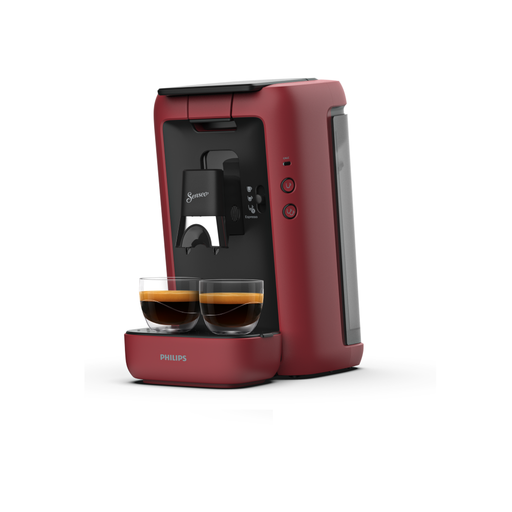 Image unavailable
For everyday coffee made with soft pods, without grinding or manual dosing.
1.2 L water tank, one- or two-cup preparation, Long, Intense and Espresso recipes, Memo function, adjustable spout and descaling indicator.
This machine requires compatible SENSEO pods: check which products are available and their cost through your usual retailer. Descaling is still necessary.
 Image unavailable
For households wanting an automatic bean-to-cup machine without relying on a capsule system.
Integrated grinder, use of beans or ground coffee, 1.8 L water tank, two-cup function, steam wand and descaling programme.
Cleaning the coffee-grounds container, steam wand and filtration system must be incorporated into your routine; check the recommended intervals in the instructions.
 Image unavailable
For households wanting to prepare coffee from beans using one-touch recipes and a steam wand.
1.8 L water tank, 250 g bean hopper, conical grinder with 13 settings, three one-touch recipes, two-cup function and adjustable steam wand.
The machine requires you to refill the beans, empty the grounds and clean the steam wand. Consult the instructions for cleaning and descaling procedures.
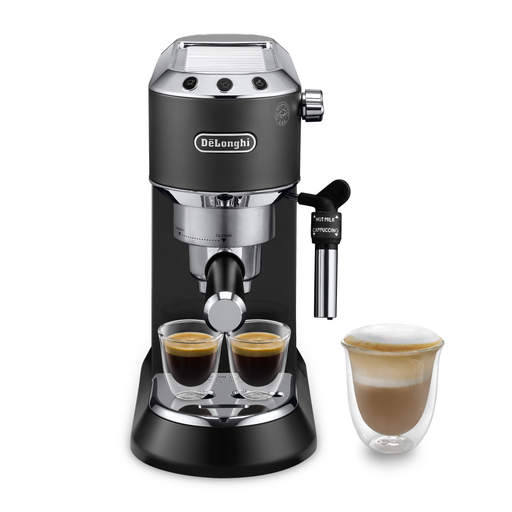 Image unavailable
For people who want to choose their ground coffee and take a more hands-on approach to preparation.
Advertised width of 149 mm, Thermoblock system, one- and two-cup filters, ESE filter, steam wand, three temperature settings and adjustable water volume.
Tank capacity should be confirmed before purchase. The portafilter and steam wand require more preparation and cleaning than a pod machine.
Yes. ADEME states that aluminium or plastic coffee and tea capsules should be placed in the sorting bin, bag or container for paper and packaging.
Always check the format specified by the manufacturer. Que Choisir describes soft pods as standardised, but compatibility must be confirmed on the packaging and in your model’s instructions.
The frequency depends on the model, water hardness and intensity of use. Que Choisir gives an average of once every two to three months; always follow your machine’s instructions and descaling alert as a priority.
Do not assume that you can: consult the instructions before using a descaling product. Nespresso explicitly states that vinegar should never be used with its machines.
No, because the benefits depend on the number of coffees prepared, the price of the beans and maintenance costs. Que Choisir nevertheless states that a grinder can have a lower cost per cup than pod espresso, while requiring a larger initial investment and more maintenance.