
Livraison le jour même ou le lendemain

Qualité garantie

Débloquez vos offres de bienvenue: Livraison GRATUITE | Jusqu'à -80 % | 30 jours d'essai gratuits à JoyPlus
Téléchargez l'application
Figuring out dinner for your 8-month-old can quickly become a headache. Between hectic days and the desire to provide a balanced meal, choosing the right evening jar is crucial. The only problem is that the shelves are overflowing with products that are far from equal in quality. Some, despite reassuring marketing, have formulas that are poorly suited for an evening meal.
As a Product Expert at Joybuy, my mission is to help you see things more clearly. Let's review the pitfalls to avoid and the criteria to check to choose an evening meal for your 8-month-old that is both convenient and truly nutritious.
The packaging is often designed to be reassuring, but only a careful read of the label will tell you the truth. Here are the red flags to watch out for:
To make the right choice, keep these three key criteria in mind.
A good evening meal should be nourishing enough to prevent hunger-related night wakings, yet easy to digest. Look for recipes that combine?:
The ingredients list should be your guide. A high-quality formula can be identified by several signs?:
Always check that the product is labelled "from 8 months". At this age, textures can start to be slightly mashed or puréed, but they must remain soft and perfectly safe. A well-designed evening meal for an 8-month-old gently prepares the child's palate for less smooth foods, a key step in diversification.
To help you apply these criteria, here are a few products that meet different needs.
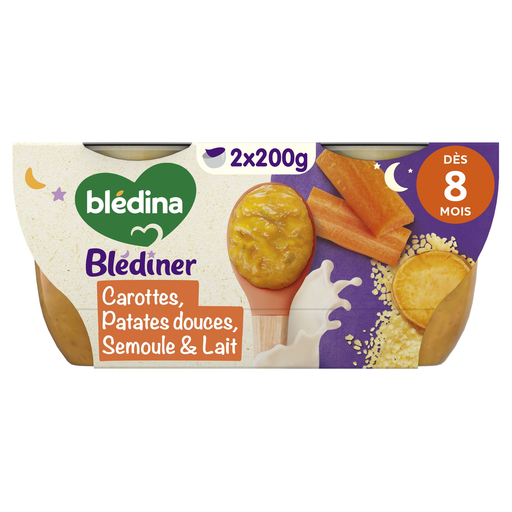
Why we chose it: This is the ultimate all-in-one solution for evenings when every minute counts. It combines vegetables, starches (durum wheat semolina), and a dairy component in a single bowl, drastically simplifying dinner preparation.
This product is specifically formulated as a milk-based evening meal for babies. It avoids the pitfall of an incomplete dinner (no. 2) by ensuring a perfect balance between different food groups for good satiety.
A no added salt formula, source of Omega-3 (from rapeseed oil), and a smooth texture perfectly suited for babies from 8 months.
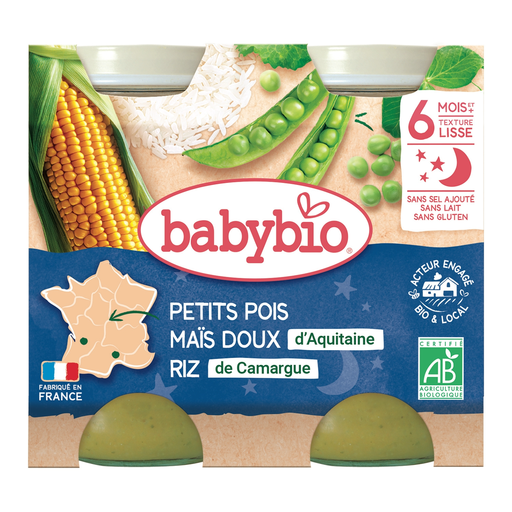
Why we chose it: Perfect for parents who prioritise organic and plant-based food. This recipe highlights ingredients from French farms (peas, corn, Camargue rice), a true mark of transparency.
Its ingredients list is short and clear, free from common allergens (no milk, no gluten) and with no added salt. It avoids the pitfall of unclear formulas (no. 2) by focusing on a simple, healthy recipe.
100% organic, with fully traceable ingredients sourced from France. The combination of vegetables and rice makes for a substantial plant-based dinner.
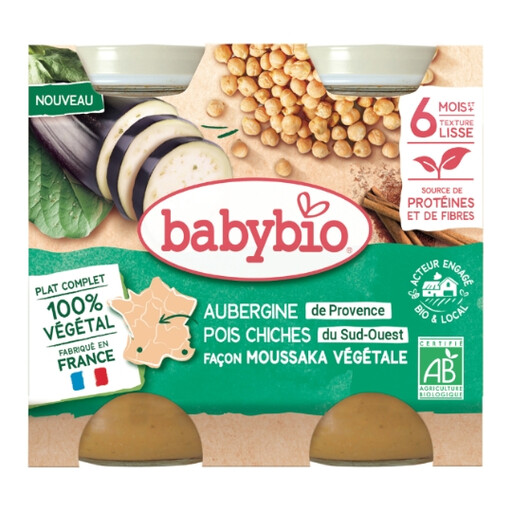
Why we chose it: For parents who want to awaken their baby's palate with more original flavours. This moussaka-inspired recipe, with aubergine and chickpeas, is an excellent way to introduce legumes.
Although the recipe is original, its formula remains simple and perfectly suitable. The chickpeas provide plant-based protein, making it a complete dish rather than just a vegetable purée (pitfall no. 2).
An organic, vegetarian, and original recipe to add variety. It also has no added salt, and is milk-free and gluten-free.
We have curated a full range of products that meet our strict selection criteria and European regulations.
The golden rule is to follow your child's appetite. A 200g portion is a good baseline for dinner, but some babies will be more or less hungry. Watch for their satiety cues (turning their head away, closing their mouth...). If the main course seems insufficient, you can supplement it with a no-added-sugar fruit purée or a dairy product suitable for their age.
It's best to consider fruit as a dessert or part of the meal, rather than the main course. A 100% fruit meal is likely to be too high in sugar and not filling enough to ensure a peaceful night. Opt for a dish based on vegetables and starches for a complete baby dinner.
A balanced evening meal for an 8-month-old combines vegetables (for vitamins and fibre) and starches (for sustained energy). Products labelled "complete dinner" or "milk-based meal" are often designed with this in mind. The best practice is still to decode the ingredients list to verify the presence of these two food groups.