
Livraison le jour même ou le lendemain

Qualité garantie

Débloquez vos offres de bienvenue: Livraison GRATUITE | Jusqu'à -80 % | 30 jours d'essai gratuits à JoyPlus
Téléchargez l'application
Switching to an electric car is a great step forward, but choosing the right home charging station can quickly become a headache. Between marketing promises and opaque technical jargon, it's easy to make a mistake. Our mission is to help you see things more clearly. Let's break down the common errors to avoid, so you can make an informed choice that's perfectly suited to your needs and budget.
Before you even start comparing models, it's crucial to know the pitfalls that can turn a promising investment into a source of frustration and unnecessary expense.
To avoid these traps, focus on a few key technical parameters that will make all the difference in your daily use.
The station's power, expressed in kilowatts (kW), determines the charging speed. The right choice depends on your electrical installation and your car's onboard charger capacity.
A connected charging station is an undeniable advantage. Via a Wi-Fi-connected mobile app, you can:
The load balancing feature (or Dynamic Load Balancing) is another key function. It automatically adjusts the charging power based on the consumption of other appliances in your home to avoid tripping the breaker.
Check that the station is equipped with a Type 2 connector, the standard in Europe. Also, ensure it has multiple protections: against overcurrent, overvoltage, lightning, and current leakage (a Type B RCD with 30mA AC + 6mA DC is the benchmark). For an outdoor installation, an IP65 or IP66 rating is essential to guarantee it is sealed against dust and water jets.
Rather than an endless catalogue, we've selected three models that meet specific needs while sidestepping the classic pitfalls.
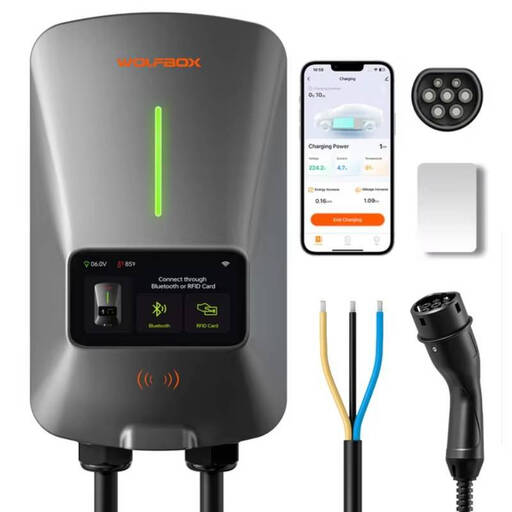
Why we chose it: Perfect for overnight charging of a vehicle used for daily commutes. Its 7 kW power is ideal for standard single-phase installations, without needing to upgrade to a more expensive electricity plan.
It saves you from paying for unnecessary power. Its 7 kW strikes the perfect balance between speed and compatibility with most home electrical systems.
Its excellent value for money, which includes app control and RFID cards to secure access.
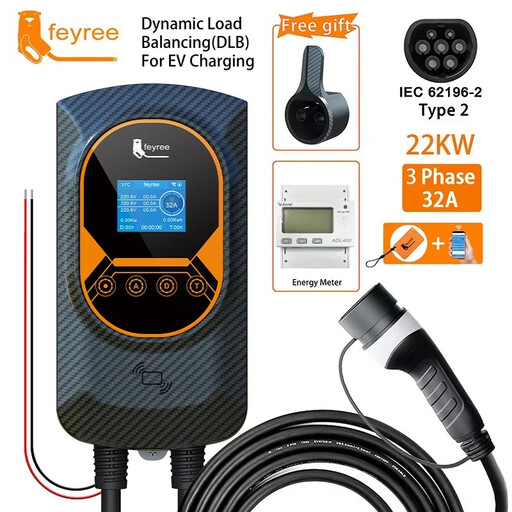
Why we chose it: The solution for high-mileage drivers with a three-phase setup who demand charging that is as fast as it is smart. Ideal for households with many power-hungry appliances.
Its Dynamic Load Balancing (DLB) feature anticipates the risk of overloads, which are common with powerful chargers. It modulates the power to optimise the charge without tripping the breaker.
The combination of its high power (up to 22 kW) and load balancing ensures a fast, safe charge, even when the rest of the house is running at full capacity.
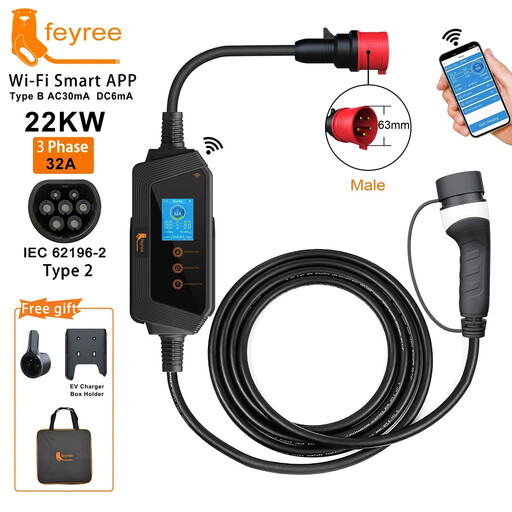
Why we chose it: The all-in-one solution for those who can't (or don't want to) have a fixed wall-mounted installation. Perfect for renters, second homes, or for keeping a powerful charging solution in your trunk.
This portable charger can be used like a conventional wallbox with its wall mount, but remains transportable to break free from the constraints of a permanent installation.
Its versatility is its greatest strength: the power of a fixed station (up to 22 kW) and the freedom of portability, all controlled by a Wi-Fi app.
We have curated a complete range of products that meet our selection criteria and current safety standards.
It all depends on three things: your daily driving habits, your car's charging capacity, and your electrical installation. For the majority of EV drivers who charge overnight, a 7?kW station on a single-phase supply is the most balanced option. If you're a high-mileage driver (over 200 km/day) and your home has a three-phase supply, an 11 or 22?kW station becomes an attractive choice.
Absolutely, and for two main reasons: savings and convenience. Scheduling your charges during off-peak hours can significantly lower your electricity bill. Not to mention the convenience of being able to start or monitor the charge at your fingertips, directly from your smartphone.
The answer is no. In many countries, the installation of a wallbox over 3.7?kW must be carried out by a qualified electrician, ideally one with a specific certification for EV charging infrastructure. This is a guarantee of safety for your installation and your vehicle, and it is also an essential condition for being covered by your insurance in case of an incident.