
Livraison le jour même ou le lendemain

Qualité garantie

Débloquez vos offres de bienvenue: Livraison GRATUITE | Jusqu'à -80 % | 30 jours d'essai gratuits à JoyPlus
Téléchargez l'application
Made the switch to an electric car? Congratulations! But to ensure the dream doesn't become a logistical headache, home charging is a crucial step. While a standard household outlet can work in a pinch, its limitations in speed and, more importantly, safety quickly become apparent. Installing an electric vehicle charging station, or wallbox, is the gold standard for seamless and efficient daily use.
But with an overwhelming number of options on the market, how do you navigate it all? This guide is here to break down the key criteria and present our selection of the best models, helping you make the right choice for your vehicle and your electrical system.
Before diving into our top picks, a quick technical overview is in order. These are the key points that will make all the difference in your day-to-day experience.
This is the heart of the matter. Expressed in kilowatts (kW), the power directly determines how fast your car charges.
A connected EV charger does much more than just deliver power. With Wi-Fi and a dedicated mobile app, you can manage your charging with just a few taps:
Your home EV charger transforms into a true energy management tool.
When it comes to charging, safety is non-negotiable. Ensure the charger is certified and includes all essential protections (against surges, current leaks, and overheating).
Among the smart features, dynamic load balancing is particularly brilliant. A charger with dynamic load balancing analyses your home's real-time electricity consumption. If you turn on the oven while the heating is running, it intelligently reduces the power allocated to the car to avoid tripping your circuit breaker. It's the ideal solution for homes with limited electrical capacity. Today, nearly all EV chargers and vehicles in Europe use the standard Type 2 connector, ensuring maximum compatibility.
Let's get practical. Here is our selection of chargers that caught our eye for their performance, features, and overall value.
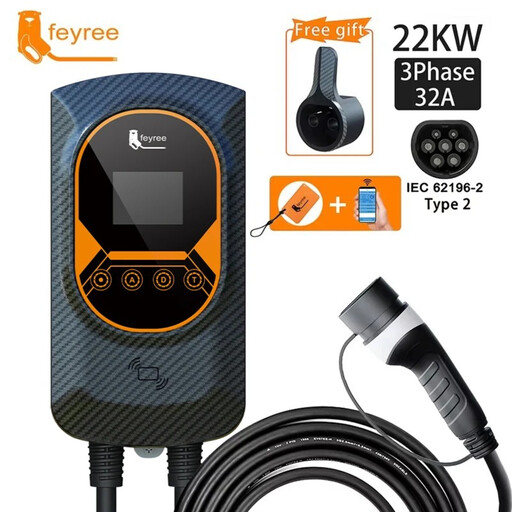
What Sets It Apart This model goes all in: high charging power and full connectivity. Its ability to reach up to 22 kW makes it a future-proof solution, capable of charging compatible vehicles at top speed. Control via the Tuya Smart app offers remote management that is as simple as it is effective.
Pros
Best For Those lucky enough to have a three-phase supply and a 22 kW-compatible vehicle. It's ideal for anyone wanting the fastest possible home charging with complete control from their smartphone.
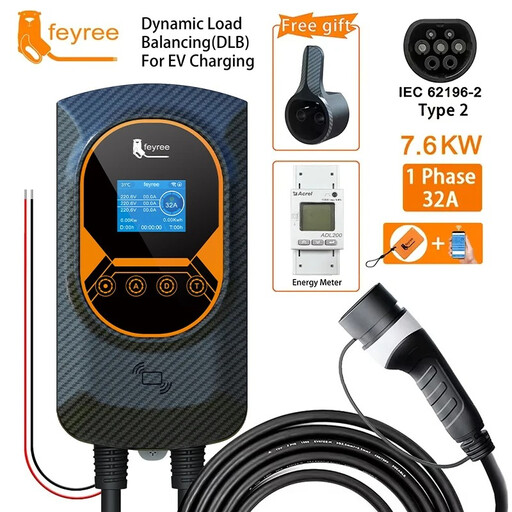
What Sets It Apart Its standout feature: dynamic load balancing (DLB). It intelligently juggles the available power between the car and other home appliances to avoid overloading your electrical system.
Pros
Best For The perfect solution for single-family homes where the electrical system is already busy. It provides guaranteed peace of mind for those who want to charge at their line's maximum capacity without needing to upgrade their electricity plan.

What Sets It Apart This charger is made for those who love to know everything. Its large 4.3-inch colour screen offers an unparalleled view of all charging parameters, and its logging functions allow for ultra-precise consumption tracking.
Pros
Best For Data geeks who love to analyse and optimise everything. An excellent choice if you want precise control and maximum information directly on the charger, in addition to the app.
Our selection highlights feature-rich models, but the market is full of other gems. To explore different power levels, designs, or price points, feel free to browse our complete catalogue.
For the majority of homes with a single-phase supply, a 7 kW charger represents the best balance. It ensures a full charge overnight, which is perfect for daily use. A 22 kW charger is an excellent option if you are fortunate enough to have a three-phase supply and your vehicle supports it. The time savings are significant.
No, but it must be handled by a qualified electrician, ideally one certified for EV charger installation. This professional will guarantee an installation that complies with the strictest safety standards, running a dedicated line from your electrical panel and installing the necessary protections (circuit breaker and residual current device).
Dynamic load balancing is a very smart feature that allows the charger to adapt its charging power in real time. In practice, it monitors the entire home's electricity consumption. If the total demand approaches the limit of your electricity plan, it automatically reduces the power sent to the car. The result: you avoid power outages while still enjoying the maximum charging speed as soon as other appliances are turned off.