
Livraison le jour même ou le lendemain

Qualité garantie

Débloquez vos offres de bienvenue: Livraison GRATUITE | Jusqu'à -80 % | 30 jours d'essai gratuits à JoyPlus
Téléchargez l'application
High-end robot vacuum and mop cleaners promise a clean home without spending hours on it. Yet some purchases fall short after just a few weeks: a station that’s a pain to maintain, hair wrapping around the brush, uneven mopping, or navigation that struggles around furniture. Before choosing a Eureka J15 Pro Ultra robot vacuum and mop, it’s worth separating genuinely useful features from pure marketing claims.
A high figure in pascals naturally catches the eye, but it isn’t enough to judge a device’s performance. The brush design, air-seal integrity, dustbin capacity, and carpet handling all play a role in cleaning quality. A 16,200 Pa robot vacuum can easily handle crumbs, dust, and embedded pet hair, without replacing manual cleaning on very thick carpets.
An auto-empty station reduces the manual work, but it doesn’t eliminate it. You still need to refill the clean water tank, empty the dirty water, replace the bag, and clean the filters when necessary. Also check whether the station actually washes and dries the mop pads, and at what temperature.
Pet hair can quickly clog a standard brush. As for round robots, they often leave a thin strip of dust along the skirting boards. In daily use, anti-tangle technology and a proper edge-cleaning system are often more valuable than a long list of connected features.
The J15 Pro Ultra boasts a maximum suction of 16,200 Pa. This figure can make a difference in crevices, on carpets, and with dry dirt, but compare it especially with the mode you’ll use day to day. According to the product sheet, the noise level reaches 73 dB(A) in silent mode: if you’re sensitive to noise, it’s best to schedule cleaning runs when the home is empty.
In a French flat with a mix of parquet, tiles, and a few rugs, choose a device that can lift its mop or brush when it detects carpet. The J15 Pro Ultra offers automatic lifting of both the brush and the mop pad, handy for avoiding moisture on textile surfaces.
A robot vacuum with a mop should separate clean water from dirty water as much as possible. The J15 Pro Ultra’s station claims washing at 75 °C, along with cleaning the plate and drying the pads. This temperature is a technical specification stated by the manufacturer: it does not, on its own, guarantee disinfection or a sanitary result.
In any case, only use cleaning products compatible with the instruction manual. Do not add household detergent not intended for the device: it could create too much foam or damage the water circuit.
LDS laser navigation maps rooms and helps the robot follow regular cleaning paths. The J15 Pro Ultra combines a laser sensor with an RGB camera to detect obstacles. Its intelligent dirt detection function is said to distinguish several categories of debris and adapt cleaning accordingly.
In homes with dogs or cats, the FlexiRazor brush uses a blade system that the manufacturer claims limits hair and fur tangling. This design can reduce the need for intervention, but regular checks of the wheels, side brush, sensors, and filters remain essential.
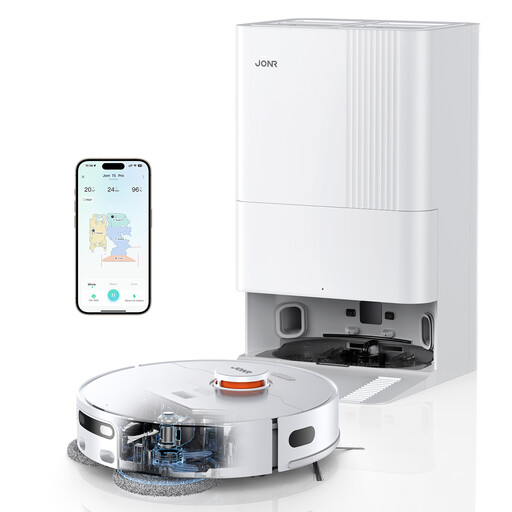
Why this choice suits this profile: It’s aimed at those who want to try automated vacuuming and mopping without immediately investing in a particularly sophisticated setup.
Its base centralises emptying, mop pad washing, and hot air drying, so you don’t have to intervene after every cycle.
Claimed suction of 8,150 Pa, laser navigation, obstacle recognition, and an anti-tangle side brush.
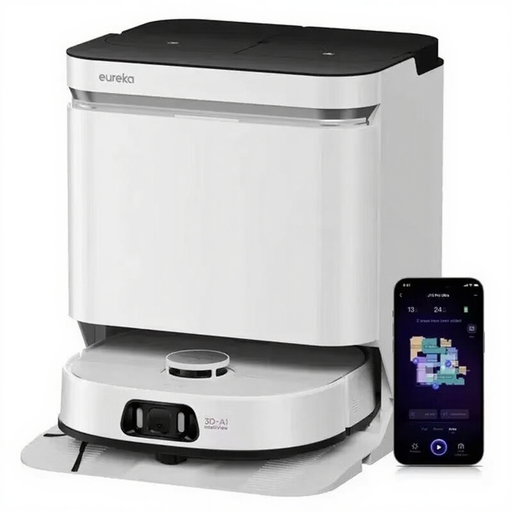
Why this choice suits this profile: Its combination of vacuuming, mopping, detection, and automated maintenance suits homes where the device needs to run frequently without constant supervision.
The auto-empty station washes the mop pads at 75 °C, cleans its plate, and dries them, while the FlexiRazor brush is designed to limit tangles.
Claimed suction of 16,200 Pa, LDS sensors and RGB camera, ScrubExtend corner cleaning, and automatic lifting of the brush and mop pad.
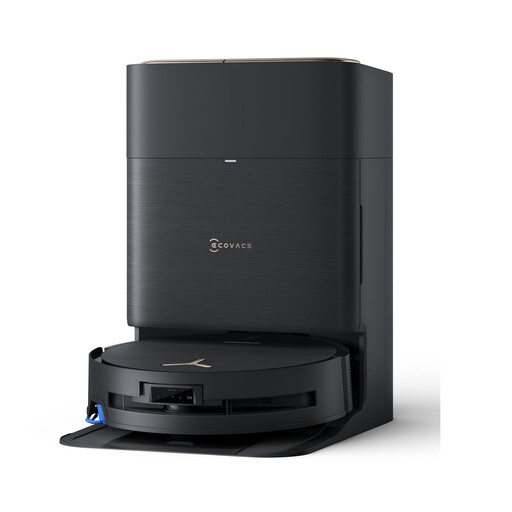
Why this choice suits this profile: Its comprehensive station and roller mopping system can suit large areas and the repeated cleaning runs of a family home.
The OZMO roller is said to self-clean continuously, while the station empties dust, washes at 75 °C, and dries with hot air.
Claimed suction of 16,600 Pa, ZeroTangle system, 3D obstacle detection, and mopping that extends to edges.
We’ve put together a comprehensive, real-time updated selection of products that meet these demanding criteria, while complying with European safety regulations.
Its FlexiRazor brush and anti-tangle function are designed to limit hair build-up. You will still need to regularly remove debris around the wheels, clean the filters, and check the side brush, especially if several pets live in the home.
Yes. Remove cables, small objects, clothes, and spilled liquids. Place the station on a flat floor against a wall, leaving enough space in front and on the sides. Then run a full mapping session so the robot can identify rooms and areas to avoid.
Keep an eye on the dirty water tank and the dust bag, rinse the components indicated in the manual, and keep the sensors clean. The mop pads also need regular inspection. This routine remains essential to preserve the performance of a self-cleaning robot vacuum over time.