Homes without essential appliances
You need to organise meals and laundry as soon as you move in. Start by checking which appliances are already there and which tasks have no solution available.


After moving in, start by buying appliances that provide an everyday function your home is missing: keeping food fresh, preparing meals or doing the laundry, depending on your routine. Before ordering, check the space available, the route into the room and the model’s connections. You can wait to buy appliances whose usefulness is still uncertain.
You need to organise meals and laundry as soon as you move in. Start by checking which appliances are already there and which tasks have no solution available.
A narrow alcove, stairs or fixed connection points can limit your options. The appliance’s dimensions and the route into the room matter just as much as the space it will take up once installed.
You want to compare appliances that suit your home. The energy label and information available through EPREL can help; in France, the durability index applies in particular to washing machines.
First, take stock of the functions already covered in your home. Then check that the appliances you need will fit and work there, before comparing their features.
| What matters | What to check | Consumers’ views |
|---|---|---|
| Everyday functions | List the appliances already in the home and work out how you’ll keep food fresh, prepare meals and do the laundry. | If the home has few appliances, I want to be able to sort out meals and laundry without buying duplicates. Around 34% of consumers would prioritise these functions. |
| Suitability for your home | Measure the space and delivery route; check the connections against the model’s instructions. | In a narrow kitchen, an appliance is only useful if it can be brought into the room and installed in its intended spot. Around 33% of consumers would make this their priority. |
| Energy use and durability | Compare the energy labels of models suited to the same use, and check the durability index where applicable. | Once the size and connections are sorted, I want to compare models by their energy use and the durability information available. Around 20% of consumers would make this their top criterion. |
| Buying later | Identify functions that can be covered another way for now, and wait until you’ve decided where secondary appliances will go. | If a function is already covered, I’d rather see how my habits develop before choosing an extra appliance. Around 13% of consumers would put off buying. |
For the categories it covers, the energy label helps you compare models suited to the same need. The European Commission’s EPREL database also lets you explore their features. In France, according to the ministry responsible for ecology, the durability index has replaced the repairability index for washing machines since 8 April 2025. None of these indicators can replace measuring your home or checking the appliance instructions.
An appliance might be the right width but still not fit the alcove or make it through the doors and up the stairs.
Measure the height and depth too, as well as the delivery route, then compare your measurements with the installation diagram for the exact model.
A dishwasher needs a suitable water supply, waste outlet and electrical supply. An empty space doesn’t necessarily mean it can be installed there.
Read the instructions and check the existing installation before you buy. If changes are needed, ask a suitably qualified professional to assess the work.
Plumbing, cabinetry or electrical work may be needed before the appliance can be used.
The rating doesn’t tell you whether the capacity, dimensions or connections will suit your needs.
First compare compatible models, then look at the energy label and other relevant features. For a washing machine sold in France, check the durability index too, if one is displayed.
An appliance supplied with the home or a shared solution may already cover a function, while your final layout could change how much space is available.
Limit your first purchases to needs that can’t wait, and choose other appliances once you’ve settled into your routine and decided where they’ll go.
These models are for keeping food fresh when your home doesn’t already have a suitable appliance. They vary in capacity and format, so choose one that meets your needs, then check the full dimensions, access and installation requirements. Cooking appliances and laundry appliances should be assessed separately.
 Image unavailable
Worth considering if your home needs an appliance for keeping food fresh and 467 L is the right capacity for you.
Energy rating E; advertised with Total No Frost technology. Check the space available, ventilation requirements and delivery access.
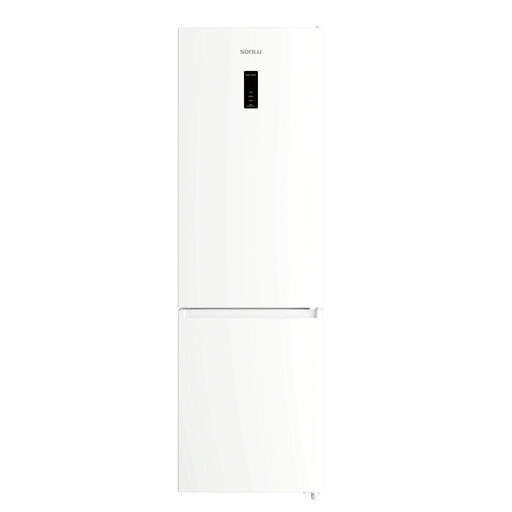 Image unavailable
Worth a look if you need refrigeration and freezer storage in an appliance advertised as 60 cm wide.
252 L fridge and 103 L freezer; energy rating E. Check the height, depth and clearance requirements in the instructions before choosing this format.
 Image unavailable
Worth considering if space is limited and the stated capacity suits your needs.
Advertised width of 54 cm; 153 L fridge and 74 L freezer; energy rating E. Low Frost technology is said to reduce frost build-up, not eliminate it. Check the height and required clearances too.
 Image unavailable
Worth a look if you’re looking for a 444 L appliance for keeping food fresh and have a suitable space for it.
The product name states that it has frost-free technology and an energy rating of E. Check its full dimensions and ventilation clearances before deciding.
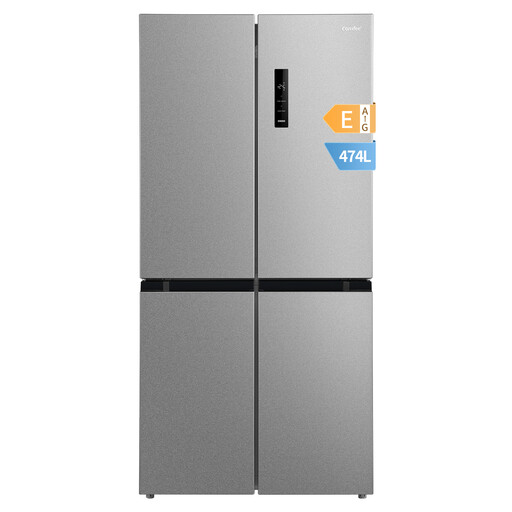 Image unavailable
Worth considering if you’re looking for an advertised capacity of 474 L for keeping food fresh.
Energy rating E. Before ordering this four-door model, check the dimensions, door opening, ventilation and delivery route.
Start with appliances that provide an everyday function your home is missing: keeping food fresh, preparing meals or doing the laundry. What comes first depends on which appliances are already there and whether you have access to shared facilities. According to ADEME, a fridge runs continuously, so it’s worth prioritising if you need to store food and don’t have one.
Measure the width, height and depth of the space, then compare them with the installation diagram for the exact model. Also check the doors, corridors, turns and stairs along the delivery route.
No. The model also needs to be connected to a suitable water supply, waste outlet and electrical supply. Read the instructions and have the existing installation checked if changes are needed. Don’t assume this work is included in the installation service.
For a category covered by the scheme, compare the energy labels of appliances suited to the same use. The European Commission’s EPREL database then lets you check the declared features of the relevant models. Depending on the category, the label may also provide information about noise or water consumption.
No. In France, according to the ministry responsible for ecology, the durability index replaced the repairability index for washing machines on 8 April 2025, as part of a phased roll-out by category. Its score out of 10 can help you compare washing machines suited to your home, but it can’t tell you on its own whether a model will fit or work there.