Which needs should you prioritise?
Start with the functions you’ll need as soon as you move in, then check whether your home can actually accommodate the appliances you’re considering. Whether you live in a flat or a house doesn’t replace the need to assess the space, existing appliances and your habits.
| Need |
What to check |
Who this applies to |
| Food storage and cooking |
For a fridge, compare its capacity and dimensions with your shopping habits and the space available. For cooking, check the installation type and your home’s technical requirements. |
I want to store food and prepare meals as soon as I move in, without relying on somewhere else. Around 36% of consumers prioritise this need. |
| Laundry |
Check that the capacity suits your washing, that you have enough space, and review the water and noise information on the label. ADEME says that a 7 kg capacity is enough most of the time, but you should still assess your own needs. |
Without a utility room or another convenient laundry option, I need to do my washing regularly at home. Around 29% of consumers prioritise this. |
| Fit for your home |
Measure the space and access routes; identify whether you need a freestanding or integrated appliance. For relevant appliances, also check the existing drainage, pipes and ventilation. |
With limited space, I first need to make sure the appliance can be installed and used without getting in the way. Around 21% of consumers prioritise this. |
| How long you’ll use it and what can wait |
Assess the condition of any appliance you’re keeping or buying second-hand, and check the seller’s status. If you’re buying a new washing machine covered by the scheme, also check its durability index. |
If an existing appliance can still meet my needs, I’d rather decide what needs replacing and what can wait. Around 14% of consumers prioritise this. |
Appliances to consider on Joybuy
These appliances suit different stages of equipping your home: sorting out refrigeration and cooking, or adding a countertop dishwasher if your habits and available space make it worthwhile. Check your home’s specific requirements before choosing a size.
 Image unavailable
CHiQ JR227LSE, 227 L silver fridge freezer
Consider this if you need chilled and frozen food storage as soon as you move in. The product details list 153 L of fridge space and 74 L of freezer space, a width of 54 cm, a reversible door, Low Frost technology and an E energy rating.
Before deciding where to put it, check its height, the clearance needed for ventilation, annual energy consumption and noise level.
View on Joybuy
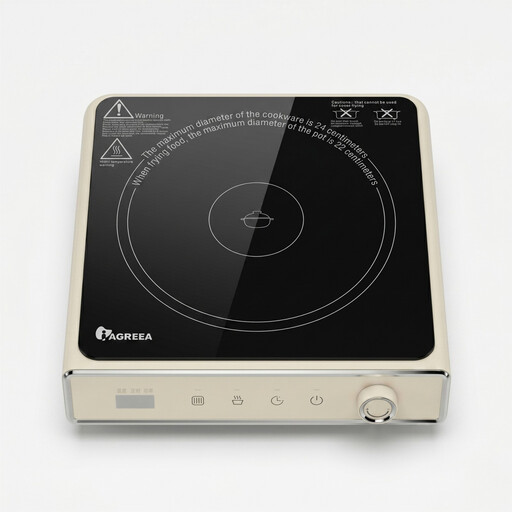 Image unavailable
IAGREEA DF200-DTL2520, 2000 W portable ceramic hob
This single-zone hob may suit your cooking needs if your home doesn’t have a built-in hob. The product title lists a power output of 2000 W and eight temperature and power settings.
A single zone may limit how many dishes you can prepare at once. Check the required power supply, as well as the timer and automatic shut-off functions, in the model documentation.
View on Joybuy
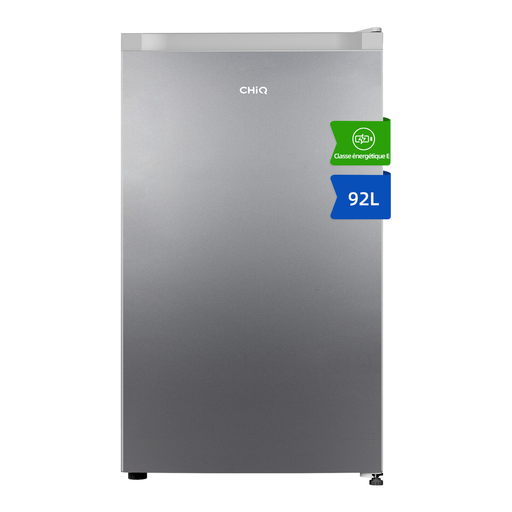 Image unavailable
CHiQ JR92DSE, 92 L silver compact fridge
This model may suit you if you only need a small amount of chilled storage. Its product details list a 92 L capacity, a width of 47 cm, a reversible door and an E energy rating.
Consider whether this capacity is enough as your household’s only fridge. Also check the height, depth, ventilation requirements, annual energy consumption and noise level.
View on Joybuy
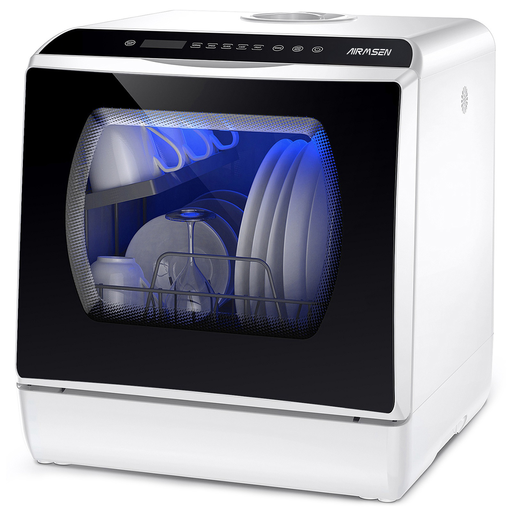 Image unavailable
AIRMSEN, countertop dishwasher with 5 L tank
Consider this after sorting out refrigeration and cooking, if having a dishwasher at home is worth the space it takes up. The product title lists a built-in 5 L tank and 5+1 wash cycles.
Even when using the tank, you’ll still need a way to drain the wastewater. Check the space available, power supply, water connection requirements and noise level before buying.
View on Joybuy
Frequently asked questions
Which appliances should you have from the first few days in a new home?
Make sure you have a way to store food and cook, then consider a washing machine if you don’t have another suitable laundry option. The ADEME and EDF R&D study shows that these categories are common in French households, but whether you need to buy them straight away depends on what’s already there and how you use your home.
Do you need a different appliance list for a flat and a house?
No. The type of home alone doesn’t determine what you need. Instead, check the space, access routes, installation type and noise level, then look at the technical requirements for each appliance. Qualitel highlights the importance of ventilation and pipes in the kitchen.
What’s the difference between a second-hand appliance and a refurbished one?
According to the French Ministry of the Economy, a refurbished appliance is a second-hand item whose functions have been tested and which has been repaired or restored if necessary. To understand what recourse you have if there’s a fault, also check who’s selling it: the ministry distinguishes between sales by a business and private sales when it comes to the statutory guarantee of conformity.
Do all household appliances display a durability index?
No. The French ministry responsible for the environment says that, in France, the index applies to certain products, including washing machines, from 8 April 2025. Don’t assume it appears on every category. For other appliances, check the information that applies to them, such as the energy label where available.
How can you compare two fridges without looking only at their energy rating?
Compare models that are the right type and size for the same need. The European Commission says that a fridge’s label also shows its annual energy consumption, storage capacity and noise emissions. Compare these details with the space available and how close the fridge will be to your living areas.


