If you make several espressos every day, a bean-to-cup machine could suit your household if you want to choose your coffee while automating the brewing process. Bear in mind, though, that it will take up more space, make noise while grinding and need more maintenance. Capsule machines offer a simple, compact option; soft pod machines are better suited if you’re happy with a longer coffee, while a portafilter gives you more control over the brewing process.
Which approach is right for you?
How often you make espressos matters, but the space you have and the steps you want to take each day will also guide your choice.
Households making several espressos a day
A bean-to-cup machine is worth considering if you want to choose your beans and make drinks without filling a portafilter for every cup. Que Choisir recommends this type of machine in particular for coffee enthusiasts and heavy coffee drinkers. However, check how much space it needs and what maintenance it requires.
People short on space
A capsule or soft pod machine can make brewing easier in a small kitchen. Before choosing between the two systems, check the machine’s dimensions, which coffee formats it accepts and the type of drink it makes.
Coffee lovers who enjoy the brewing process
A portafilter is for anyone who wants to take a more hands-on role in making their espresso. Compare how easy it is to access the settings, handle the filter and clean the model you’re considering.
What should you check before choosing?
Start with the coffee you want to drink, then consider how each system fits your daily routine and available space.
| Priority |
What to check |
Think about your needs |
| Coffee format |
Check whether the machine takes beans, ground coffee, capsules or soft pods. For capsule machines, check exactly which formats are compatible. |
I prefer to choose my own beans, or I’d like to use a pre-measured dose without measuring coffee for every cup. |
| Daily use |
Compare the steps involved in making several cups: filling the tanks, starting a pre-set drink, or preparing and emptying a portafilter. |
Several people in my household drink espresso one after another; I want to know which steps I’ll need to repeat between cups. |
| Space and noise |
Measure the space, including the room needed to open lids and remove tanks. If you’re considering a grinder, check the noise measurements for the model. |
In an open-plan kitchen or beneath a wall cabinet, access to the machine and grinding noise matter as much as its dimensions when closed. |
| Drinks you want |
Check which drinks the machine actually makes and what settings are available. If you want frothed milk, look at the system provided and how to clean it. |
I mostly drink short espressos, or my household likes a mix of longer coffees and milk-based drinks. |
| Maintenance |
Check how easy it is to access the coffee grounds container, drip tray and brewing unit, where fitted. Also read the model’s rinsing and descaling instructions. |
I’m interested in automated brewing, but I want to be able to carry out regular cleaning easily where the machine will sit. |
Pitfalls to avoid
-
Assuming a soft pod makes a short espresso
A pre-measured dose doesn’t, by itself, determine the style of coffee you’ll get. Soft pod systems and machines designed for short espressos don’t necessarily meet the same needs.
If you’re after a short, strong espresso, check the type of machine and look for a test of the drink it makes, rather than relying on the word ‘espresso’ alone.
-
Measuring a bean-to-cup machine only when it’s closed
Que Choisir points out that a grinder takes up more space and makes more noise than a capsule system. Filling it and cleaning it also require access to several parts.
Measure the space needed to open the lids, then check access to the containers and read the noise test results for the model you’re considering.
-
Assuming all capsules are recycled in the same way
Que Choisir notes that recycling instructions for capsules and pods vary and can sometimes be difficult to interpret. The material and local collection options affect what you need to do.
Read the packaging instructions and check your council’s guidance for the specific product you plan to use.
A few brands to consider
A brand may offer several types of machine, so compare the individual model and its brewing method rather than making assumptions about the whole range.
De’Longhi
The brand is included here as one to consider if you’re looking for an automatic grinder machine.
- An Autentica grinder model features in the machine selection below.
- Consider the space it takes up, the noise it makes and how easy it is to access parts for maintenance on the model you choose.
Philips
Philips offers several brewing methods, including Senseo pods and automatic grinder machines.
- This range gives you the chance to compare different brewing routines from one brand.
- Don’t choose a Senseo pod machine or a Philips grinder based on the brand’s reputation alone: check the drinks and maintenance requirements of each machine.
KitchenAid
Les Numériques includes the KF4 automatic grinder in its selection of coffee machines.
- The KF4 is a specific model to consider if you’re looking at automatic grinder machines.
- Features or findings relating to the KF4 don’t necessarily apply to other KitchenAid machines.
Cuisinart
Cuisinart presents the EM550E as an automatic grinder machine that makes several drinks.
- The Joybuy France product page for the EM550E lists four coffee options.
- The number of drinks alone doesn’t tell you how noisy the grinder is or how much cleaning is involved.
Machines for different needs
These Joybuy options let you compare bean-to-cup machines, a portafilter machine and a capsule machine, depending on your available space and preferred brewing routine.
 Image unavailable
Philips 2200 Series EP2230/10 LatteGo with grinder
For a household that wants to make espresso regularly from beans, this model combines a grinder with the LatteGo system. Check how much room you’ll need to fill it and read the cleaning instructions before deciding where to put it in your kitchen.
View on Joybuy
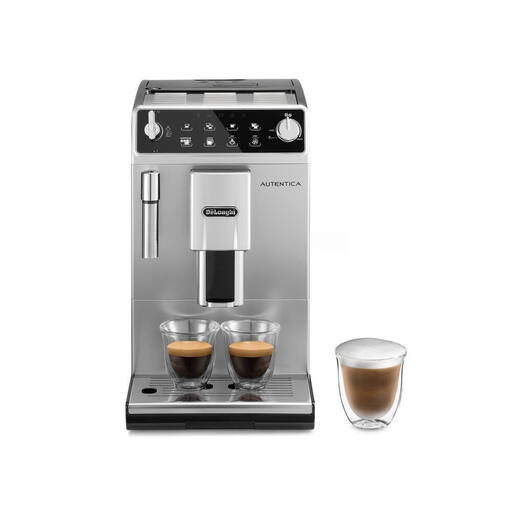 Image unavailable
Grey De’Longhi Autentica ETAM29.510.SB with grinder
This automatic machine with grinder is designed for making coffee from beans. If you plan to use it frequently, pay particular attention to how easily you can access the parts that need filling and cleaning, and how much space you’ll need around the machine.
View on Joybuy
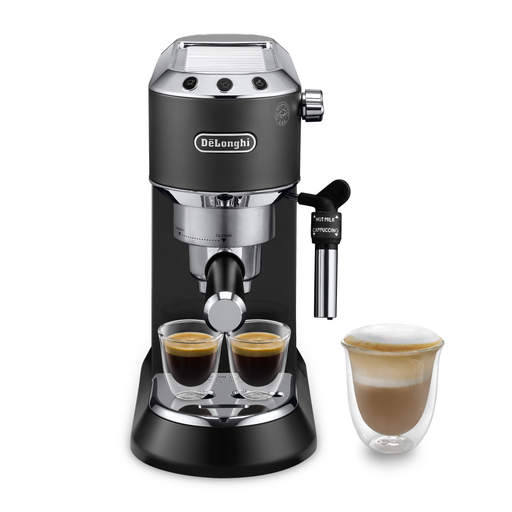 Image unavailable
Black De’Longhi Dedica Style EC685.BK with portafilter
A portafilter machine is a good choice if you want to be involved in making your coffee rather than simply starting a fully automated drink. The product title states a pressure of 15 bar; check the tank capacity on the model’s product page before choosing, as the information provided on this point varies.
View on Joybuy
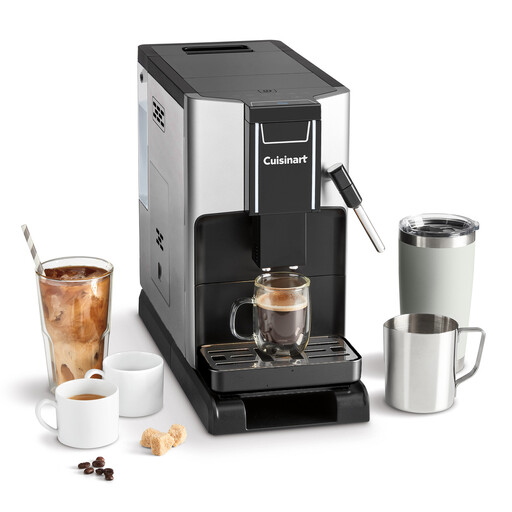 Image unavailable
Cuisinart EM550E automatic machine with grinder
If you want to enjoy a variety of drinks while using beans, the Joybuy France product page for the EM550E lists four coffee options. As well as the advertised descaling programme, check what cleaning steps this model requires.
View on Joybuy
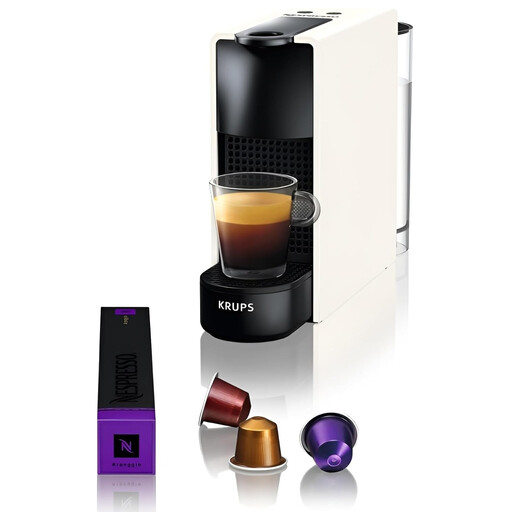 Image unavailable
White KRUPS Nespresso Essenza Mini
This capsule machine is for households that prefer to use pre-measured doses. The product title states that it has a 0,6 L tank and a power rating of 1200 W; check exactly which capsule formats are compatible and how often you’d need to refill it for your needs.
View on Joybuy
Frequently asked questions
Is a soft pod machine suitable for short espresso?
Not necessarily: the dose format doesn’t guarantee the style of coffee you’re looking for. If you want a short, strong espresso, check the brewing system and look for a test of the drink made by the model you’re considering.
What needs maintaining on a machine with a grinder?
Empty and clean the coffee grounds container and drip tray, then follow the model’s instructions for the brewing unit and descaling. If you make milk-based drinks, also check how to clean the milk system after use.
Can all capsules and pods go in food waste?
No. Que Choisir notes that instructions vary depending on the products and local collection options. Read the guidance for the product you’re using and check your council’s instructions before throwing it away.
Does a new machine bought from a retailer in France come with a legal guarantee?
Yes. In France, the Ministry of the Economy states that the statutory legal guarantee of conformity is mandatory for new goods sold by a retailer to an individual. It covers the conformity of the product and shouldn’t be confused with any additional commercial guarantee that may be offered.


