Households making one or two cups at a time
If you want to keep everyday effort to a minimum, compare capsule and soft pod machines. Check how many cups you can make at once, the drink sizes available and which consumables the machine accepts.


For a quick cup with minimal effort, compare capsule and soft pod machines. Choose a portafilter machine if you want more control over the preparation, or a bean-to-cup machine if you want to start with whole beans and let the machine do the work. Also check the drinks on offer, compatible consumables and cleaning requirements. According to Que Choisir, a bean-to-cup espresso machine takes up more space and makes more noise than a capsule system.
If you want to keep everyday effort to a minimum, compare capsule and soft pod machines. Check how many cups you can make at once, the drink sizes available and which consumables the machine accepts.
A portafilter machine lets you handle filling, tamping and fitting the ground coffee, as De’Longhi explains for its manual machines. You’ll also need to clean it after each use.
A bean-to-cup espresso machine automates the process, using freshly ground beans. Before finding a place for one in your kitchen, consider the space it needs, how noisy it is and how much upkeep it requires. Que Choisir highlights the first two as drawbacks compared with a capsule system.
Que Choisir identifies four types of machine: soft pod, capsule, portafilter and bean-to-cup. Start with your daily routine and the drinks you make, then check the requirements of the model you’re considering.
| What to consider | What to check | How I use it |
|---|---|---|
| Number of cups | Check whether it can make one or two cups, then consider the steps involved in serving several coffees in a row. | I often serve two people, so I’m looking for a machine that suits this routine. |
| Drink sizes and compatibility | Check the drink sizes available and the exact capsule or pod format. Nespresso, for example, has separate Original and Vertuo systems. | I also drink long coffees, so the machine’s stated drink sizes need to match the cups I actually make. |
| Preparation steps | Compare filling and tamping a portafilter, as described by De’Longhi, with using the controls on an automatic machine. Check the steps involved for the specific model. | I enjoy adjusting the preparation myself, or I’d rather keep the steps before each cup to a minimum. |
| Space and noise | Measure the width, depth and height, and allow enough room to access the reservoir and trays. According to Que Choisir, a bean-to-cup espresso machine is bulkier and noisier than a capsule system. | My worktop is narrow, or noise matters when I make coffee early in the morning. |
| Cleaning and maintenance | Check the manual for cleaning and descaling instructions. De’Longhi notes that how often a bean-to-cup machine needs descaling depends, among other things, on water hardness. | I want to be able to keep up with these tasks without discovering after purchase that the process is impractical for me. |
| Consumables and parts | Find out which consumables and cleaning products are compatible, and check the part numbers for removable components. A part listed for a range may not fit every model in that range. | I’d rather know in advance which system I’ll use every day and what I’ll need to replace or maintain. |
Nespresso describes Original and Vertuo as two separate systems, each with different drink sizes. So the brand name alone isn’t enough to tell you whether a capsule is compatible.
Check which system the machine uses and confirm capsule compatibility before use.
According to Que Choisir, a bean-to-cup espresso machine takes up more space and makes more noise than a capsule system. Even if a machine fits on your worktop, it may still be awkward to use if its trays are difficult to remove.
Measure the available space, the clearance beneath your cupboards and the room needed to fill the reservoir and empty the trays. If noise is a deciding factor, look for a demonstration of the model you’re considering.
Que Choisir says that poor maintenance can contribute to early faults. For bean-to-cup machines, De’Longhi notes that the need for descaling varies, among other things, with water hardness.
Check the manual for your chosen model to find out about alerts, compatible products and cleaning steps to build into your routine.
Maintenance cycles take time and may require products designed for your model.
The brand shows the choice between two capsule systems. According to Nespresso France, Original offers drinks from espresso to lungo, while Vertuo ranges from espresso to mug-sized coffees.
The range is an example of soft pod machines. For the SENSEO Switch model featured on its French website, Philips says you can make one or two cups in under a minute.
The French range includes manual portafilter machines and automatic bean-to-cup espresso machines. De’Longhi explains how users take a hands-on approach with the former, while the latter make coffee from whole beans.
These models represent the four ways of making everyday coffee covered here: bean-to-cup, soft pod, capsule and portafilter. Compare each model based on the space you have, how hands-on you want to be and the drinks you make.
 Image unavailable
Worth considering if you want to make your everyday coffee from whole beans using a grinder machine. Check the space it needs, the controls for your usual drinks and the maintenance instructions for this model.
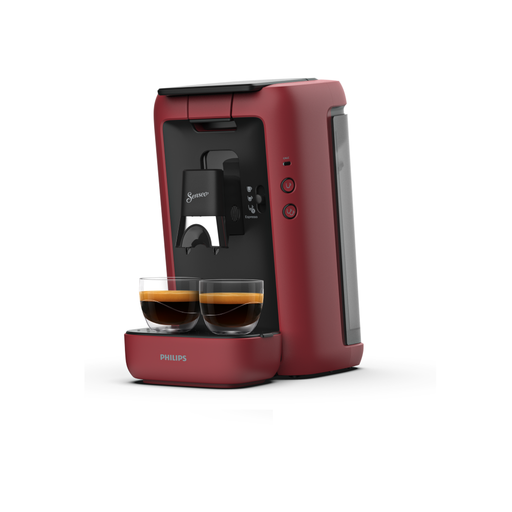 Image unavailable
For everyday coffee made with soft pods, check which pods the machine accepts and whether it can make one or two cups to suit your needs. Also read the model’s descaling instructions.
 Image unavailable
This grinder machine is designed for people who want to make coffee from whole beans with minimal preparation. Check its dimensions, whether the noise level is acceptable for your home and the maintenance required for this model. Milk-based drinks require you to use the steam wand.
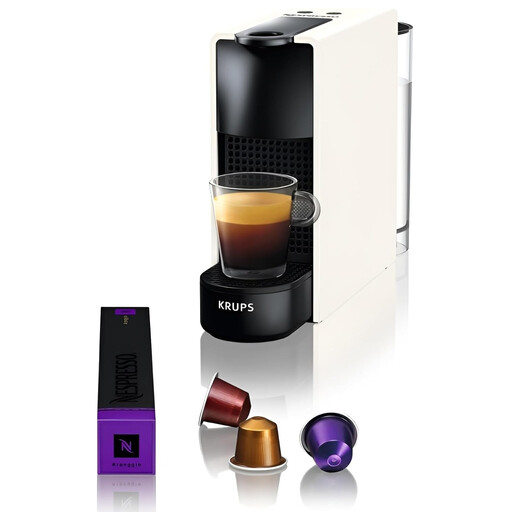 Image unavailable
Worth a look if you prefer coffee with minimal effort and have limited space. Before choosing your capsules, confirm which system this model accepts and what cup sizes it offers.
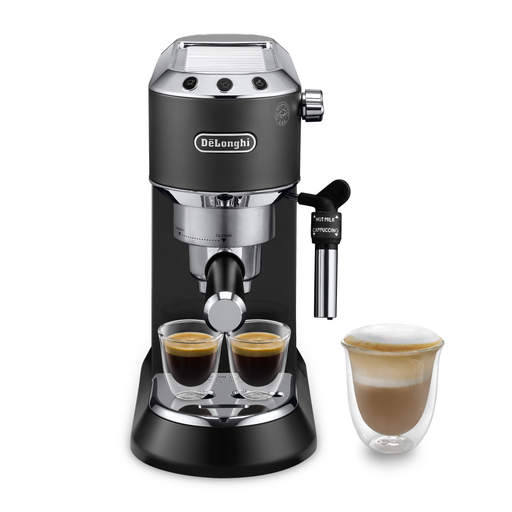 Image unavailable
This portafilter model is a good choice if you want to be involved in the preparation and don’t mind cleaning the parts afterwards. Check how much room you’ll need to use the portafilter, and confirm the reservoir capacity for this model before choosing.
No. Check which system the machine uses and the stated capsule compatibility. Nespresso France, for example, distinguishes between Original, with drinks ranging from espresso to lungo, and Vertuo, which also offers a mug size.
Yes, including descaling in line with the model’s instructions. De’Longhi says how often it’s needed depends, among other things, on water hardness. Check your machine’s manual for the correct procedure.
Not necessarily. Philips lists parts and accessories for some SENSEO machines, but you should check the exact machine model against the part number before choosing.
Yes, when a business sells the machine to a private individual in France. The Ministry of the Economy explains that this mandatory guarantee covers new, second-hand and refurbished goods. Keep your proof of purchase and the product description in case you need to report a fault to the seller.