If you’ll be making several coffees throughout the working day, start by choosing a machine based on the steps you’re happy to repeat: capsules or soft pods for simple preparation, a portafilter if you want to be involved in making every cup, or an automatic bean-to-cup machine if you want to use whole beans without handling a portafilter. Then check the specific model’s water and coffee capacities, cleaning requirements, grinding noise and the availability of consumables. Automatic preparation doesn’t mean there’s no maintenance.
Who is each option for?
The right type of machine largely depends on how much time you want to spend making each cup and what you’re prepared to do between breaks.
For anyone who wants to keep things simple
You make several coffees throughout the day but don’t want to adjust settings or measure out coffee for every cup. Capsules, soft pods and automatic bean-to-cup machines each meet this need in different ways, so check the capacities and cleaning requirements of the model you’re considering.
For anyone keeping an eye on running costs
If you’re making coffee at home throughout the day, compare the cost of the coffee or pods, as well as descaling products and any water filters. Before choosing a system, check that consumables are compatible and easy to get hold of.
For anyone who prefers beans or hands-on preparation
You’re happy to take on a few extra adjustments and cleaning tasks to use a grinder or portafilter. If you work near the machine or are often on video calls, also check how noisy the specific model is when grinding.
What sets the machines apart?
If you’ll be making several coffees during the working day, start with the preparation method, then consider what it means for your breaks, maintenance and regular purchases.
Capsules
Worth considering: if you want to make a cup with minimal effort during a short break.
Bear in mind: you’ll need to buy capsules that are compatible with your chosen machine.
Soft pods
Worth considering: if you prefer a simple preparation method that uses this type of pod.
Bear in mind: you’ll need to check which exact pod formats the machine accepts and which pods are available.
Portafilter
Worth considering: if you want to measure out the coffee and be involved in making every cup.
Bear in mind: you’ll need to do more and clean the filter after use.
Automatic bean-to-cup
Worth considering: if you regularly want to make coffee from whole beans without handling a portafilter every time.
Bear in mind: these machines are generally bulkier than pod machines, and you’ll need to consider grinding noise and component maintenance.
| What to consider |
What to check before buying |
Who is it for? |
| Speed and simplicity |
The type of coffee it takes and the steps involved before and after each cup. |
When my breaks are short, I want to make a coffee without having to adjust several settings. Around 29% of consumers would put simplicity above all else. |
| Cost and availability |
The current cost of coffee or compatible pods, and the cleaning products required. |
When I have several cups a day, I want to be able to find the right consumables without overlooking ongoing costs. This would be the main priority for around 21% of consumers. |
| Control over preparation |
What you can do with the portafilter and whether the specific model comes with the accessories you want. |
I prefer to measure out the coffee and make each cup myself, even if it takes longer. This would be the top priority for around 14% of consumers. |
| Whole beans and frequent use |
The capacity of the tanks and trays, grinding noise and cleaning tasks. |
When making several coffees from whole beans, I want to avoid handling a portafilter while knowing when the machine needs refilling and maintenance. Nearly 36% of consumers would prioritise this combination of needs. |
What not to overlook
-
Choosing based only on the advertised pressure or coffee format
These details don’t tell you about refilling, cleaning or noise during the working day. UFC-Que Choisir, for example, considers ease of use and noise levels in its testing protocols.
First compare the everyday steps, capacity and overall size. If noise is a deciding factor, then look for a test of the exact model.
-
Assuming automatic cleaning means no maintenance
A cleaning programme doesn’t necessarily replace emptying the trays, maintaining milk-related parts or descaling the machine.
Check the manual for the model to find out which parts need cleaning, which products are suitable and how to descale it.
Descaling products and, depending on the machine, water filter cartridges mean extra purchases and regular maintenance.
-
Confusing what’s available now with long-term availability
Choosing a capsule, pod or maintenance part ties you to products that are compatible with your machine.
Before buying, check where you can get the consumables you want, and ask the manufacturer or seller which maintenance parts are suitable for your chosen model.
Brands to compare
These brands represent different types of machines. Check the features and services available for the specific model you’re interested in.
Nespresso
A brand to consider if you’re looking at capsule machines.
- Nespresso says it has more than 2,000 used capsule collection points in France.
- Check which capsule system the machine accepts and which products you want to buy.
Senseo
A brand to consider for machines that use soft pods.
- The Senseo France catalogue features several pod varieties, some available in packs of up to 72.
- Check which format your chosen model accepts and which pods suit you.
De’Longhi
A brand with both portafilter and bean-to-cup machines.
- De’Longhi France features manual ranges and provides product manuals.
- An integrated grinder, settings and steam wand depend on the model, so check its product details and manual.
Philips
A brand to consider for automatic bean-to-cup machines.
- Philips France support lists maintenance instructions and parts information for the 5400 Series, among other products.
- For other series, check the maintenance requirements and parts for the specific model separately.
Machines to consider on Joybuy
These models cover capsules, portafilter machines and automatic bean-to-cup machines. Compare each one with your daily routine and the consumables it uses. If you’re considering a soft pod machine, use the criteria above and don’t assume that a capsule machine will accept this format.
 Image unavailable
Philips EP2230/10 Series 2200 LatteGo
Worth considering if you regularly want to make coffee with a bean-to-cup machine rather than handling a portafilter for every cup. Compare the grinding noise, overall size and maintenance tasks with your workspace.
View on Joybuy
 Image unavailable
HiBREW H1C 6-in-1, black
Worth considering if you prefer capsule coffee for your breaks. Before choosing this version, make sure the coffee formats you plan to use are compatible and easy to get hold of.
View on Joybuy
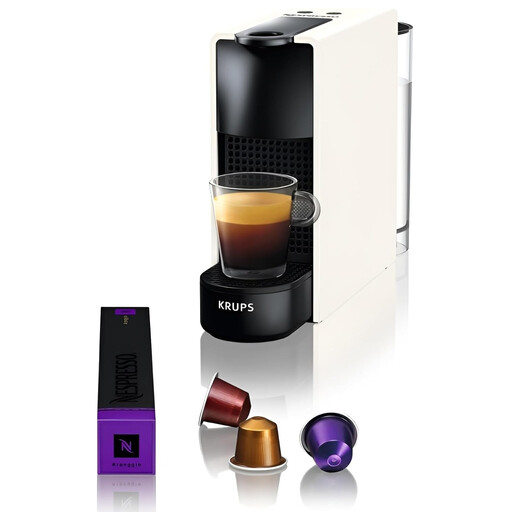 Image unavailable
KRUPS Nespresso Essenza Mini, white, 0.6 L
Worth considering if you’re looking for a capsule machine that takes little preparation during breaks. Its tank capacity is listed as 0.6 L and its power as 1 200 W. Consider how often you’ll need to refill it during the day, and check that it takes the capsules you have in mind.
View on Joybuy
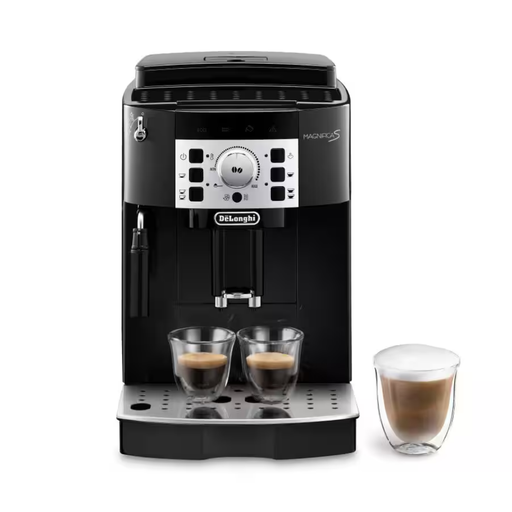 Image unavailable
De’Longhi Magnifica S ECAM22.140.B, black
Worth considering if you want to use whole beans in an automatic machine. If you’ll be making several coffees near your workspace, check the grinding noise, tray capacities and maintenance tasks for this model.
View on Joybuy
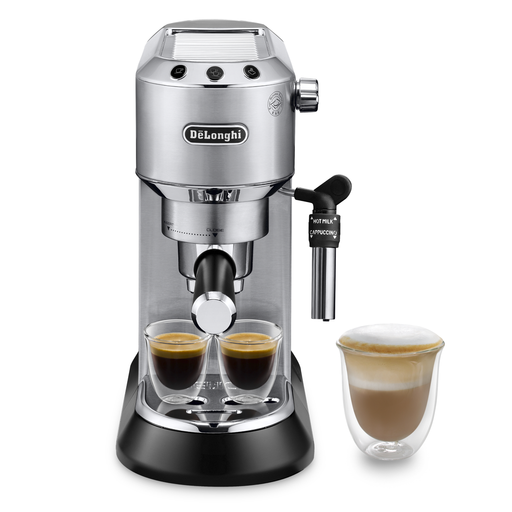 Image unavailable
De’Longhi Dedica Style EC685.M, silver
Worth considering if you want to be involved in making your coffee rather than using a fully automatic cycle. Allow for the steps involved in using a portafilter, and check which coffee formats it accepts and how to clean the accessories.
View on Joybuy
Frequently asked questions
Does grinder noise matter when you work from home?
Yes, particularly if the machine is near your workspace or you use it during calls. UFC-Que Choisir assesses noise and vibration when grinding, as well as during rinsing and dispensing, so look for a test of the model you’re interested in.
Is automatic cleaning enough for a machine with a grinder?
No, it doesn’t necessarily mean you can skip emptying the trays, cleaning certain parts or descaling the machine. Check the model’s manual for the manual steps and products required.
How often should you descale an espresso machine?
Follow your machine’s indicator and manual, as the frequency depends on factors including your water and how often you use it. UFC-Que Choisir suggests descaling every two to three months on average. Use the process and products recommended for your model.
What warranty applies to a machine bought in France?
The legal guarantee of conformity applies when an individual buys a machine from a professional seller in France. According to the Ministry of the Economy, it covers new, second-hand and refurbished goods, and applies to faults that existed when the goods were delivered. Keep your proof of purchase and contact the seller to make a claim.


