If you make several espressos a day, start by choosing between the convenience of a ready-to-use portion, the hands-on approach of a portafilter machine and the automation of a bean-to-cup machine. Que Choisir describes capsules and pods as significantly more expensive to use than whole beans and ground coffee. A grinder avoids single-serve portions, but it also needs regular maintenance. Compare the cost per cup with the steps everyone in your household will be happy to repeat each day.
Who is this choice for?
Households keeping an eye on ongoing costs
If you make several coffees a day, the coffee and consumables you buy for each cup are an important part of your decision, not just the machine itself. Que Choisir highlights the cost difference between single-serve portions, whole beans and ground coffee.
Users who want to keep things simple
If several people use the machine, you may prefer a straightforward routine that’s easy to repeat, rather than having to adjust and fill a portafilter for every coffee.
Coffee lovers who want to be involved in the process
If you enjoy choosing your coffee and getting involved in making it, using a portafilter may suit you better than a fully automatic machine. De’Longhi positions its manual machines with this in mind.
How do the different systems compare?
Capsules
Worth considering: if you prioritise ready-to-use portions and minimal effort.
Bear in mind: you’ll need to keep buying compatible capsules and sort them after use.
Soft pods
Worth considering: if you want to make one portion at a time; some models can serve two cups.
Bear in mind: you’ll need a regular supply of pods, adding to the cost of every coffee.
Portafilter
Worth considering: if you want to fill the portafilter and take a more hands-on role in making your coffee.
Bear in mind: each espresso takes more steps, as well as the machine needing maintenance.
Bean grinder
Worth considering: if you want to make coffee automatically from whole beans.
Bear in mind: you’ll need to clean and descale it as directed for your model, and may need to replace filters.
| Consideration | What to check | Who this matters to |
|---|
| Running costs |
Work out how much coffee or how many portions you’ll need per cup, then factor in any filters and cleaning products required for the machine. |
When we make several espressos a day, I want to keep a handle on the purchases we need to make for every cup; around 33% of consumers rank running costs as their main concern. |
| Simplicity and pace |
Check whether your chosen model can make one or two cups, how much effort is involved and how much the water tank holds. |
If different people use the machine one after another, I prefer a routine that’s easy to repeat without lengthy adjustments; for around 25% of consumers, simplicity is the priority. |
| Getting involved in preparation |
For a portafilter machine, check which types of coffee it accepts and what accessories are included; for a grinder, look at the settings available. |
I’m happy to put in more effort for each espresso so I can be involved in making it; around 25% of consumers value this above other considerations. |
| Space and maintenance |
Measure the space available and check you can easily access the water tank; read up on the cleaning and descaling required for the model. |
My machine needs to fit on the worktop without making it difficult to fill or clean; space and maintenance are the main concern for around 17% of consumers. |
What not to overlook
-
Focusing only on the machine, not the coffee you’ll need
When you use a machine regularly, the cost of consumables matters. Que Choisir says capsules and pods cost significantly more than whole beans or ground coffee.
Start with the number of coffees your household makes and compare the consumables each system needs, including for maintenance.
-
Assuming a grinder takes care of its own maintenance
Automatic preparation doesn’t mean there’s no cleaning to do. De’Longhi recommends rinsing the removable brewing unit and descaling its bean-to-cup machines; the water filter may also need replacing.
Check your model’s instructions for the parts to clean, descaling alerts and, if you make milk-based drinks, how to maintain the milk system.
-
Assuming one model’s features apply to the whole range
Senseo says its Original model makes one cup in 30 seconds and two cups in under 60 seconds. These timings don’t apply to every pod machine.
Check the features, dimensions and capacity of the specific model you’re considering.
-
Thinking that sorting capsules means no extra steps after your coffee
ADEME says aluminium and plastic capsules can go in with paper and packaging for recycling, but you’ll still need to store and sort them after use.
If you choose capsules, set aside a convenient place for used ones. If you’d rather avoid single-serve portions, compare ground coffee and whole beans too.
Brands to consider by system
Nespresso
A brand to look at if you prefer capsule-based coffee.
- The French range includes machines and coffee in capsule form.
- Check that the capsules are compatible with your chosen system and factor in the ongoing cost of buying them.
Senseo
A range of soft pod machines for households looking for a simple way to make coffee.
- For its Original model, Senseo says you can make one or two cups and that some parts are dishwasher-safe.
- Check the features, tank and preparation times for each model rather than assuming the Original’s specifications apply to the whole range.
De’Longhi
A brand with both manual portafilter machines and bean-to-cup machines.
- These two types of machine let you choose between a more hands-on approach and automatic preparation from whole beans.
- De’Longhi says its bean-to-cup machines need the removable brewing unit rinsed and the machine descaled, among other maintenance.
Philips
A brand to compare if you’re considering a bean-to-cup machine and want to know more about water management.
- Philips offers the AquaClean filter for compatible machines.
- The filter is still a consumable and doesn’t eliminate descaling altogether; Philips says its guidance depends, among other things, on the drinks made and rinsing cycles.
Machines for these needs on Joybuy
These models let you explore three ways to make several coffees at home: an automatic grinder, a portafilter machine and capsules. Compare the daily routine and consumables for each before you choose.
 Image unavailable
Philips EP2230/10 2200 Series LatteGo glossy black
A bean-to-cup machine to consider if you want to make coffee regularly from whole beans without using a portafilter. Check the cleaning requirements for the brewing group and LatteGo system based on how you use it.
If you plan to use an AquaClean filter, check whether it needs to be bought separately and how often it needs replacing.
View on Joybuy
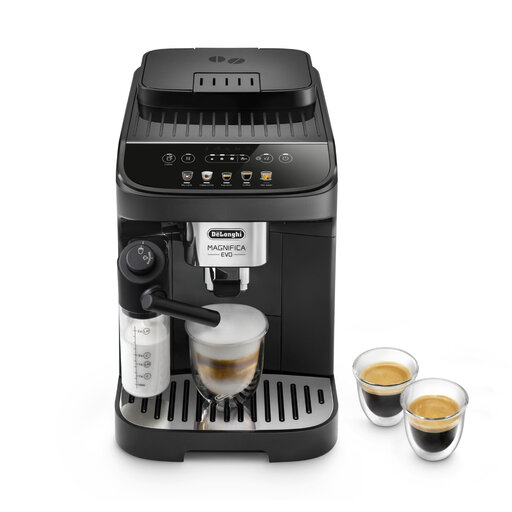 Image unavailable
De’Longhi Magnifica Evo ECAM290.61.B LatteCrema black
This automatic bean-to-cup machine is designed for households that want to keep preparation simple while using whole beans.
If you plan to make milk-based drinks, remember to factor in cleaning the parts involved. Check the dimensions before making space for it on your worktop.
View on Joybuy
 Image unavailable
De’Longhi Magnifica S ECAM22.140.B black
An automatic bean-to-cup machine for households who want to make espresso from whole beans rather than single-serve portions.
For everyday use, check how much space you’ll need and the capacity of the bean hopper. If you plan to use the steam wand, check what cleaning it requires.
View on Joybuy
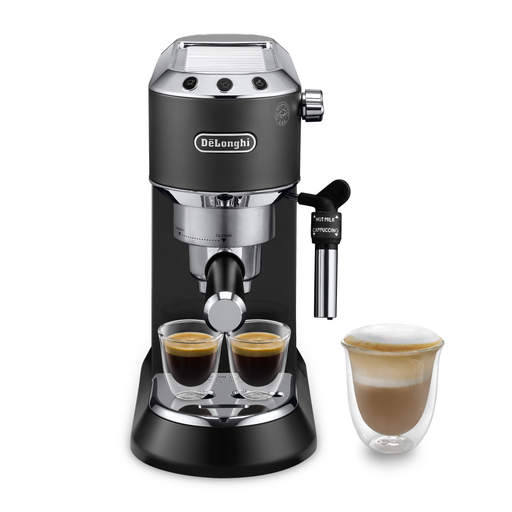 Image unavailable
De’Longhi Dedica Style EC685.BK black
This portafilter machine is a good fit if you want to take a more hands-on role in making each espresso rather than leaving the process to an automatic grinder.
Check the water tank capacity for this version so you can plan how often to refill it. If you use the steam wand, remember to factor in cleaning it.
View on Joybuy
 Image unavailable
Krups Nespresso Essenza Mini white, 0,6 L, 1200 W
A capsule machine to consider if you value single-serve preparation and minimal effort more than using whole beans or ground coffee.
Its 0,6 L tank is worth bearing in mind when several people have coffee every day, as you may need to refill it often. Also check which compatible capsules you want to use.
View on Joybuy
Frequently asked questions
How do you compare two systems if you make several coffees a day?
Work out what each cup will require for your household, then add the filters and cleaning products needed for the models you’re considering. Que Choisir says capsules and pods cost significantly more to use than whole beans and ground coffee; your daily consumption will determine how much this difference matters to your choice.
Does an AquaClean filter mean you never need to descale a Philips bean-to-cup machine?
No, not permanently. Philips’ AquaClean guidance depends on the drinks made and rinsing cycles. For the models covered by its instructions, the brand says descaling is still needed after eight filter cycles. Follow the instructions for your specific machine.
Where can you dispose of used coffee capsules in France?
ADEME says aluminium and plastic capsules can be put in the recycling bin, bag or container with paper and packaging. Check your local authority’s guidance in case it has specific local instructions.
What should you do with a coffee machine at the end of its life?
Take it to a collection point for electrical and electronic equipment rather than putting it in household rubbish. The French ministries responsible for the ecological transition describe a collection and recycling scheme for household equipment; if the machine is still usable, you could also look into having it repaired.


