Households making several coffees a day
You want to keep ongoing costs and refills down without adding extra steps for every cup. UFC-Que Choisir notes that the cost per coffee and ease of use vary between machine types.


If you make several coffees a day, start by considering the overall cost of use and how many steps you’re happy to take for each cup. Capsules keep things simple, soft pods can make two cups, depending on the model, and a portafilter gives you more control. A bean-to-cup machine automates coffee preparation, but it usually takes up more space and makes noise while grinding, as UFC-Que Choisir points out.
You want to keep ongoing costs and refills down without adding extra steps for every cup. UFC-Que Choisir notes that the cost per coffee and ease of use vary between machine types.
You want to serve two coffees without waiting for two cycles in a row. Check that the specific model offers this feature rather than assuming it comes with its machine type.
You’ll need to balance the machine’s footprint, tank capacity and grinding noise, particularly if it’s near your workspace.
Worth considering: if you want pre-measured coffee with few steps, especially when space is limited.
Things to consider: capsule costs add up as you make more cups, and the system needs to match the capsules you buy.
Worth considering: if you want a straightforward brew and, on some models, the option to make two cups at once.
Things to consider: Philips’ two-cup function and stated brewing time apply to the SENSEO Original Plus CSA210/50, not to all soft pod machines.
Worth considering: if you’re happy to measure and handle the coffee for greater control over the brewing process.
Things to consider: the portafilter and any steam wand need cleaning after use.
Worth considering: if you regularly make coffee from whole beans and prefer automated controls.
Things to consider: UFC-Que Choisir generally finds these machines larger and noisier while grinding than capsule systems. The initial cost and maintenance matter too.
| Criteria | What to check before you buy | Who is it for? |
|---|---|---|
| Overall cost of use | Compare the machine, compatible coffee and maintenance costs over the same period and for the same number of cups. | If I make several coffees every day, I want to compare ongoing costs with the price of the machine; around 29% of consumers prioritise long-term cost. |
| How often you take a coffee break | Check whether it can make two cups at once and confirm the tank capacity for the exact model. | When several people want coffee close together, I want to avoid waiting through two cycles; around 23% of consumers prioritise speed of service. |
| Steps per cup | Compare inserting a pod, filling the portafilter and using an automatic machine’s controls. | If I often make a coffee between tasks, I’d rather keep the steps to a minimum for each cup; around 18% of consumers prioritise simplicity. |
| Space and noise | Measure the available space and make sure you can reach the tanks; check a sound test of the model if quiet operation matters. | If the machine needs to sit near my workspace, I consider its dimensions and the noise it makes while grinding; around 18% of consumers prioritise keeping their surroundings quiet. |
| Routine maintenance | Check the manual for descaling and cleaning the trays, brew group and steam wand, where applicable. | If I don’t want extra cleaning after coffee breaks, I check what the specific model requires; around 12% of consumers prioritise low-maintenance options. |
If you make coffee regularly, the coffee format and maintenance supplies also affect the cost of use. UFC-Que Choisir points out that the cost per cup depends, among other things, on the system you choose.
Compare costs over the same period and for the same number of cups, taking into account the consumables that are actually compatible.
The formats aren’t necessarily interchangeable: SENSEO soft pods and ESE pods used with some portafilter machines belong to different systems.
Check the system name and the formats specifically listed as compatible with that model in its manual.
Automatic machines still need regular maintenance. A portafilter and steam wand also mean extra steps after brewing.
Before choosing, check the manual and make sure you can access the parts that need cleaning, as well as the descaling instructions.
A small machine may have a limited tank: UFC-Que Choisir gives a capacity of 0.6 l for the Krups Essenza Mini XN1108 it reviewed. A grinder can also take up a lot of space and be noisy while grinding.
Measure the space, making sure there’s room to access the trays. If quiet operation is essential, look for a sound test of the exact model.
The Original range includes capsule machines such as the Essenza Mini Crème Mat.
SENSEO machines use soft pods; the Original Plus CSA210/50 is one example in this range.
The brand offers portafilter machines and automatic bean-to-cup models, including the Dedica Style and Magnifica Start.
The Solo in silver is one example of an automatic bean-to-cup machine.
The Nespresso Essenza Mini XN1108 is a specific example of a compact Original capsule machine.
This selection includes capsule, soft pod, portafilter and automatic bean-to-cup machines for regular coffee breaks at home.
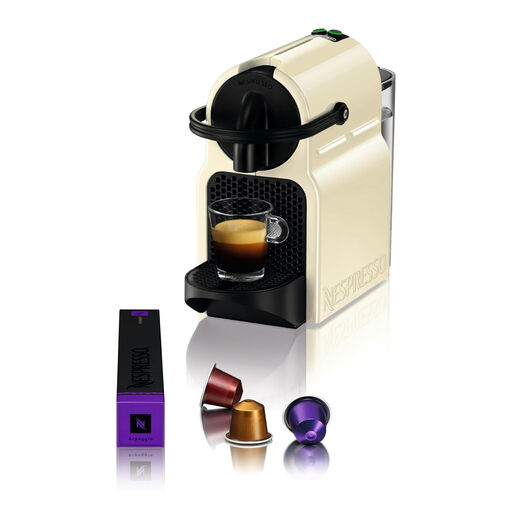 Image unavailable
Its one-touch operation and two cup sizes make it a good choice if you want to keep the steps to a minimum for each coffee.
0.7 l tank and 11-capsule container. Designed for Nespresso Original or compatible capsules according to the product description; check the format before buying.
 Image unavailable
The portafilter and adjustable settings let you control certain aspects of brewing, with more hands-on steps than a fully automatic machine.
Removable 1.3 l tank, with temperature, volume and pre-infusion settings; steam wand for drinks that require it.
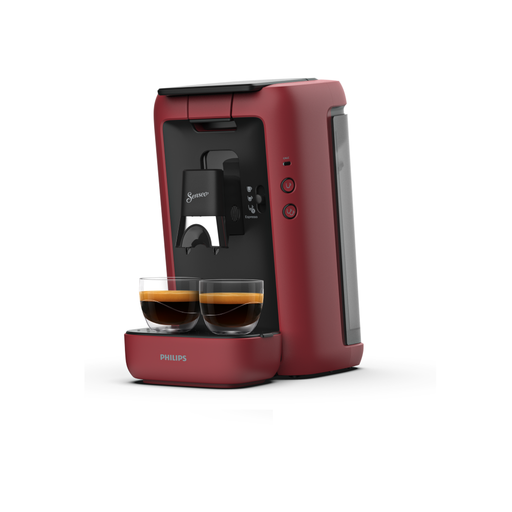 Image unavailable
The option to make two cups at once is handy for sharing a coffee break; this machine uses SENSEO pods.
1.2 l tank, three recipes, Memo function and descaling alert. The product description says it makes up to eight cups per fill and has removable dishwasher-safe parts.
 Image unavailable
The built-in grinder and two-cup function make it suitable for regular coffee made from whole beans, with settings to tailor each cup to your taste.
1.8 l tank, 12 grind settings and three intensity levels. The product description lists a grounds container for 12 pucks, a removable brew group and dishwasher-safe LatteGo parts.
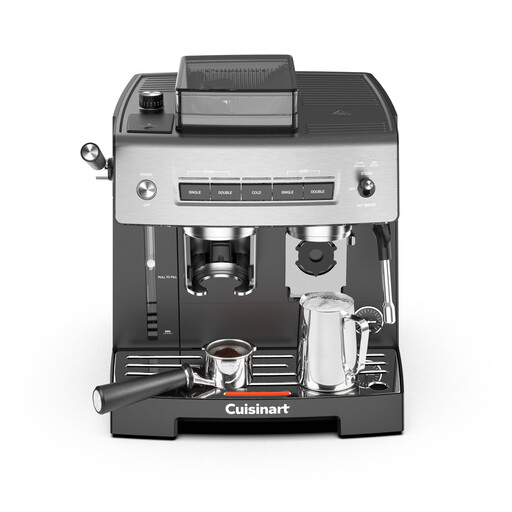 Image unavailable
The built-in grinder and portafilter let you make coffee from whole beans or ground coffee, with handling and cleaning steps to factor in.
2.2 l tank, 16 grind settings, steam wand and cold extraction function according to the product description.
Compare the same number of cups over the same period, adding together the price of the machine, compatible coffee and maintenance products. Coffee made from whole beans may cost less than coffee in pods, but that alone doesn’t determine how long it will take for the machine to pay for itself.
Not necessarily. The SENSEO Original Plus CSA210/50 uses SENSEO pods, while the Dedica Style EC685.M EX:4 is described as compatible with ground coffee and ESE pods. Check the accepted format in the manual for the model you’re considering.
Descale the machine as directed in the manual and clean the parts you use. A portafilter and steam wand mean extra steps after brewing; how often you need to do this depends on the model’s instructions.
In France, when a private individual buys from a professional seller, the legal guarantee of conformity is claimed from the seller, subject to the relevant legal conditions. The DGCCRF says claims must be brought within two years of the goods being delivered; a commercial extended warranty is separate from this guarantee.
ADEME advises putting aluminium or plastic capsules in the recycling bin for paper and packaging. Some brands also offer in-store collection; this guidance doesn’t mean that every capsule put out for recycling is actually recycled.