What should you look for?
For everyday use, start with how you like to make coffee, then check the consumables, space requirements and maintenance involved. Que Choisir distinguishes between capsule machines, soft pod machines, portafilter machines and bean-to-cup machines.
Capsules
Worth considering: if you want to make espresso with minimal effort and have limited space.
Bear in mind: you’ll need to use capsules compatible with your chosen system.
Soft pods
Worth considering: if you want a straightforward way to make coffee, including longer coffees on some machines.
Bear in mind: you’ll need pods that fit your machine, and you’ll have less hands-on control than with a portafilter.
Portafilter
Worth considering: if you want to measure and tamp the coffee yourself, then use a steam wand for milk if your model has one.
Bear in mind: there are more preparation and cleaning steps.
Bean-to-cup
Worth considering: if you often make espresso from beans and want the machine to automate the preparation.
Bear in mind: according to Que Choisir, these machines are generally bulkier and noisier than capsule systems, and need model-specific maintenance.
| What matters |
What to check |
Who is it for? |
| Simplicity and space |
Measure the space, allowing room to access the reservoir and trays; check which capsule or pod formats the machine accepts. |
If you want coffee ready with minimal effort and without crowding your kitchen, simplicity comes before extra settings. Around 33% of consumers put ease of use and space first. |
| Consumables |
Check which coffee is compatible with the machine, along with any filters or cleaning products required for that model. |
For frequent use, I want to know which consumables I’ll need to replace and whether their format suits me. This is the priority for around 25% of consumers. |
| Control and milk-based drinks |
Compare the steps involved in making espresso and, if you make milk-based drinks, check whether the model has a steam wand or a milk system. |
If I often make cappuccinos, choosing between frothing the milk myself and automating that step changes my routine. Around 25% of consumers prioritise this level of control or automation. |
| Maintenance |
Check the descaling instructions and how easy it is to access the trays, steam wand or milk system. |
A machine I use every day needs to be easy to clean as part of my routine; otherwise, maintenance can get put off. Ease of maintenance is the main concern for around 17% of consumers. |
Machines for different needs on Joybuy
This selection includes bean-to-cup machines, a capsule machine and a portafilter machine. Compare how each prepares coffee with what works for your daily routine.
 Image unavailable
Philips EP2230/10 Series 2200 LatteGo
Worth considering if you regularly want to make coffee from beans and use a system for milk-based drinks. Check the space needed to access the parts that require cleaning, and the maintenance steps for the LatteGo system.
View on Joybuy
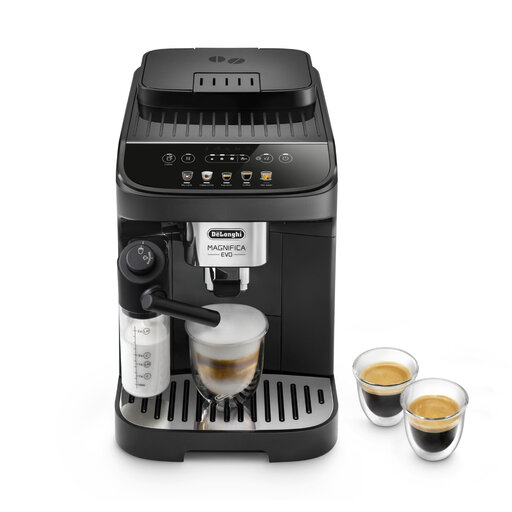 Image unavailable
De’Longhi Magnifica Evo ECAM290.61.B LatteCrema
This automatic bean-to-cup machine is worth a look if you often make milk-based drinks and want to reduce the steps involved. Check the manual for the ECAM290.61.B variant to find out how to clean the milk system after use.
View on Joybuy
 Image unavailable
De’Longhi Magnifica Start ECAM220.21.WW
An option for making coffee from beans if you’re happy to froth milk manually with the steam wand. Remember to clean it after use, and check the dimensions of this variant against your available space.
View on Joybuy
 Image unavailable
KRUPS Nespresso Essenza Mini, 0,6 L, white
Worth a look if you prefer capsule coffee and have limited space. Its name lists a 0,6 L reservoir and 1 200 W power rating; check which capsule format is compatible with this model before choosing it.
View on Joybuy
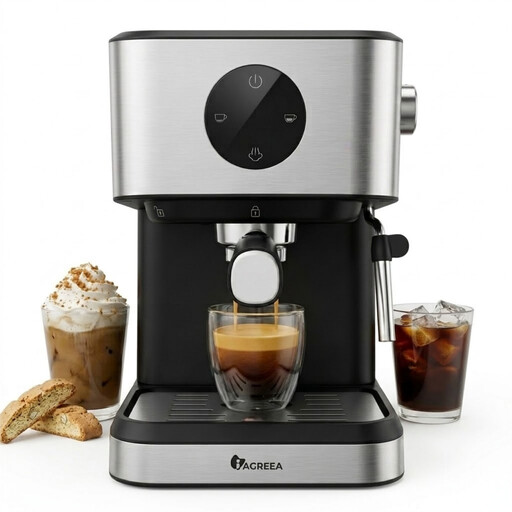 Image unavailable
IAGREEA, 20 bar espresso machine, 50 oz reservoir
Worth considering if you’re happy with the steps involved in using a portafilter and want to froth milk with a steam wand. The name lists a pressure of 20 bar and a 50 oz reservoir; pressure alone doesn’t tell you what the coffee will taste like. Check the space it will take up and the cleaning instructions before buying.
View on Joybuy
Frequently asked questions
Do you need an automatic milk system to make cappuccinos?
No. If you only make them occasionally and are happy to froth the milk yourself and rinse the steam wand, a machine with a steam wand could suit you. For frequent use, compare the preparation steps and milk-system cleaning requirements of the automatic models you’re considering.
Which consumables should you check before choosing a machine?
First, check which types of coffee the model accepts: compatible capsules or pods, beans or ground coffee. Then check its manual for any filters, descaler and accessories you’ll need.
How often should you descale an espresso machine?
Always follow your model’s indicator and instructions first, as how often you use it and the hardness of your water both matter. Que Choisir suggests an average interval of every two to three months, but this doesn’t replace the instructions for your particular machine.
Where should you dispose of used coffee capsules in France?
ADEME advises putting aluminium or plastic capsules in the packaging recycling bin, bag or container. Check what your capsules are made of before throwing them away.
What should you do with an espresso machine at the end of its life?
An espresso machine is electrical equipment. In France, the Ministry for Ecological Transition says it can be taken to a collection point or recycling centre. If it’s still usable, consider having it repaired before replacing it.


