Busy people with limited space
You mainly prepare one coffee at a time and want to minimise both the effort involved and the amount of worktop space used. A pod machine could suit this situation if you are happy with its consumables system.


Choose a pod machine if simplicity and a small footprint are your priorities, provided you are happy with its compatible pod system. Soft coffee pods suit a straightforward routine, while a portafilter machine is better for anyone who wants more control over extraction. A bean-to-cup machine is generally more suitable for regular use if the initial investment, space and maintenance work for you. Compare the cost per cup based on the consumables you will actually buy, rather than assuming one solution is always cheaper.
You mainly prepare one coffee at a time and want to minimise both the effort involved and the amount of worktop space used. A pod machine could suit this situation if you are happy with its consumables system.
You regularly make several coffees and want to compare running costs, waste and coffee choice, not just the price of the machine. Que Choisir states that a bean grinder can reduce the cost per cup compared with pods when used regularly, although the initial investment is higher.
You are happy to measure, tamp and clean the machine to have more control over the coffee you prepare, perhaps with a steam wand for milk-based drinks. In that case, a portafilter machine is worth considering before a fully pre-dosed solution.
Start by choosing the level of involvement that suits you, then check the consumable format, the space available and the maintenance tasks you are prepared to carry out every day.
| Priority | What to check | Your needs |
|---|---|---|
| Simple preparation | Compare the steps required before each cup: a capsule or pre-dosed pod, a grinder’s automatic controls, or manual dosing with a portafilter. Also check which consumable format is compatible. | I want to prepare my daily coffee without measuring or grinding for every cup. A capsule, soft pod or automatic grinder can reduce the amount of handling compared with a manual portafilter. |
| Long-term cost | Calculate the price per cup of the capsules, pods, beans or ground coffee you are genuinely considering. Add descaling products, any filters and your consumption volume. | I do not want to choose based solely on the machine’s advertised price. Que Choisir states that a grinder can have a cost per cup two to three times lower than pod espresso, but the result depends on the beans purchased and how often the machine is used. |
| Waste and recycling | Check the consumable’s material, the Info-tri label and your local authority’s guidance. ADEME states that aluminium or plastic capsules should go in the recycling stream for paper and packaging. | I want to know what to do with used capsules or pods without confusing recycling, industrial composting and home composting. A pod labelled as industrially compostable should not automatically be considered suitable for a garden compost bin. |
| Routine maintenance | Read the instructions for the exact model: descaling, removable parts, coffee grounds container, brewing unit and cleaning of the steam wand or milk system. Check which products are compatible where required. | I need an appliance whose routine cleaning fits easily into my daily routine. Portafilters and grinders in particular require regular attention to parts that come into contact with coffee and, where applicable, milk. |
Que Choisir highlights that capsules can increase running costs, while a grinder requires a higher initial investment that may be offset by a lower cost per cup when used regularly. However, the result depends on the prices you actually pay and the number of coffees prepared.
Compare the price per cup of the products you are prepared to buy, then estimate the cost for your weekly usage before choosing a system.
Allow for the following, depending on the model: consumables, descaler, any filters and replacement accessories.
The system you choose determines which capsules are compatible and which products you will be able to buy. This check also affects how you sort your waste and whether you can access any collection points.
Before buying, check the formats that are genuinely compatible, the products available from your usual retailers or online, and the recycling options accessible near you.
Senseo states that its standard pods are designed to meet the EN 13432 European standard for industrial composting. This does not mean that they are suitable for home composting.
Follow the Info-tri guidance for the product you have bought and your local authority’s rules. Do not dispose of a pod in the countryside.
Que Choisir points out that regular maintenance helps preserve the coffee’s aromas and extend the machine’s service life. A grinder adds tasks involving the grounds container, coffee circuit and, if fitted, the milk system.
Before comparing recipes or settings, consult the model’s instructions: descaling frequency, removable parts, care of the steam wand or milk carafe, and the products required.
Set aside time for cleaning and, depending on the appliance, allow for descaler or a water filter.
A brand associated with pod machines: the Original and Vertuo systems target classic espresso and formats ranging from espresso to mug-sized drinks respectively.
A brand associated with soft coffee pods, available in a range of pack sizes.
A brand with a strong presence in bean-to-cup espresso machines, with ranges including Magnifica, Rivelia, Eletta, Dinamica and PrimaDonna.
A relevant brand for bean-to-cup espresso machines aimed at households looking for automatic recipes, with or without a milk function depending on the model.
Joybuy options for bean-to-cup, soft-pod and portafilter machines, designed for a regular coffee routine at home.
 Image unavailable
For households that want to use coffee beans while also preparing milk-based drinks as part of a regular routine.
The AquaClean filter is listed as compatible but is not included. You should also clean the brewing unit, grounds container and milk system in accordance with the instructions.
 Image unavailable
Worth considering if you want to switch between beans and pre-ground coffee as part of your daily coffee routine.
Check the dimensions before buying. The steam wand, grounds container and coffee circuit require regular cleaning.
 Image unavailable
For anyone who wants to prepare coffee and milk-based drinks at home with customisable volume settings.
Check the instructions for cleaning cycles, removable parts and the consumables required. Allow time to maintain the grounds container, coffee circuit and milk components.
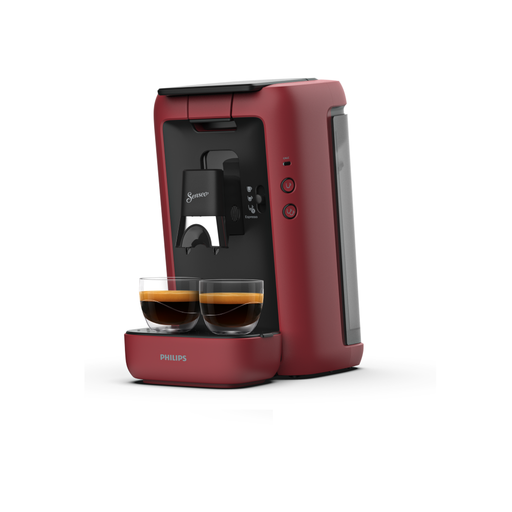 Image unavailable
For a soft-pod routine when you usually prepare one or two cups at a time.
Check the Info-tri label and local guidance for your chosen pods. The product information recommends regular descaling with a compatible product.
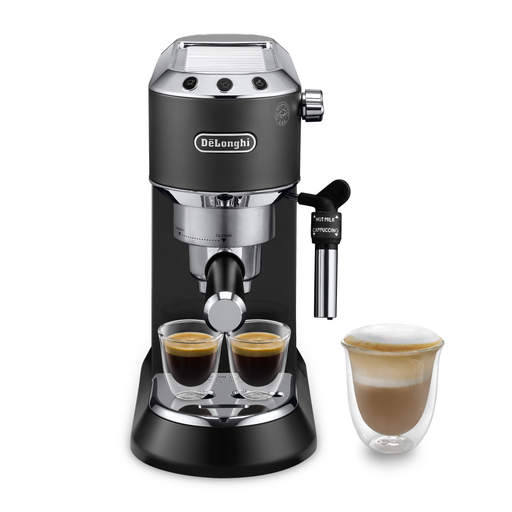 Image unavailable
For anyone who wants to work with ground coffee while looking for a slim machine for the worktop.
This is not a one-touch machine: the portafilter must be filled, emptied and rinsed after use. Clean the steam wand immediately after preparing milk-based drinks.
ADEME advises placing them in the recycling bin, bag or container for paper and packaging. Some brands also offer collection points: Nespresso states that it has more than 2,000 collection points in France for used capsules.
Not automatically. Senseo states that its standard pods are designed to meet the EN 13432 European standard for industrial composting, which does not prove that they are suitable for home composting. Check the pod’s material, the Info-tri label and your local authority’s guidance before putting it in a garden compost bin.
ADEME recommends first looking for a repair, donation or reuse option. A coffee machine can also be taken to an electrical and electronic equipment collection point, including a recycling centre.
According to Nespresso, Original is designed for classic espresso, from ristretto to lungo, while Vertuo covers sizes ranging from espresso to mug. Start by choosing according to the drink sizes you actually prepare, then check the availability and price of capsules compatible with the system selected.