How do the four systems compare?
Start by counting how many coffees you serve, then compare the preparation steps, supplies and maintenance involved for each system at that pace.
| Priority |
What to check |
Your needs |
| Serving pace |
Compare how many cups the machine makes per cycle, the stated time for one and two cups, and the tank capacity against the volume of your drinks. These details vary by model. |
When several people are leaving at the same time, I want to know how many cycles and refills we’ll need. |
| Preparation steps |
Capsules and pods come in individual portions; a portafilter machine requires you to fill and tamp the coffee. With a grinder, check which steps are automated on the specific model. |
I’d rather either make each coffee quickly or take the time to prepare the portafilter myself. |
| Cost of supplies |
Compare capsules, pods, ground coffee or beans per drink of a similar size, then multiply by your usual consumption. Que Choisir says capsules and pods cost considerably more than whole-bean and ground coffee. |
If we make several coffees a day, I want to work out what repeated coffee purchases add up to over the same period. |
| Maintenance |
Check the manual for descaling, rinsing and cleaning instructions for the different parts. With a grinder, also check access to the grounds container and brewing unit; with a portafilter machine, consider how much cleaning is needed after making a drink. |
Everyday tasks should fit the time our household has available, even when several people use the machine. |
| Space and capacity |
Measure the available space and make sure there’s room to fill the tank or remove parts for cleaning. Consider the stated capacity alongside the number and size of the coffees you serve. |
With limited worktop space, I don’t want to choose a size without checking how much room it needs for everyday use. |
| Managing portions |
For capsules, check the material and the recycling guidance from your local council or the brand. For beans, plan how you’ll dispose of the used grounds and coffee packaging. |
I want to know where the daily waste will go, rather than assume that a capsule will automatically be recycled. |
A guide to brands and their ranges
These examples can help you compare systems and specific models, but they don’t cover every machine made by each brand.
Nespresso
Worth considering if your household wants to make individual capsule portions and arrange for them to be collected.
- Nespresso France lists support services and collection points, subject to the applicable conditions in mainland France, Corsica and Monaco.
- On its care page, Nespresso recommends descaling every three months or after around 300 capsules. It takes about 15 minutes. Check the instructions for your chosen machine and find out what collection options are available for its capsules.
Senseo
Soft pod machines are worth considering if you want to serve straightforward individual coffees.
- For the Original and Maestro models mentioned, Senseo says you can make two cups in under a minute. The brand says the Maestro tank holds enough water for 10 cups.
- These capacities and timings don’t apply to the whole range. For some machines without an indicator light, Senseo recommends descaling every three months and up to six times a year.
De’Longhi
A brand with both manual portafilter machines and bean-to-cup espresso machines, offering two different approaches to making coffee.
- De’Longhi describes a manual preparation method where you fill and tamp the portafilter; its grinders automate more of these steps.
- Maintenance varies by model. For the Magnifica range, De’Longhi recommends removing and rinsing the brewing unit, and following the descaling programme.
Machines for making coffee for several people every day
These Joybuy options include bean-to-cup machines, a portafilter machine and a capsule machine. To choose between them, match the way each machine makes coffee to the number of drinks you serve and the tasks your household is happy to do each day.
 Image unavailable
Philips EP2230/10 Series 2200 LatteGo with grinder
This bean-to-cup machine is suited to a household that wants to make coffee from beans rather than individual portions. The EP2230/10 model is called LatteGo; check its product details to see which drinks it makes in one cycle and what maintenance tasks will suit your routine.
View on Joybuy
 Image unavailable
De’Longhi Magnifica Start ECAM220.21.WW, white
This bean-to-cup espresso machine offers an automated way to make coffee for your household every day. If several people will be leaving at the same time, check how quickly it can make a number of drinks in succession and what cleaning the ECAM220.21.WW requires.
View on Joybuy
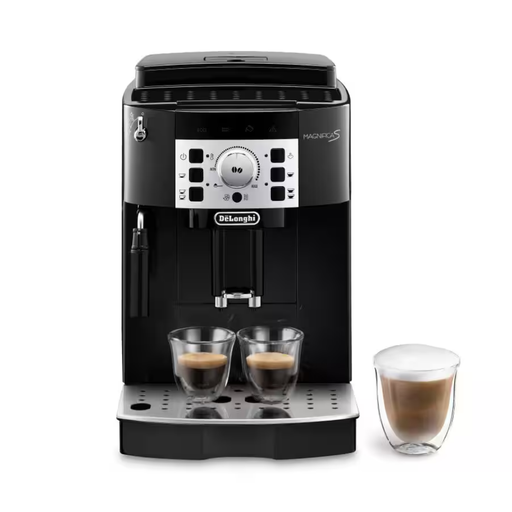 Image unavailable
De’Longhi Magnifica S ECAM22.140.B, black
The Magnifica S ECAM22.140.B is another bean-to-cup option for making coffee from beans. If several people will use the machine one after another, check how long each cycle takes and how easy it is to access the parts that need cleaning.
View on Joybuy
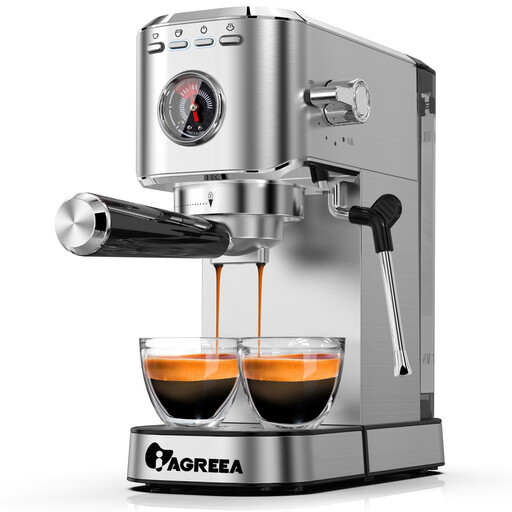 Image unavailable
IAGREEA 20Bar portafilter machine, 1.1 L tank
This portafilter machine is for households happy to get involved in every preparation. Its description lists single and double modes, a pressure gauge, a steam wand and a removable 1.1 L tank. The double mode alone doesn’t confirm that two cups are served at the same time.
View on Joybuy
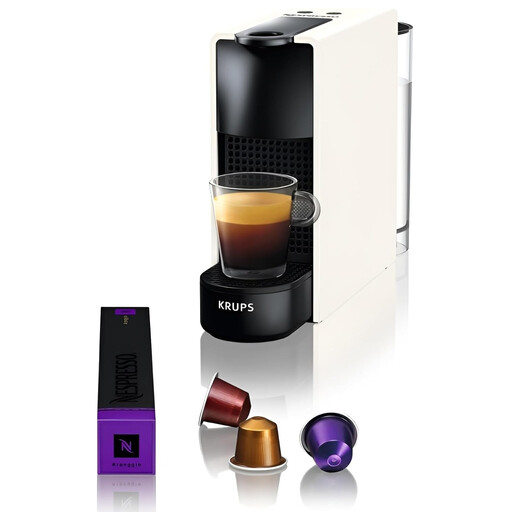 Image unavailable
KRUPS Nespresso Essenza Mini, 0.6 L, white
This capsule machine serves individual portions without the need to handle ground coffee. Its description lists a 0.6 L tank and 1200 W of power. Consider this capacity against the number of drinks your household makes and check which capsules are compatible. Que Choisir notes that capsules cost considerably more than whole-bean or ground coffee.
View on Joybuy
Frequently asked questions
How do you compare running costs when several people drink coffee?
Work out the cost of supplies for the number of drinks you actually make over the same period, using comparable drink sizes. Then compare capsules or pods with the amount of whole-bean or ground coffee you use. Que Choisir describes capsules and pods as considerably more expensive than whole-bean and ground coffee, but costs will vary from one household to another.
Do you need a large tank for several people?
No. The capacity you need depends on the number and size of your drinks, and how often your household is happy to refill the tank. Check how many cups the machine makes per cycle, too. As an example specific to this model, Senseo says the Maestro tank holds enough water for 10 cups and that it can make one or two cups in under a minute.
How often should you descale your machine?
Always follow the manual and any alerts on your chosen machine first. On its care page, Nespresso recommends descaling every three months or after around 300 capsules. For some machines without an indicator light, Senseo recommends descaling every three months and up to six times a year. These are guidelines, not a single schedule that applies to every model.
Are capsules put in household rubbish recycled?
Not necessarily. According to ADEME, they go through the household waste stream and may be incinerated or sent to landfill. To use a different disposal route, check the capsule material, your local council’s guidance and the collection points offered by the relevant brand.
Does an automatic grinder mean you can skip portafilter maintenance?
No. A grinder automates some preparation steps, but you’ll still need to deal with the used grounds and maintain the machine. For the Magnifica range, De’Longhi recommends removing and rinsing the brewing unit, as well as following the automatic descaling instructions. With a portafilter machine, you need to measure and tamp the coffee, then clean the parts you’ve used. Compare the tasks listed in the manuals for the models you’re considering.


