Households making coffee one cup after another
If several people are waiting for coffee in turn, the number of steps between cups and how often you need to refill the tank matter just as much as the brewing process itself.


For serving several coffees with minimal effort, capsules and pods are worth considering. A portafilter machine is a better fit if you want to be involved in the preparation, while an automatic grinder is an option if you drink coffee often and are happy to look after a bulkier machine. UFC-Que Choisir notes that a grinder can reduce the cost per cup compared with pods, but your choice also depends on the water tank, the drinks you want and your cleaning routine.
If several people are waiting for coffee in turn, the number of steps between cups and how often you need to refill the tank matter just as much as the brewing process itself.
If you drink coffee every day, compare the repeated cost of capsules or pods with using ground or whole-bean coffee, based on a similar volume of drinks.
If different people in your household prefer different drinks, check the settings and, for milk-based drinks, the specific model’s milk system and how it is cleaned.
Worth considering: if you prefer minimal handling and a compact machine.
Bear in mind: you’ll need to buy compatible capsules regularly and check what collection schemes are available locally.
Worth considering: if you want an easy way to make several cups without opting for a grinder.
Bear in mind: you’ll need to buy pods that fit your machine regularly; tank capacity varies by model.
Worth considering: if choosing and measuring the ground coffee yourself is part of the experience you’re after.
Bear in mind: you’ll need to fill, tamp and lock the portafilter for each brew, as described by De'Longhi.
Worth considering: if you often make coffee from whole beans and want to start brewing at the touch of a button.
Bear in mind: according to UFC-Que Choisir, it takes up more space, makes more noise and needs more maintenance than a capsule machine.
| Consideration | What to check | Who it matters to |
|---|---|---|
| Ease of use and pace | Compare the steps between coffees and the tank capacity in litres. | If several people want coffee one after another, I want to avoid repeated handling and refilling; around 29% of consumers would put this pace first. |
| Cost of each coffee | Compare compatible consumables and maintenance costs for the same volume of drink. | If I make coffee often, the cost of regular purchases affects my choice of machine; running costs would be a priority for around 29% of consumers. |
| Drinks and settings | Check the recipes, available settings and type of milk system on the model. | In a household where everyone prefers a different drink, I want to know which ones I can actually make; around 18% of consumers would prioritise this flexibility. |
| Space and maintenance | Measure the space needed to access the trays and check cleaning, descaling, capsule collection and the standby settings for the model in question. | If the machine is staying on a small worktop, I want to be able to use and maintain it without making my routine more complicated; around 24% of consumers would put these considerations ahead of the others. |
In a household that drinks coffee often, capsules are a recurring purchase. UFC-Que Choisir recommends considering the cost per cup when comparing systems.
Estimate how many coffees you make each week, then compare compatible consumables for similar drink volumes.
UFC-Que Choisir describes grinders as bulkier and noisier than capsule machines. Cleaning the trays and, depending on the machine, the milk system is another task to add to the brewing process.
Measure your worktop, allowing room to access the trays, then check the manual to see whether the cleaning and descaling routine suits you.
According to ADEME, a capsule thrown away with household rubbish follows the usual waste treatment route, which may not include a dedicated collection scheme.
Check your local guidance and drop-off options for the capsule format you plan to use.
The tank and milk-drink system vary by model. For example, Philips lists a 1.2 l tank for its reconditioned SENSEO Original XL HD7818/20R1, but that capacity does not apply to every SENSEO machine.
Compare the specifications for the exact models you’re considering, including the tank, milk frother, parts to clean and standby settings.
In France, the brand offers manual portafilter machines and automatic machines with grinders.
Philips offers SENSEO pod machines and bean-to-cup espresso machines. Consider which suits the number of coffees you need to serve and the drinks you want to make.
A brand to consider if you’re looking at capsules and want to arrange their collection in mainland France.
Melitta’s French range includes bean-to-cup espresso machines and models the brand presents as reconditioned.
JURA offers automatic home bean-to-cup machines for a range of coffee specialities.
These machines represent three ways to make coffee at home: with an automatic grinder, capsules or a portafilter. First, choose the preparation and maintenance routine that suits your household, then compare the features of each model.
 Image unavailable
Worth considering if your household wants a grinder machine with a LatteGo milk system. Before choosing, check which drinks this model makes and what the milk system’s cleaning routine involves.
 Image unavailable
Worth considering if several people want to choose different drinks on an automatic machine. The product title lists six types of coffee; check the recipes, how the milk system works and how to clean it on the model’s product page.
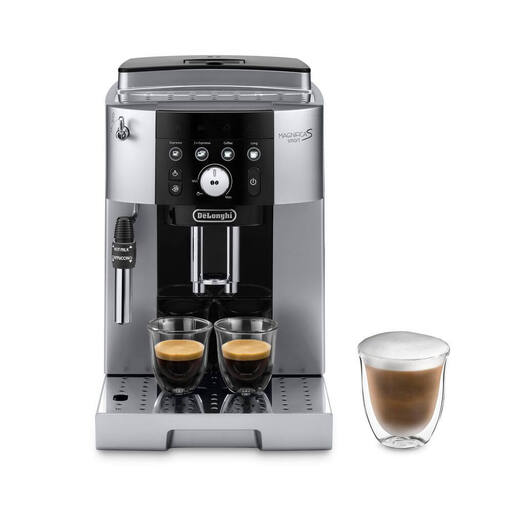 Image unavailable
This automatic grinder machine is suited to a household that wants to make coffee from whole beans regularly. Before choosing this model, check how much space it takes up and what steps are involved in making milk-based drinks.
 Image unavailable
Worth considering if you prefer capsules and are short on space. The product title lists a 0.6 l tank and a rated power of 1,200 W. If you’re making several coffees, check whether refilling the tank and handling used capsules will suit you.
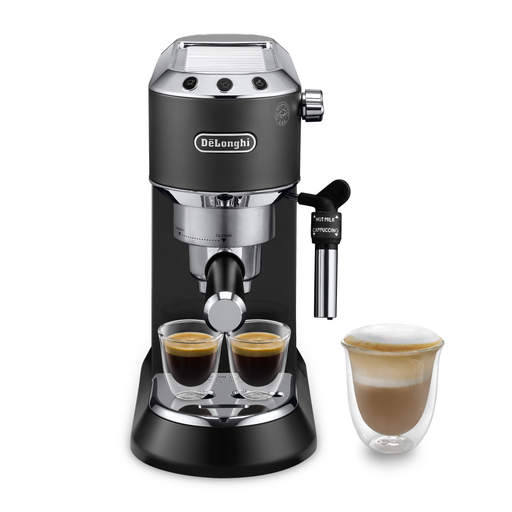 Image unavailable
Worth considering if you want to make coffee with a portafilter and are happy to do a little hands-on preparation between cups. The product title lists a pressure of 15 bar; check the tank capacity for this model before counting on making several coffees without refilling.
How often you need to descale depends on your water hardness, how much you use the machine and the instructions for your model. UFC-Que Choisir suggests an average of every two to three months. Before buying, also check the process and products required for the machine you’re considering.
No. The collection route depends on the capsule format and the options available locally. ADEME explains that capsules thrown away with household rubbish follow the usual waste treatment route. For the schemes Nespresso describes in mainland France, check the drop-off options near you.
Compare the milk system and the steps involved, not just the number of recipes listed. Check each model for a steam wand, milk frother or automatic system, then look at the rinsing and dismantling required after use.
Yes, provided you compare values measured under the same conditions for the specific models you’re considering. Check the stated power in watts for standby mode, and separately check the automatic shut-off settings: the two figures describe different things.