If you’re short on time and space
If you want coffee at the touch of a button and don’t have much worktop space to spare, consider a capsule or soft pod machine. Check the model’s dimensions and the format of consumables it accepts.


If you want to make coffee with minimal fuss, choose a capsule or soft pod machine, after checking which format it accepts and how much the consumables cost. A portafilter machine is a good choice if you want to measure out your own ground coffee. A bean-to-cup machine is better suited to regular coffee drinkers, provided you’re happy with a higher initial outlay, a larger footprint and more maintenance.
If you want coffee at the touch of a button and don’t have much worktop space to spare, consider a capsule or soft pod machine. Check the model’s dimensions and the format of consumables it accepts.
If you make espresso regularly, compare the cost per cup over time rather than focusing only on the initial outlay. Que Choisir reports that coffee made with a grinder can work out cheaper per cup than pod espresso, in return for a machine that costs more to buy and maintain.
A portafilter machine lets you prepare coffee from ground beans yourself, while a bean-to-cup machine starts with whole beans. Depending on the model, both types can also make milk-based drinks, but the preparation steps and cleaning involved differ.
Start by choosing a preparation method you’ll be happy to use every day. Then compare the consumables, space requirements and maintenance for the models you’re considering.
Best for: making a quick cup with a pre-measured capsule and minimal adjustments.
The trade-off: your regular purchases will depend on the capsule system accepted by the machine.
Best for: simple, one-button brewing, especially if one or two cups are all you need.
The trade-off: don’t confuse this format with ESE pods, which are used by some portafilter machines.
Best for: choosing your own ground coffee and taking a more hands-on approach to making espresso.
The trade-off: you’ll need to be comfortable with a few more steps. ESE compatibility depends on the model and the portafilter supplied.
Best for: regular coffee drinking, using whole beans with automated preparation.
The trade-off: Que Choisir notes that these machines are noisier and take up more space than capsule systems, and need regular maintenance.
| Factor | What to check | Your needs |
|---|---|---|
| Consumables and running costs | Find out exactly which format the machine accepts. Compare the cost per cup for drinks of a similar size and at your usual brewing frequency. | I make coffee regularly: repeat purchases matter just as much as the initial outlay. For the systems it compares, Que Choisir reports a lower cost per cup with a grinder than with pod espresso. |
| Preparation and drinks | Check the drink sizes and recipes offered by the model, and whether it includes suitable equipment for milk-based drinks if you want to make them. | I mainly want to press a button, or I’d rather measure out my ground coffee and take a more hands-on role in making my drink. |
| Maintenance | Check the manual for descaling instructions and access to the containers. For a grinder, also check how to clean the brewing unit and, where applicable, the milk system. | If I use the machine frequently or live in a hard water area, I need to be able to fit these tasks into my routine. |
| Noise and dimensions | Measure the available space, including room to access the water tank. For noise, consider grinding, rinsing and brewing separately: Que Choisir assesses each stage individually. | In a small kitchen or if noise matters at certain times, I’d rather check how the machine sounds in real-world use. |
| Waste | Check what single-serve portions are made from and how they should be disposed of. Distinguish between home composting and industrial composting. | If I want to avoid individual packaging, ground coffee or whole beans are worth considering. For capsules or pods, I’ll check what recycling options are available locally. |
Regular capsule purchases add to the running costs. Que Choisir reports that a grinder can lower the cost per cup compared with pod espresso, but requires a higher initial outlay.
Compare systems based on how many coffees you usually make and the size of your drinks, and don’t forget maintenance consumables.
These formats aren’t interchangeable: an ESE pod only works with a portafilter declared compatible, while a capsule machine accepts the system designed for that model.
Check the exact format in the product details and manual, then make sure the coffee you want to buy is available in that format.
Que Choisir warns that limescale can block a machine’s internal circuit. A bean-to-cup machine also needs the containers cleaned and, depending on the model, the brewing unit and milk system maintained.
Before choosing, check the manual to see how easy it is to access the parts that need cleaning and what maintenance alerts to expect. Then follow the instructions for your machine.
These disposal routes aren’t the same. Que Choisir distinguishes industrial compostability from the ability to compost a pod at home, while ADEME provides sorting guidance based on the material capsules are made from.
Read the exact label on the consumable and follow the relevant local guidance. If you want to avoid individually wrapped portions, consider ground coffee or whole beans too.
The ranges below illustrate different systems; features mentioned don’t automatically apply to every model from a brand.
Nespresso presents its Vertuo range as suitable for several drink sizes, from espresso to a mug.
Senseo offers soft pod machines, including the Select, Original+, Maestro and Switch ranges.
The Dedica Style EC685.W is an example of the brand’s manual portafilter machines.
Philips offers espresso machines with grinders, including models in its LatteGo series.
These models cover three ways to make espresso at home: with a bean-to-cup machine, a portafilter machine or capsules. Compare the way each one works with your routine; soft pod machines are another option to consider.
 Image unavailable
Worth considering if you want to make bean-to-cup coffee and milk-based drinks. Check the recipes available on this version, then look at the cleaning steps for the LatteGo system and grinder before you decide.
 Image unavailable
This grinder machine is designed for regular coffee made from whole beans. If you’d also like to make two coffees at once or steam milk, check that these features are available on the exact model and allow enough space around the machine.
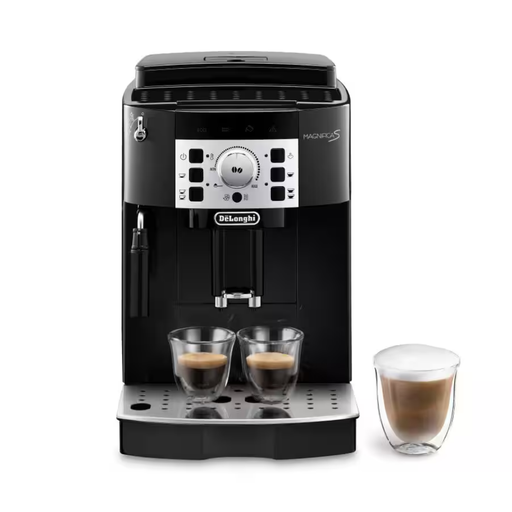 Image unavailable
The built-in grinder makes this a good fit for a bean-to-cup routine. If you plan to alternate with pre-ground coffee or steam milk, check the features and maintenance requirements of this version, and measure the space available.
 Image unavailable
This option involves more steps than a capsule machine. If you want to switch between ground coffee and ESE pods, check that the portafilter and accessories are compatible with the H11. The stated 19 bar pressure alone isn’t enough to judge the espresso in your cup.
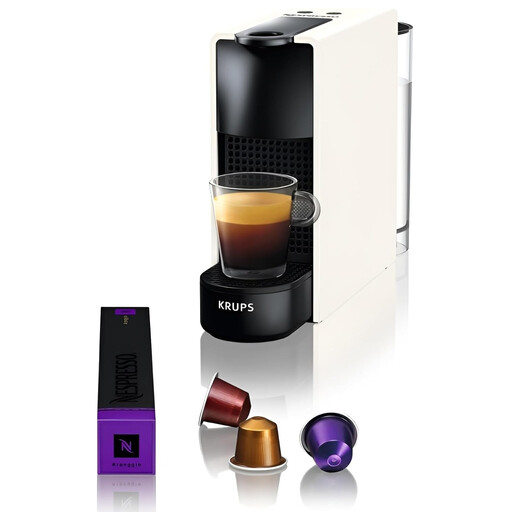 Image unavailable
Consider this if you prefer capsule coffee with minimal adjustments. Check that this version accepts Nespresso Original capsules and compare the cost of the capsules you’ll use. Don’t assume it’s compatible with Vertuo.
No. Check the format accepted by the exact model: capsule systems differ, and soft pods aren’t the same as ESE pods. De’Longhi says ESE pods can be used with compatible portafilter machines, but that doesn’t apply to every machine.
Always follow your model’s manual and maintenance alert first. Que Choisir recommends descaling on average every two to three months, adjusting this according to water hardness and how often you use the machine. Ignoring an alert can lead to a blocked circuit.
Yes, if you make coffee at times when noise might be an issue. Que Choisir reports that a machine with a grinder is noisier than a capsule system, and assesses rinsing, grinding and brewing separately. Compare the noise at each stage rather than relying on a single noise rating.
According to ADEME, aluminium or plastic capsules should go in the recycling bin for paper and packaging. For paper products or those labelled compostable, read the instructions for the specific consumable and check what’s available locally: home and industrial composting aren’t the same.
Allow time for the tasks listed for your model, including descaling and cleaning the containers. A grinder may also need its brewing unit and milk system maintained. Check the manual to see whether the water filter or any other consumables need replacing.