When choosing an espresso machine for home, start with the routine you’re happy to repeat: inserting a capsule or pod, preparing a portafilter, or letting a machine grind the beans. Then compare the cost of consumables, the space available and the maintenance required for the specific model, especially if several people take turns making short or long coffees and milk-based drinks.
Which type of household suits each option?
How often you make coffee isn’t the only factor when comparing machines: the routine you prefer, the drinks you make and the space available all matter too.
For households that want coffee with minimal effort
If you prefer a straightforward brewing process and have limited space, consider capsule and soft-pod machines. Check the model’s dimensions, then make sure you can get hold of the consumables it takes in the format you need.
For regular coffee drinkers keeping an eye on consumables
If you make several coffees every day, the cost per cup and choice of coffee become more important. Compare portion-based systems with bean-to-cup machines. A portafilter machine is also worth considering if you’re happy to prepare each cup yourself.
For households that switch between coffee and milk-based drinks
If you serve espressos, longer coffees and milk-based drinks, check the recipes and milk system on the specific model you’re considering. A manual steam wand and an automatic system involve different routines and cleaning requirements.
What sets the machines apart?
First, choose a brewing method you’ll be happy to use every day. You can then compare maintenance, speed and noise on specific models. Que Choisir assesses these factors, among others, in its espresso coffee machine testing protocol.
Capsules
Worth considering: if you want to pop in a portion and quickly make your coffee, once you’ve checked how much space the machine takes up.
Bear in mind: capsule choice depends on the exact system. The cost of each portion matters more if you use the machine frequently.
Soft pods
Worth considering: if you want portion-based brewing without switching to beans or filling a portafilter.
Bear in mind: drink options and features vary by machine. Check which pods it accepts too.
Portafilter
Worth considering: if you want to prepare each shot yourself using ground coffee.
Bear in mind: filling and locking in the portafilter means a few extra steps for every coffee. Only some models have a steam wand.
Bean-to-cup
Worth considering: if you make coffee regularly, want to choose your beans and prefer a more automated brewing process.
Bear in mind: the grinder, containers, brew group and, where applicable, milk system all add maintenance tasks.
| Factor |
What to check |
Who is it for? |
| Steps and footprint |
Measure the space needed for the machine and access to its water tank. Check what you’ll need to do for each cup. |
If I make a coffee before heading out and have limited worktop space, I want a simple routine without losing easy access to the parts I need to fill. Around 27% of consumers would put this need first. |
| Consumables and cost per cup |
Compare the cost per cup using the pack sizes you’d actually buy, and check which capsules or pods are compatible. |
When several coffees are made each day, I want to be able to choose my coffee and keep repeat purchases under control. This would be the top priority for around 27% of consumers. |
| Control over brewing |
Check the steps, settings and accessories included with the model. If you use milk, see whether it has a manual steam wand or an automatic system. |
I’d rather fill the portafilter and take an active role in brewing than make every drink at the touch of a button. Around 20% of consumers would prioritise this level of control. |
| Back-to-back drinks and maintenance |
Check how the machine handles several cups in a row, as well as its milk system, noise levels and model-specific cleaning requirements. |
If several people are waiting for coffee or a milk-based drink, I want to know what needs doing between preparations. Around 26% of consumers would prioritise this. |
What not to overlook
-
Buying a capsule machine without checking its system
Compatibility isn’t determined by the brand name alone. Nespresso, for example, says that one model in its Original range only takes Nespresso Original capsules. This doesn’t apply to other systems.
Make a note of the system used by the model you’re considering and check which capsules you’ll be able to buy regularly before choosing a machine.
-
Forgetting about repeat purchases
Capsules, pods and beans all mean different things to buy as you make more coffees. Some models may also require cartridges or cleaning products.
Estimate how many cups you’ll make, then compare the consumables and maintenance tasks listed in the instructions for each machine on your shortlist.
-
Assuming automation means no maintenance
A grinder or milk system can make preparation easier, but it doesn’t eliminate cleaning. Philips, for example, recommends regular cleaning of the removable brew group on some of its machines.
Before choosing a model for its recipes, find out which parts need removing, rinsing and descaling.
Also allow time to clean any parts that come into contact with milk after use.
-
Judging by the name of a milk-based drink alone
A manually operated steam wand and an automatic milk system involve different steps. Milk functions also vary from one model to another.
Check how the drink you want is prepared and which parts of the milk system need washing.
Brands to know when comparing ranges
These brands showcase different types of machine. Check the features and limitations of the specific model you’re interested in rather than assuming they apply across the whole range.
Nespresso
Capsule systems to compare, including the Original and Vertuo ranges.
- According to Nespresso, one Original model offers several cup sizes and a descaling alert.
- This model is listed as compatible only with Nespresso Original capsules, so check the system used by the machine you choose.
Senseo
Soft-pod machines to compare if you’re looking for portion-based brewing.
- Depending on the model, Senseo offers short or long coffee options and the ability to make one or two cups.
- Don’t assume every model has intensity settings or a descaling indicator.
De’Longhi
Portafilter machines for coffee drinkers who want to be involved in the brewing process, as well as other automatic ranges.
- For its manual machines, De’Longhi describes filling the portafilter with ground coffee and tamping it down.
- Check whether the specific model has a steam wand and make sure its dimensions suit your space.
Philips
Automatic bean-to-cup machines, some of which come with a milk system.
- Philips lists espresso, classic coffee and cappuccino recipes for its 2200 Series EP2235/47, with a LatteGo system.
- The product page recommends regular maintenance of the removable brew group. Check the features and instructions for any other variant.
Melitta
Bean-to-cup machines with drinks and settings that vary between series.
- Melitta offers ranges with one-touch milk-based drinks.
- Check the recipes, milk system, noise levels and maintenance requirements for the model you’re considering rather than assuming they’re the same across the brand.
Machines to explore on Joybuy
This selection includes capsule machines, portafilter machines and bean-to-cup models. For each one, make sure its brewing method suits your habits before comparing its specific features.
 Image unavailable
Philips EP2230/10 2200 Series LatteGo, black
Worth considering if you’d prefer to make coffee with a grinder rather than using portions. This model is listed as an espresso machine with a grinder and bears the LatteGo name. Check the drinks available and the maintenance required for the milk system on this variant.
View on Joybuy
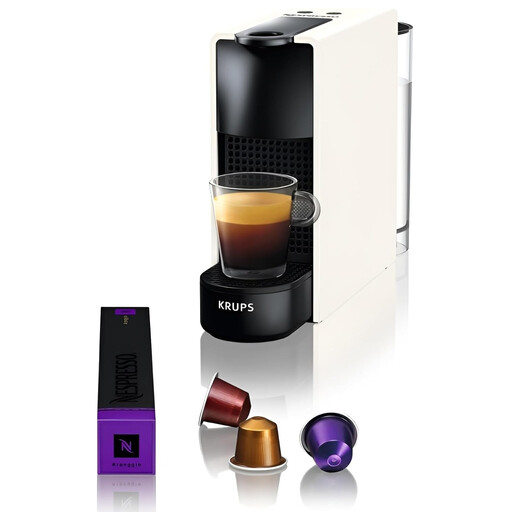 Image unavailable
KRUPS Nespresso Essenza Mini, white, 0.6 L
Worth considering if you prefer to make coffee with capsules and want a 0.6 L water tank. The power listed in the name is 1200 W. Check which capsule format it takes and what drinks are available before choosing this model.
View on Joybuy
 Image unavailable
HiBREW H16 with grinder and milk system
Worth considering if you want an automatic machine with a grinder and milk system. The product name lists six coffee varieties and a touchscreen. Check the recipes and cleaning tasks for this model.
View on Joybuy
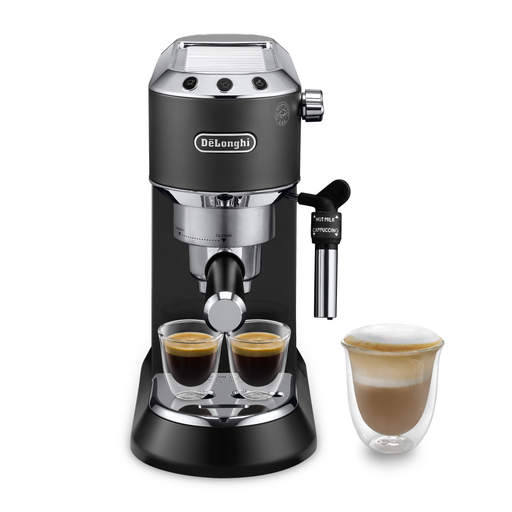 Image unavailable
De’Longhi Dedica Style EC685.BK, black
Worth considering if you’re happy with the steps involved in making coffee manually with a portafilter. The name of this variant lists 15 bars. If you enjoy milk-based drinks, check how the steam wand works and how to clean it.
View on Joybuy
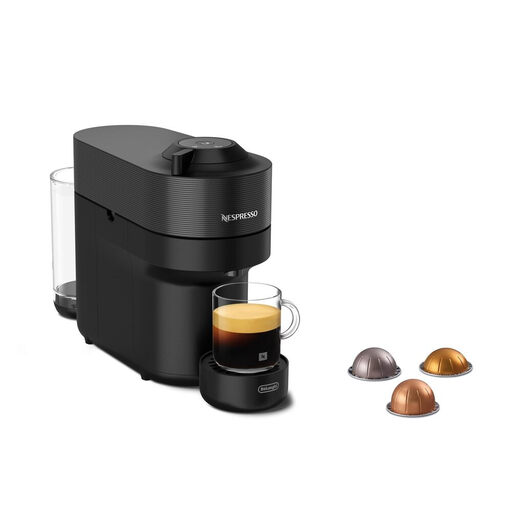 Image unavailable
Nespresso Vertuo Pop ENV90.B, black, 0.6 L
Worth considering if you want portion-based brewing with the Vertuo system. The product name lists a 0.6 L water tank. Check the drink sizes available with this model and make sure it takes the capsules you plan to use.
View on Joybuy
Frequently asked questions
Do capsule machines take all capsules?
No. Compatibility depends on the system and the specific model. Que Choisir points out that many brands use a specific type of capsule. Nespresso, for example, says that one Original model only takes Nespresso Original capsules. Check the exact system before buying your consumables.
How do you compare the cost per cup of capsules, pods and beans?
Work out the cost per cup using the pack sizes you’d buy, then factor in the cleaning products required for each model. A comparison published by Que Choisir in 2009 looks at these brewing methods, but its historical prices are no substitute for a calculation based on what you’d pay today.
What maintenance should you check before choosing an espresso machine?
Check the descaling instructions and removable parts. If you make milk-based drinks, find out how to clean the milk system too. Que Choisir notes that descaling frequency depends on factors including the water and how often you use the machine. The instructions for the specific model will tell you what to do.
Is the CE marking an independent certification?
No. The DGCCRF explains that the CE marking is not a certification mark: it indicates the manufacturer’s commitment to meeting the applicable European requirements. If you’re buying a machine in France, also check the product specifications and the seller’s identity. According to the French Ministry of the Economy, the legal guarantee of conformity applies to goods sold by a business to a consumer, whether new, second-hand or refurbished.


