If you regularly make espresso at home, start by thinking about the steps you’re happy to repeat: inserting a capsule or coffee pod, preparing a portafilter, or maintaining a machine that grinds coffee beans. With capsules and coffee pods, you need to check which system is compatible; a portafilter leaves more of the preparation to you. A grinder automates much of the process using whole beans, but its size, noise and maintenance are also worth considering.
Who are these machines for?
How often you make coffee doesn’t point every household towards the same machine. Your daily routine, the consumables you’ll need and the space you have available can all affect your decision.
Households looking for a quick, fuss-free coffee
If you often make espresso, compare the steps involved for each cup with capsules, coffee pods and automatic grinders. Remember to factor in cleaning too: a simple preparation process doesn’t mean there’s no cleaning to do.
Shoppers keeping an eye on ongoing costs
Coffee and cleaning products are regular household purchases. UFC-Que Choisir notes that capsules and coffee pods cost more than whole beans and ground coffee. When choosing a system, compare the products you’d actually buy and the number of drinks you make.
Households where space and noise matter
If you have a small worktop or make coffee early in the morning, the machine’s size and noise level matter. UFC-Que Choisir says an automatic grinder takes up more space and makes more noise than a capsule system. Then check the dimensions and specifications of the model you’re considering.
Which features matter day to day?
For regular espresso at home, the type of machine mainly determines the preparation steps you’ll repeat and the consumables you’ll need to buy. Then compare the practical considerations of each model.
Capsules
Worth considering: if you want to handle the coffee as little as possible for each cup.
The trade-off: capsules must be compatible with your machine’s specific system.
Soft coffee pods
Worth considering: if you prefer using coffee pods; some models can make two cups at once.
The trade-off: you can’t assume a machine has this feature or is compatible with your pods just from its type.
Portafilter
Worth considering: if you want to use ground coffee or grind it separately, and prepare the portafilter yourself.
The trade-off: measuring the coffee, emptying the portafilter and cleaning it are all part of the routine.
Bean-to-cup grinder
Worth considering: if you often make coffee from whole beans and want to automate much of the preparation.
The trade-off: make sure you have enough space, are happy with the maintenance involved and can live with the noise level.
| Factor |
What to check |
Who it matters to |
| Daily steps |
Look at what you need to do before each cup and what needs doing straight after use. |
If I make several coffees a week, I want each cup to involve as few steps as possible; around 33% of consumers would put ease of use first. |
| Ongoing costs |
Over the same period, compare the coffee compatible with each system and any cleaning products needed, based on how often you use it. |
When coffee is a regular purchase, I’d rather know what using it regularly will cost than just look at the machine; around 25% of consumers would make this their top priority. |
| Maintenance, noise and space |
Measure the space required, check the cleaning instructions and look for noise information for the specific model. |
On my worktop, a machine needs to be easy to use without disrupting the household with its size, noise or maintenance; around 25% of consumers would put this first. |
| Making several drinks in a row |
Check whether it makes one or two cups and, if it matters to you, whether it has a milk system and how to clean it. |
If I’m making drinks for several people or want a choice of drinks, I want to know what the model can do before choosing; around 17% of consumers would prioritise this. |
Mistakes to avoid before buying
-
Judging running costs from a single offer
UFC-Que Choisir highlights the difference in cost between capsules or coffee pods and whole beans or ground coffee. But what it means for your household depends on the products you buy and how many drinks you make.
Compare compatible consumables over the same period, and leave temporary offers out of your usual calculations.
Remember to factor in descaling products, any filters and delivery costs for your purchases too.
-
Assuming all capsules or coffee pods will fit
A capsule designed for one system won’t necessarily work with another. For SENSEO parts and accessories, Philips also recommends checking compatibility using the model number.
Make a note of the exact system and machine reference, then check the instructions or compatibility information before ordering.
-
Underestimating the space and maintenance a grinder needs
UFC-Que Choisir describes automatic grinders as larger and noisier than capsule systems. De’Longhi says the descaling frequency for its bean-to-cup espresso machines depends on the hardness of your water.
Measure the space, check you can reach the water tanks and read about the maintenance required for the model.
Descaling is another regular task, and you’ll need products that are suitable for the machine.
-
Assuming recyclable capsules can be collected from your home
How you sort your waste depends on local guidance. ADEME explains that capsules thrown away with general household waste follow that waste stream, while Nespresso offers collection points for its capsules.
Before choosing a capsule system, check your local council’s guidance and what collection options are available to you.
A few brands to help you compare systems
These brands illustrate different types of machine. Always check the features and consumables for the specific model you’re considering.
Nespresso
The brand offers Original and Vertuo capsule systems. Make sure you know which one you’re choosing before buying a machine or its consumables.
- Using a capsule means less handling of the coffee before each cup.
- Check which system the model accepts and what collection options are available near you. Nespresso lists collection points in France, but these don’t replace local waste-sorting guidance.
Philips SENSEO
SENSEO machines use soft coffee pods, and the features available vary by model.
- Philips says its Original Plus CSA210/50 model can make one or two cups.
- Don’t assume this feature is available across the whole range. Philips recommends using the model number to check which parts and accessories are compatible.
De’Longhi
The Magnifica range includes bean-to-cup espresso machines. The drinks and controls available depend on the model.
- De’Longhi says you can make drinks at the touch of a button across the Magnifica range; check which drinks the model you’re considering offers.
- Check the machine’s size, any milk functions and its maintenance requirements. De’Longhi says descaling frequency depends on the hardness of your water.
Capsule and bean-to-cup machines on Joybuy
These models let you compare two ways to make coffee regularly at home: using capsules or starting with whole beans in a machine with an integrated grinder. For each one, consider the coffee system, maintenance and space required in light of your routine.
 Image unavailable
Philips Series 2200 EP2230/10 LatteGo, glossy black
Worth considering if you regularly want to make coffee from whole beans using a machine with a grinder. Check that the drinks on offer and the maintenance requirements suit your needs.
Series 2200 model EP2230/10, LatteGo version; glossy black finish.
View on Joybuy
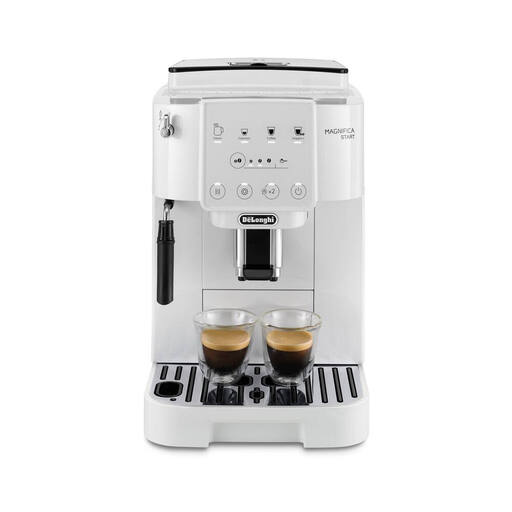 Image unavailable
De’Longhi Magnifica Start ECAM220.21.WW, white
An option to look at if you want to make espresso from whole beans while automating some of the steps. Check you have enough space and find out about maintenance before choosing.
Espresso machine with grinder, model ECAM220.21.WW; white finish.
View on Joybuy
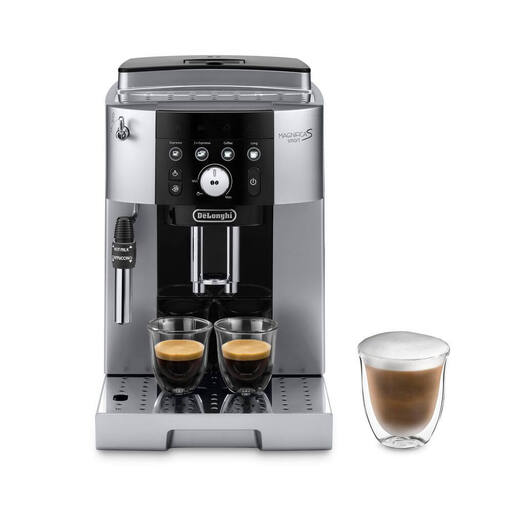 Image unavailable
De’Longhi Magnifica S Smart ECAM250.23.SB, silver
This grinder model is for households that prefer to make espresso from whole beans. If drink settings matter to you, compare the controls with what you need.
Automatic espresso machine with grinder, model ECAM250.23.SB; silver finish.
View on Joybuy
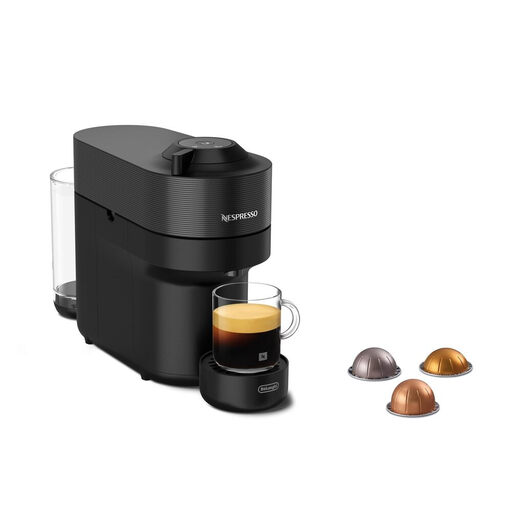 Image unavailable
Nespresso Vertuo Pop ENV90.B, black
Worth considering if you’d rather insert a capsule than prepare ground coffee or use a grinder. Make sure the capsules you plan to buy are compatible with the Vertuo system.
Vertuo Pop capsule machine, model ENV90.B; 0,6 L tank and black finish.
View on Joybuy
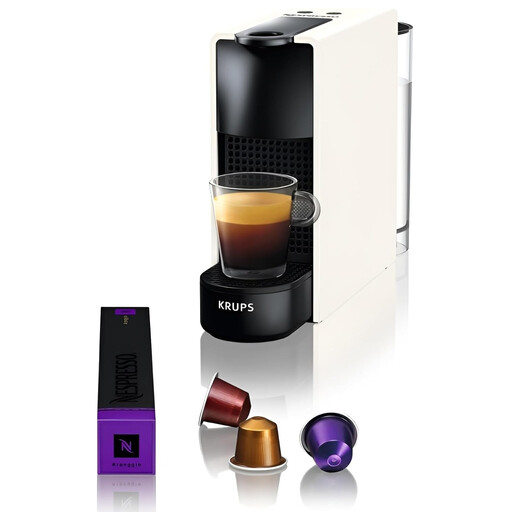 Image unavailable
KRUPS Nespresso Essenza Mini, pure white
A capsule machine to consider if you want to keep preparation to a minimum before each espresso. Check which capsule system this model accepts before buying your supplies.
0,6 L tank and stated power of 1 200 W; pure white version.
View on Joybuy
Frequently asked questions
Do Nespresso Original capsules fit all capsule machines?
No, compatibility depends on the system accepted by the machine. Check the information on both the machine and the capsules; don’t assume an Original capsule will fit a Vertuo machine.
How do I choose compatible consumables and accessories?
Make a note of the coffee system and model number before ordering. Then check the instructions and the manufacturer’s support pages. For SENSEO parts and accessories, for example, Philips offers a search by model number.
How often should I descale a machine with a grinder?
Follow the instructions and alerts for your model rather than using the same schedule for every machine. De’Longhi says the descaling frequency for its bean-to-cup espresso machines depends on the hardness of your water.
Can all coffee capsules go in the yellow recycling bin?
No, check the waste-sorting guidance for your area and the collection options available for your capsules. ADEME says capsules thrown away with general household waste follow that waste stream; Nespresso says collection in the yellow bin depends on the area.


