For everyday coffee at home, your choice should mainly come down to how much hands-on preparation you’re happy to do: capsules or pods for a straightforward brew, a portafilter if you want to handle the ground coffee yourself, or an automatic bean-to-cup machine if you want to use whole beans without preparing each dose by hand. Que Choisir’s guide distinguishes between these four types. Before you decide, weigh up running costs, the compatibility of consumables, available space and the maintenance required for the model you’re considering.
Who are these machines for?
People who keep an eye on running costs
If you make several coffees a week, the cost of consumables and maintenance purchases matters just as much as the machine itself. Que Choisir highlights the value of looking at the cost per cup if you drink coffee regularly.
People who want to keep handling to a minimum
You want to make coffee without measuring or tamping the grounds for every cup, while keeping to a cleaning routine you can stick to. Simple controls don’t mean you can skip checking what needs doing after each brew.
Coffee lovers happy to get involved in the process
You want to choose your ground coffee or beans and are happy to spend time using a portafilter or maintaining a grinder. Depending on the model, parts that come into contact with coffee, water or milk need regular attention.
How do the four types compare?
For everyday espresso, start by deciding between hands-on preparation and a brew that takes just a few steps. Then compare consumables, maintenance and the space you’ll need. Even a machine that’s easy to use may still require regular purchases or cleaning.
Capsules
Best for: making coffee with minimal effort and keeping the machine’s footprint small.
Bear in mind: your choice of capsules depends on which system the model is compatible with, and you’ll need to buy them regularly.
Soft pods
Best for: a straightforward brew using pods that are compatible with your chosen machine.
Bear in mind: check compatibility with the exact model, and remember to allow for descaling.
Portafilter
Best for: measuring and preparing your own ground coffee.
Bear in mind: more steps for every coffee, followed by cleaning the portafilter.
Automatic bean-to-cup
Best for: drinking coffee made from whole beans regularly, without wanting to prepare every dose by hand.
Bear in mind: Que Choisir notes that these machines are generally bulkier and noisier than capsule systems, and that grinders have their own maintenance needs.
| What to consider |
What to check before buying |
Who is it for? |
| Running costs and choice of coffee |
Confirm which format the machine accepts, then compare the consumables you plan to use with how often you’ll make coffee. |
If I drink coffee often, I want to choose what I buy regularly without being tied to a format that doesn’t suit me; around 27% of consumers make this a priority. |
| Ease of preparation |
Check what you’ll need to do before and just after making a cup: insert, fill, rinse or empty. |
When I’m making one coffee after another throughout the day, I’d rather not measure and tamp the grounds every time. Around 20% of consumers put minimising these steps ahead of other considerations. |
| Hands-on preparation |
Check how the machine handles ground coffee, which accessories are included and, if you need it, whether it’s explicitly compatible with ESE pods. |
I want to decide for myself how to prepare ground coffee, even if that means more steps and cleaning; around 20% of consumers prioritise this level of control. |
| Maintenance, noise and size |
Check the dimensions, including the clearance needed to open the compartments, then read the maintenance instructions. If noise matters, look for measurements for the exact model. |
In a kitchen where space is limited, I want to be able to reach the reservoirs and live with the machine’s maintenance routine and noise. Around 33% of consumers prioritise these considerations. |
Things not to overlook
-
Choosing capsules without checking the format
Que Choisir says that many systems accept just one type of capsule. So, while a machine may be easy to use, choosing it could mean making repeated purchases specific to that system.
Find out the exact format before you buy, then check that the capsules you want are available in that format.
-
Underestimating the maintenance a grinder needs
An automatic grinder makes coffee from whole beans, but its compartments and internal circuit need cleaning and descaling. De’Longhi also recommends regular rinsing for its bean-to-cup espresso machines.
Read the instructions for the model you’re considering and make sure you can easily reach the parts that need emptying or cleaning.
-
Assuming a grinder will be compact and quiet
Que Choisir describes bean-to-cup espresso machines as bulkier and noisier than capsule systems. However, this doesn’t tell you how loud a particular model is or how much space it needs.
Measure the space, allowing room to open the compartments and fill the water and bean containers. If noise is a deciding factor, look for a measured test of the exact model.
-
Using the same descaling method for every machine
Maintenance instructions vary by brand and model. Advice for a SENSEO or a De’Longhi bean-to-cup espresso machine won’t automatically apply to another machine.
Follow your model’s instructions to choose a compatible product and run the right cycle.
Brands to know by machine type
Nespresso
A brand to consider for capsule machines: Nespresso France offers Original capsules and support for its machines.
- The brand offers a way to order capsules, along with advice on using and maintaining its machines.
- Original and Vertuo are separate ranges, so check which one the machine you’re considering accepts.
SENSEO® / Philips
A range of machines for soft pods, with parts and accessories listed by Philips France.
- Philips lets you search for compatible SENSEO parts using the model number.
- A parts catalogue doesn’t guarantee that a particular part will remain available, so check the full reference you’re interested in.
De’Longhi
A brand with both portafilter and automatic grinder machines, plus instructions and support tailored to its models.
- De’Longhi offers manual machines that let you take control of the brewing process, as well as automatic machines operated at the touch of a button.
- Cleaning, filters and any compatibility with pods depend on the model, so check its instructions before choosing.
Machines for the uses covered
These Joybuy machines cover the four ways of making espresso discussed here: soft pods, beans with a grinder, capsules and a portafilter. First compare the brewing method with your habits, then look at the specific variant you’re interested in.
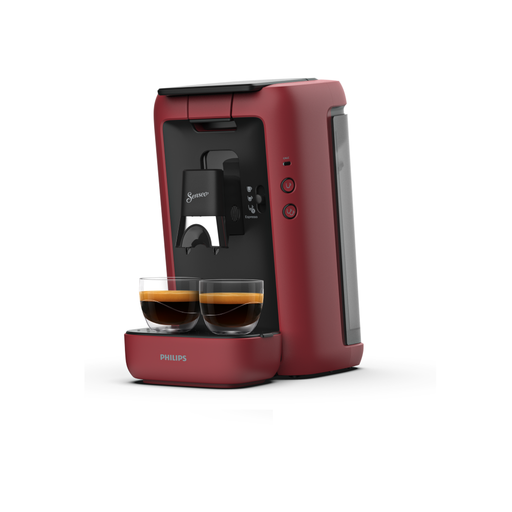 Image unavailable
Philips SENSEO CSA260/91 Maestro, intense red
For anyone who wants to make their everyday coffee with SENSEO pods. Check the format of the pods you’ve chosen and allow for descaling as set out in the instructions for this model.
View on Joybuy
 Image unavailable
Philips EP2230/10 Series 2200 LatteGo, black
For anyone who wants to use whole beans in an automatic machine. This model pairs a grinder with the LatteGo variant. Check the steps involved in cleaning the brew group and milk system before making it part of your routine.
View on Joybuy
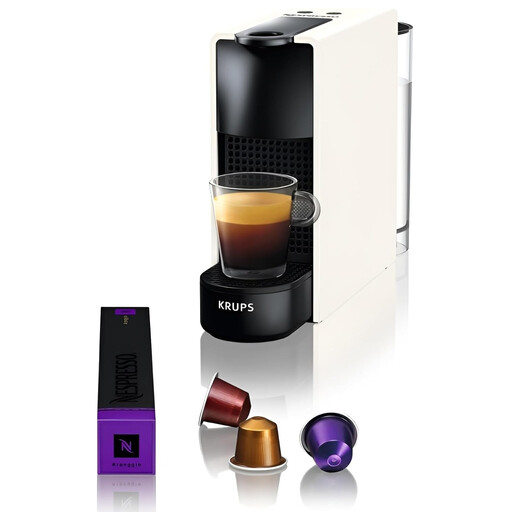 Image unavailable
KRUPS Nespresso Essenza Mini, white, 0.6 L
For making coffee with minimal effort when worktop space is at a premium. This variant is listed as 0.6 L and 1,200 W; check that your chosen capsules are compatible with the Nespresso Original system.
View on Joybuy
 Image unavailable
De’Longhi Magnifica Start ECAM220.21.WW, white
For anyone who prefers whole-bean coffee and automatic preparation. If you use the steam wand for milk, remember to include preparing and cleaning it in your daily routine.
View on Joybuy
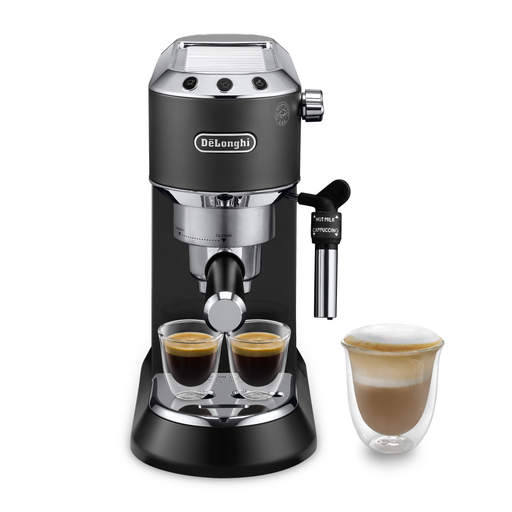 Image unavailable
De’Longhi Dedica Style EC685.BK, black
For anyone who wants to prepare their coffee themselves using a portafilter. This variant is listed as operating at 15 bars; allow for the preparation and rinsing steps, and don’t assume it accepts every pod format.
View on Joybuy
Frequently asked questions
Can you use any pod in a portafilter?
No, compatibility depends on the model and the filter you use. De’Longhi says ESE pods work with its compatible portafilter machines; this doesn’t apply to other formats or to every portafilter machine.
How often should you descale a SENSEO?
Philips recommends descaling every three months for the SENSEO machines covered by its support advice. Follow the instructions for your specific model rather than applying this schedule to another brand or model.
How can you check the maintenance parts before buying?
First, look up the machine’s full reference, then check the parts you’ll need, such as the reservoir, any filters and cleaning accessories. Philips, for example, asks for the model number to identify compatible SENSEO parts.
Where should you dispose of used capsules in France?
ADEME says aluminium or plastic capsules should go in the recycling bin, bag or container for paper and packaging. Check your local council’s guidance too, so you can sort your recycling correctly at home.


