Households that make espresso regularly
You want to automate preparation while checking that the machine suits your actual consumption habits. Que Choisir Ensemble highlights the importance of considering your routines and the settings available.


An automatic grinder may be a good choice if you make espresso regularly and want to simplify preparation, provided you’re happy with the space it takes up and the maintenance involved. Que Choisir Ensemble recommends assessing the total cost based on your consumption and choosing milk functions to suit the drinks you actually make, rather than assuming you’ll always save money.
You want to automate preparation while checking that the machine suits your actual consumption habits. Que Choisir Ensemble highlights the importance of considering your routines and the settings available.
You’re looking to cut down on handling and need to check how the containers are cleaned, how easy it is to access the brewing unit and what descaling involves. Que Choisir Ensemble covers these considerations in its advice and testing protocol.
You make cappuccinos or other milk-based drinks and want to know which preparation and cleaning tasks you’ll still need to do yourself. Que Choisir Ensemble and MaxiCoffee cover these tasks in their maintenance advice.
Consider it if: you make espresso regularly and want the machine to automate grinding and extraction.
Bear in mind: you’ll still need to manage the containers, find space for the machine and clean it; there’s no universal break-even point.
Consider them if: you prefer pre-portioned coffee and are happy to choose a format that’s compatible with the machine.
Bear in mind: consumables and recycling guidance vary by format and material. ADEME distinguishes between aluminium, plastic and paper capsules, among others.
Consider it if: you’d like to be more involved in preparing your coffee and are happy to do the associated tasks.
Bear in mind: an integrated grinder doesn’t necessarily mean the whole process is automated. For one particular model, Sage describes assisted dosing and tamping, alongside a manual steam wand.
Consider it if: you’re more interested in making a pot of longer coffee to share than a succession of espressos.
Bear in mind: Darty presents filter coffee as a way to make and share a longer coffee; this doesn’t compare the results from different machines.
To compare these methods, start with the drinks you make, then consider the cost of use, maintenance, available space and waste in light of your own circumstances.
| Consideration | What to check | Who it matters most to |
|---|---|---|
| Total cost | Compare the drinks you actually make over the same period, including coffee, maintenance, water and electricity. | If I make coffee often, I want to know whether the purchase price and running costs fit my budget. Around 25% of consumers prioritise total cost. |
| Time spent on maintenance | Check how to clean the containers and brewing unit, descale the machine and, if applicable, maintain the milk system. | When I’m short on time, I want to know what I’ll need to do after making coffee and as part of regular maintenance. Around 25% of consumers prioritise a low-maintenance routine. |
| Drinks you want to make | Check which settings are useful and whether milk preparation is manual or automated. | If I also make milk-based drinks, I want a system with preparation and cleaning steps that suit me. Around 20% of consumers prioritise a variety of drinks. |
| Space and noise | Measure the space available, including room to access the reservoirs, and look for noise measurements for the exact model. | In a kitchen where space or noise is a concern, I want to check the setup and day-to-day use before choosing. Around 15% of consumers prioritise how well a machine fits into their kitchen. |
| Packaging and waste | Consider the number of items of packaging, what they’re made from and how they’re disposed of; these factors alone aren’t enough to compare overall impact. | If I want to reduce or manage preparation waste better, I need to look at the packaging and what happens to it, without drawing my own conclusions about environmental impact. Around 15% of consumers put this concern first. |
The price of a consumable alone doesn’t tell you how much each drink costs. For a useful comparison, Que Choisir Ensemble recommends taking usage and related costs into account.
Compare the same number of drinks over the same period, using the formats and doses you actually use.
Include maintenance, water, electricity, accessories and any repairs included in your calculation.
The containers, coffee circuit and, if there is one, milk system may each need separate attention.
Before buying, check the manual for cleaning and descaling instructions, as well as any tasks that still need to be done by hand.
Allow time for maintenance and budget for the compatible consumables specified for the model.
A machine with a grinder may still involve manual steps. For example, Sage’s product information describes a model with assisted dosing and tamping, but a manual steam wand.
Check which steps the machine handles and which you’ll need to do yourself, particularly tamping and preparing milk.
Counting packaging alone doesn’t account for its material, how it’s treated or the other stages of its life cycle.
When assessing an environmental claim, distinguish between the number and weight of items of waste and what happens to them, and check the scope of the assessment. ADEME uses life cycle analysis for this type of assessment.
These Joybuy models are espresso machines with grinders, designed to make drinks from coffee beans. Milk functions and preparation options vary by model.
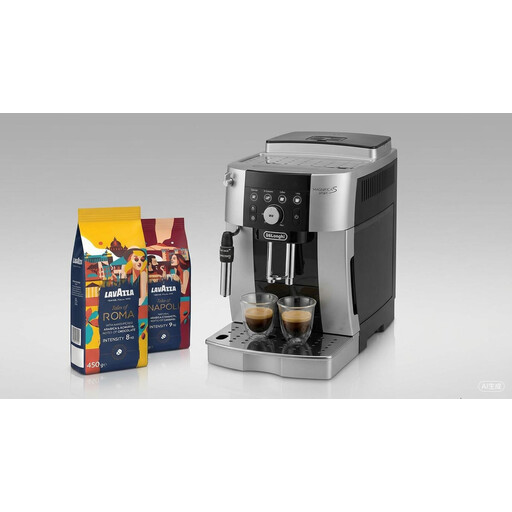 Image unavailable
For making espresso regularly from beans, with a manual steam wand for milk.
The product description lists four one-touch recipes, customisable settings and a removable brewing unit. The bundle includes two 450 g packs of Lavazza coffee.
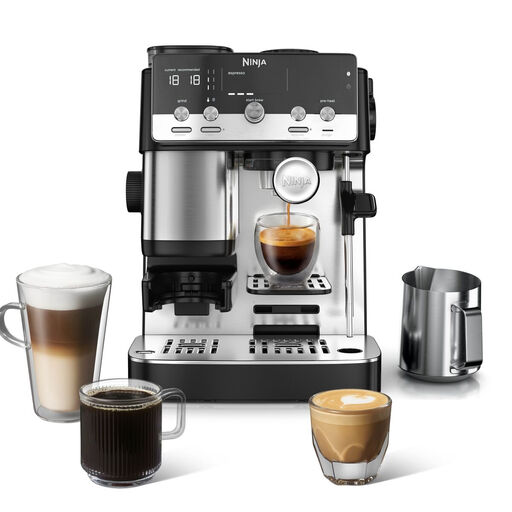 Image unavailable
For households that want to make espresso and filter coffee with an integrated grinder.
The product description lists automatic dosing, grinding and tamping for espresso. The milk frother is manual.
 Image unavailable
For making a range of drinks from beans, including milk-based drinks.
The product description lists 15 grind settings, six drinks and customisable coffee and milk volumes.
 Image unavailable
For making espresso and cappuccino with a removable milk system.
The product description lists 12 grind settings, a two-cup function and a two-piece LatteGo carafe that’s dishwasher-safe.
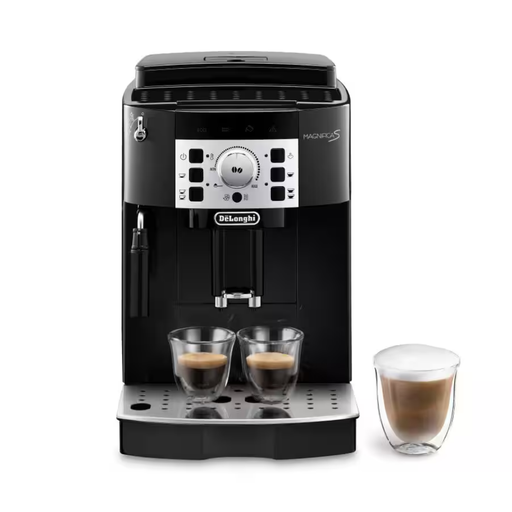 Image unavailable
For making espresso from beans or pre-ground coffee, and frothing milk by hand.
The product description lists an adjustable grinder, a two-cup function and a descaling programme with alerts.
Compare the methods over the same period and for the same number of drinks you actually consume. Include the machine and any necessary accessories, coffee or capsules, maintenance, water, electricity and any repairs you’ve included in your calculation. For beans, you can work out the coffee cost per serving from the price per kilo and the dose used. For capsules, use the price of the pack and the number used per drink. The result depends on the costs and habits included in your calculation.
No. The result depends on the cost of the machines you’re comparing, consumables, maintenance and the period you’re considering. To work out a simplified break-even point, compare the cost of the equipment and other fixed costs with the variable cost per drink. If these costs change with usage or maintenance varies, it’s better to compare total costs. Don’t apply the result to a household with different costs or consumption.
Don’t assume so. MaxiCoffee says limescale can build up even when you use a filter cartridge. Follow your model’s manual for maintenance frequency, products and steps.
ADEME’s guidance says to put aluminium or plastic capsules in the paper and packaging recycling system; some brands also offer a dedicated collection scheme. For paper capsules, it mentions home composting or a nearby food waste collection service. Follow the instructions for the type of waste and your local collection arrangements.
Not on its own. A comparison needs to specify the system being compared, the period, the number of drinks and what happens to the packaging and other consumables. Any claim about overall impact needs a clearly defined life cycle assessment; simply counting capsules isn’t enough to draw a conclusion.