What sets the different systems apart?
Start with the steps you’re happy to take for each cup, then check the consumables and maintenance required for the model you’re considering. The four categories identified by Que Choisir involve different levels of participation in the preparation.
| Feature |
What to check |
What matters to consumers |
| Steps per cup |
Check whether the coffee is pre-measured, whether the portafilter needs filling and tamping, or whether the machine grinds the beans. Check which drinks the model can make. |
When I make coffee between other tasks, I want to avoid a lengthy process for every cup. Around 27% of consumers would prioritise this everyday convenience. |
| Compatible consumables |
Check which capsule or pod format the machine accepts, or what type of coffee it uses, and whether the products you want to buy are readily available. |
If I drink coffee regularly, I want to be able to find the right consumables for my machine without switching systems. Around 27% of consumers would consider this continuity their main priority. |
| Involvement in the preparation |
Decide whether you want to fill and tamp a portafilter yourself or leave the grinding and preparation to the machine. |
I prefer to take a hands-on approach when making an espresso, even if it means a few extra steps. Around 20% of consumers would put this involvement first. |
| Space and maintenance |
Measure the available space and check that you can access the containers. Read the cleaning and descaling instructions, as well as the disposal guidance for the consumables. |
In a kitchen where space is limited, I also need to be comfortable with the noise, cleaning and everyday waste management. Around 26% of consumers would put these considerations first when choosing. |
Machines for different ways of making coffee
These models cover the four ways of making coffee featured here: soft pods, beans ground by the machine, a portafilter and capsules. Start by choosing the system whose steps and maintenance suit you, then compare the options within that category.
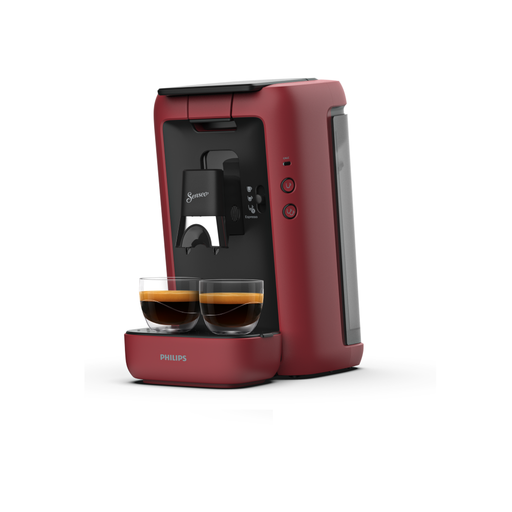 Image unavailable
Philips Senseo Maestro CSA260/91, vivid red
Worth considering if you’d like to make coffee with Senseo soft pods rather than fill a portafilter. Check that the pods you plan to use are compatible, and remember to descale the machine as instructed in the manual.
View on Joybuy
 Image unavailable
Philips Series 2200 EP2230/10 LatteGo, glossy black
This grinder machine is for anyone who prefers to use beans without filling a portafilter for every cup. The model is called LatteGo; if you make milk-based drinks, check the manual for instructions on cleaning the milk system.
View on Joybuy
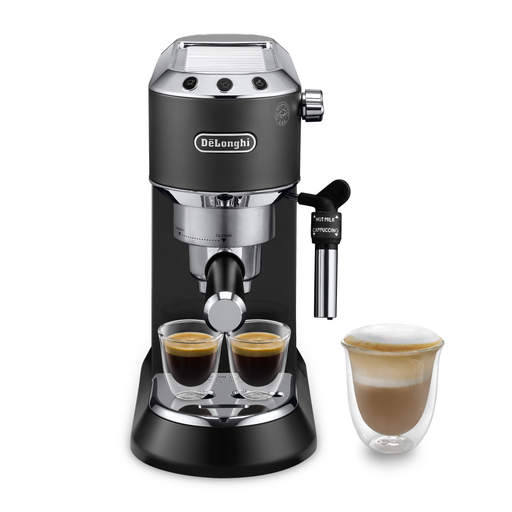 Image unavailable
De'Longhi Dedica Style EC685.BK, black
Worth considering if you’re happy with the steps involved in making coffee manually with a portafilter. This version is listed as having 15 bar pressure; check the tank capacity and the space needed for installation before choosing the model.
View on Joybuy
 Image unavailable
KRUPS Nespresso Essenza Mini, 0,6 L, 1 200 W, pure white
If you want to make coffee with capsules, check that the capsules you plan to use are suitable for this Essenza Mini’s Nespresso Original system. It’s listed as 0,6 L and 1 200 W; check the manual for descaling instructions.
View on Joybuy
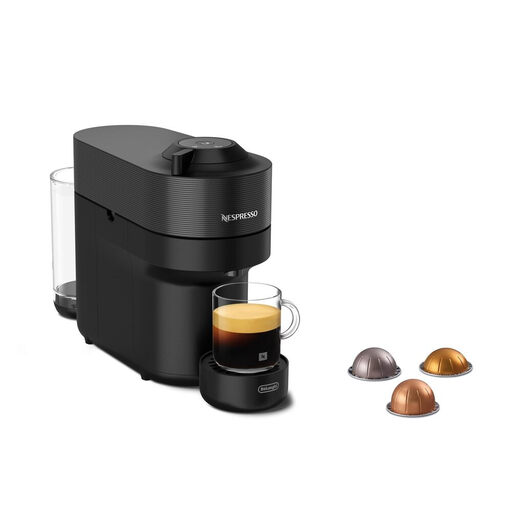 Image unavailable
Nespresso Vertuo Pop ENV90.B, 0,6 L, black
This version is for anyone who wants to use Vertuo capsules to make coffee at home. It’s listed as 0,6 L; measure the space available and check the model’s dimensions before setting it up.
View on Joybuy
Frequently asked questions
How often should you descale a coffee machine?
It depends on the machine and how you use it, so follow the manual and any alerts on your model. Nespresso France recommends descaling every three months or after around 300 capsules. Philips recommends descaling Senseo machines every three months, while De'Longhi says water hardness affects how often its grinder machines need descaling.
Can a compostable capsule or pod go in your home compost?
Not necessarily: check that the specific consumable is labelled as suitable for home composting. Que Choisir distinguishes this from products intended for industrial composting or a dedicated collection scheme. Also check the Info-tri label and the options available in your area.
Where should you dispose of coffee capsules in France?
For aluminium or plastic capsules, ADEME recommends using the recycling bin, bag or container for paper and packaging. For other materials or products with specific disposal instructions, check the Info-tri label and find out which recycling facilities are available locally.
Is an automatic grinder machine suitable for a small, quiet kitchen?
It depends on how much space you have and how much noise you’re comfortable with from the model you choose. Que Choisir says an automatic grinder machine is bulkier and noisier than a capsule system. Measure the space available, remembering to leave room to access the containers and water tank.


