What should you look for before buying?
Que Choisir identifies four types of espresso machine: capsule, soft pod, portafilter and bean-to-cup. If your household mainly wants larger cups of coffee rather than espresso, it’s also worth considering a filter coffee maker, though it’s a different type of machine from these four.
| Criterion |
What to check |
Who this matters to |
| Making several drinks in a row |
Compare the tank, how it is refilled and whether the specific model can prepare several cups one after another. |
If several people want coffee within minutes of each other, refilling and interruptions quickly become the main concern; around 31% of consumers put this at the top of their list. |
| Coffee choice and consumables |
Check which formats the machine accepts: capsules, soft pods, ground coffee or beans. Also look at the consumables needed for everyday use. |
If I want to switch between coffees or avoid relying on one particular format, I want to know what the machine can do before choosing it; around 23% of consumers prioritise this choice and the consumables involved. |
| Space and ease of use |
Measure the available space and the clearance needed to open or remove tanks and trays. |
In a kitchen with limited worktop space, a routine with fewer steps may matter more than extra settings; around 23% of consumers put space and simplicity first. |
| Maintenance and noise |
Check the manual for cleaning and descaling instructions, find out how noisy the machine is and check which parts are available for the model you’re considering. |
If the machine is used early in the morning or no one wants to spend much time maintaining it, I need to be comfortable with the day-to-day demands; around 23% of consumers make this their priority. |
Brands to consider
There are no brands to feature in this section.
Machines available on Joybuy
These models give you three ways to make coffee at home: a machine with a grinder, a capsule system and a portafilter machine. Compare how each one works with your usual routine before choosing a model.
 Image unavailable
Philips Series 2200 EP2230/10 LatteGo, with grinder
Worth considering if your household wants to make coffee from whole beans using an automatic machine. Check how much space it needs and what maintenance it requires in the manual for this model.
View on Joybuy
 Image unavailable
DE'LONGHI Magnifica Start ECAM220.21.WW, white
This bean-to-cup machine is for households that prefer this way of making coffee. Before buying, consider whether its size and maintenance requirements fit your daily routine.
View on Joybuy
 Image unavailable
DE'LONGHI Magnifica S ECAM22.140.B, black, with grinder
Another model to consider if your household wants to use whole beans. Measure the available space and check the manual to see whether its maintenance requirements suit your routine.
View on Joybuy
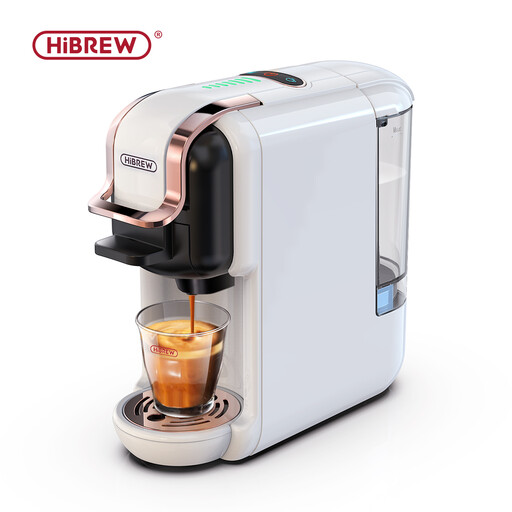 Image unavailable
HiBREW H2B 5-in-1, hot and cold
Worth considering if you’re looking for a single-serve machine that uses consumables rather than a grinder. Check with the seller which adapters are included and which formats this specific version actually accepts.
View on Joybuy
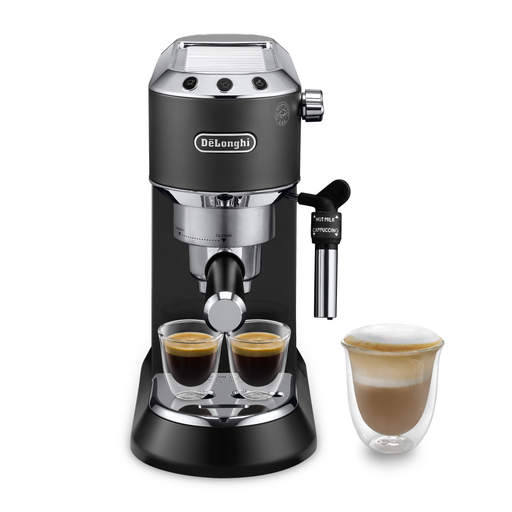 Image unavailable
DE'LONGHI Dedica Style EC685.BK, black
This portafilter model is suited to households happy to be more hands-on with preparation and cleaning. Check the tank capacity with the seller before deciding whether it will suit your household for making several coffees in a row.
View on Joybuy
Frequently asked questions
What tank capacity do you need for several coffees a day?
Start by working out the most drinks your household makes in a row, then compare the capacity and ease of refilling of the models you’re considering. Que Choisir includes the tank, speed and ease of use among the criteria to look at.
How often should you descale a machine used every day?
Follow your machine’s instructions and alerts, taking into account how hard your water is and how often you use it. Que Choisir recommends descaling every two to three months on average, but this won’t be the right schedule for every machine.
Where should you recycle aluminium or plastic capsules?
In France, ADEME advises putting aluminium or plastic coffee capsules in the recycling bin, bag or container for paper and packaging. Check what material your capsules are made from before following this guidance.
Will spare parts remain available for my machine?
Don’t assume the same availability requirement applies to every machine: the DGCCRF explains that it only covers certain categories of goods. For the model you’re interested in, ask for a list of the parts said to be available, how long they’ll be available for and how to order them.
Does a machine bought from a retailer come with the statutory guarantee of conformity?
In France, the statutory guarantee of conformity applies to new, second-hand and refurbished goods sold by a business to a private individual, according to the Ministry of the Economy. If the machine is faulty or doesn’t match its description, keep your proof of purchase and contact the seller to discuss the options available to you.


