Start by choosing the type of machine based on how often you’ll use it and how much preparation you’re happy to do: capsules to minimise effort, soft pods for simple serving, a portafilter if you want control over extraction, or an automatic bean-to-cup machine for regular use of whole coffee beans. UFC-Que Choisir notes that a bean-to-cup machine or portafilter generally requires a higher initial investment. You should also check the machine’s footprint, maintenance requirements and consumable format before making your decision.
Which households are they for?
Busy households with individual coffee habits
If you mainly prepare one cup at a time, want minimal effort and have limited worktop space, start by comparing capsule and soft-pod machines. Then check the exact consumable format accepted and its ongoing cost. Based on UFC-Que Choisir and Senseo France.
Regular whole-bean coffee drinkers
A bean-to-cup espresso machine is a good choice if you want to select your own beans and are happy with a larger appliance and a regular maintenance routine. UFC-Que Choisir states that the cost per cup can be lower than that of pod espresso under the conditions compared.
Fans of hands-on preparation
A portafilter machine is for people who want to control the coffee, dose and tamping, and who are happy to spend the associated time preparing and cleaning it. De’Longhi France presents its manual models as being designed for a more hands-on preparation experience.
Buying priorities
Start by comparing how often you’ll be serving coffee, the type of coffee you want to use and the maintenance tasks your household is prepared to handle week after week.
| Priority |
What to check |
Your needs |
| Ease and speed of preparation |
Compare the number of consecutive cups, the stated preparation time for one cup and the steps involved. Check whether the machine doses and prepares coffee automatically, or whether you need to grind, fill and tamp it yourself. |
I want to serve several coffees without complicated settings. Capsules and pods offer ready-to-use portions, while an automatic bean-to-cup machine reduces the dosing steps compared with a portafilter. |
| Long-term cost |
Consider the price of the machine alongside the type of coffee it accepts, maintenance consumables and the number of coffees you actually make. Check filters or cartridges only if they are required or recommended for the model you choose. |
I prefer to balance the initial investment against ongoing coffee and maintenance costs. UFC-Que Choisir states that a bean-to-cup machine can offer a cost per cup two to three times lower than pod espresso in its comparison. |
| Maintenance and available space |
Check the dimensions, access to the tanks, coffee unit and parts that need rinsing. Consult the recommended descaling schedule based on water hardness and frequency of use. |
My machine needs to fit in my kitchen and remain easy to clean. A bean-to-cup machine generally takes up more space and requires regular rinsing of the tanks, so make sure you’re happy with this routine before buying. |
| Consumables and packaging |
Identify the exact capsule or pod format accepted, then check its availability through the retailers you use. For capsules, also check the recycling guidance that applies in your area. |
I want to avoid an incompatible format and choose a solution that fits with my recycling habits. In an Ifop / Alliance for the Recycling of Aluminium Capsules survey conducted in December 2023 among 2,166 French consumers of aluminium capsules, 75% said they sorted them for recycling at least occasionally. |
Mistakes to avoid
-
Choosing a capsule machine before checking the format
Most systems accept only one type of capsule. A capsule compatible with one range is not necessarily compatible with another range from the same brand.
Look for the exact system name on the product page, try a small selection of compatible capsules first, then build up your supply once you’ve confirmed the format.
Capsules or pods, descaling products and any cartridges all add to the running costs.
-
Underestimating the maintenance required for a bean-to-cup or milk machine
Bean-to-cup machines require the tanks to be rinsed and, depending on the model, the brewing chamber too. Steam wands should be rinsed after preparing milk drinks; descaling depends in particular on water hardness and frequency of use.
Before buying, consult the manual to understand the cleaning steps, access to the coffee unit, the milk-system rinsing procedure and any filters required.
Maintenance takes time, requires descaling products and may involve specific consumables.
-
Confusing recyclability with having no waste
According to ADEME, aluminium or plastic capsules can be placed in the paper and packaging recycling stream, but they are still individual portions of packaging.
If reducing individual portions is a long-term priority for your household, also compare a portafilter or bean-to-cup machine that uses ground coffee or whole beans.
Brand guide for the different machine types
Nespresso
A useful reference for understanding the compatibility limitations of a capsule system: Nespresso France states that its aluminium and paper-based Original capsules are compatible with Nespresso Original machines.
- The brand advertises more than 30 Original coffees.
- Your choice should still be based on the accepted format, ongoing cost and access to compatible consumables.
Senseo
A representative brand for soft-pod machines, designed to prepare one or two cups simply.
- Senseo France states that the Senseo Original prepares one cup in 30 seconds and two cups in under 60 seconds.
- These specifications apply to this model and do not prove compatibility with every pod format.
De'Longhi
The brand’s French range includes manual espresso machines and bean-to-cup espresso machines, offering two options suited to different preparation habits.
- De’Longhi France presents its automatic models as operable at the touch of a button and its manual models as designed for a hands-on preparation experience.
- This manufacturer description does not allow the results, maintenance requirements or noise levels to be generalised across all models.
Philips
An example of an offering combining whole beans with an automated portafilter, for people who want bean coffee without carrying out every step themselves.
- For the Baristina BAR300/60, Philips specifies a ceramic grinder and automatic grinding, tamping and extraction.
- These brand specifications and claims apply to this particular model, not to the entire Philips range.
Joybuy options
These Joybuy options include bean-to-cup, soft-pod and capsule machines, allowing you to compare different at-home coffee routines.
 Image unavailable
Philips EP2230/10 Series 2200 LatteGo
For a household that regularly prepares bean-to-cup espresso and also wants milk-based drinks.
Grinder with 12 settings, adjustable intensity and length, 1.8 L water tank, 275 g hopper and two-coffee preparation.
The coffee unit, drip tray and LatteGo system still need cleaning; the AquaClean filter is listed as compatible but is not included.
Joybuy
 Image unavailable
De'Longhi Magnifica S ECAM22.140.B
For preparing several espressos with whole beans or ground coffee, with a steam wand for milk.
Built-in grinder, 15-bar pump, Thermoblock, 1.8 L water tank, two-cup function and steam wand.
The steam wand and drip tray require regular cleaning. Check the actual footprint and the conditions for using a water filter.
Joybuy
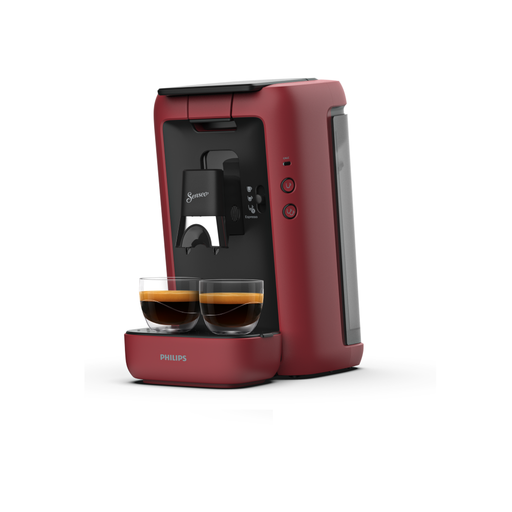 Image unavailable
Philips Senseo CSA260/91 Maestro
For a household that wants to serve one or two cups quickly with a simple routine.
1.2 L water tank, two pod holders included, adjustable spout, three recipes, Memo function and descaling indicator.
It uses SENSEO pods. Allow for the recommended descaling every three months and check the cost of your chosen format.
Joybuy
 Image unavailable
HiBREW H1C 6-in-1
For a small household that wants to switch between several capsule formats, ESE pods and ground coffee.
Advertised compatibility with NS Original, DG and K-cup capsules, ESE pods and ground coffee, 20-bar pump, 600 ml water tank and dimensions of 300 × 143 × 280 mm.
Check the exact formats permitted, the availability of consumables in France and the descaling procedure before buying.
Joybuy
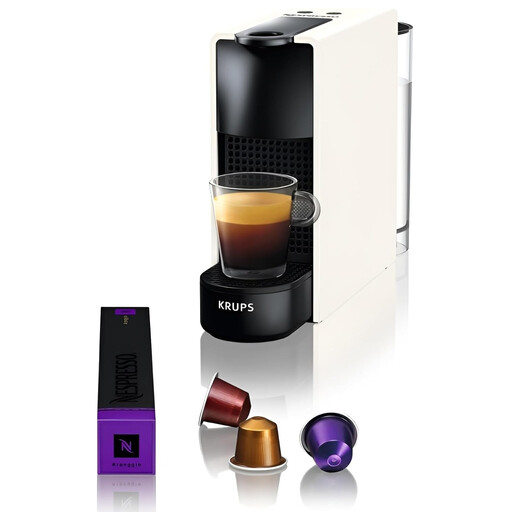 Image unavailable
KRUPS Nespresso Essenza Mini
For quick individual espressos in a kitchen where space is limited.
Two programmable volumes of 40 and 110 ml, 19-bar pump, heating time of 25 seconds, removable 0.6 L water tank and automatic switch-off.
It accepts Nespresso Original or compatible capsules. The 0.6 L tank and six-capsule container may need frequent attention with regular use.
Joybuy
Frequently asked questions
Are all capsules compatible with one another?
No. UFC-Que Choisir states that most brands accept only one type of capsule. Check the exact system specified on the machine’s product page before buying consumables. For example, Nespresso France specifies that its Original capsules are compatible with Nespresso Original machines.
How should coffee capsules be recycled in France?
ADEME states that aluminium or plastic capsules can be placed in the recycling bin, bag or container for paper and packaging. However, follow your local guidance, and don’t choose a capsule based solely on recyclability if individual packaging is a concern for you.
What maintenance does an espresso machine require?
Descaling should be adapted to the hardness of your water and how often you use the machine. UFC-Que Choisir recommends descaling every two to three months on average. For a bean-to-cup machine, also rinse the coffee-ground and drip trays regularly and follow the model’s cleaning alerts.
Should you buy an extended warranty for a coffee machine?
Not automatically. In France, the Ministry of the Economy states that the legal guarantee of conformity applies to new, second-hand and refurbished goods sold by a professional to a private individual. Compare any paid commercial warranty with this protection and check its exclusions, particularly those relating to maintenance and descaling.


