What should you check before choosing?
Start with the drinks you actually make, then consider the daily steps involved and how much space the machine will need.
| Priority |
What to check |
Your needs |
| Coffee format |
Check which capsule system the machine accepts, or whether it can use your preferred ground coffee or beans. If you choose capsules, find out what collection options are available nearby. |
I want to be able to find the coffee I use easily and know what to do with the capsules after use. |
| Preparation |
Compare the steps involved in measuring, making a drink and cleaning the equipment. A portafilter machine involves different hands-on work from a capsule machine or an automatic bean-to-cup machine. |
Some mornings, I want to make a cup with minimal effort; at other times, I’d like to choose my ground coffee and prepare the extraction myself. |
| Milk-based drinks |
Check whether the model has a manual steam wand or an automatic milk system, which recipes it offers and how its parts are cleaned. |
If I often make cappuccinos, cleaning the milk system matters just as much as making the drink. |
| Maintenance |
Check the manual for rinsing instructions, access to the trays, how to maintain the brewing unit if there is one, and descaling. According to UFC-Que Choisir, limescale can affect the temperature and extraction pressure. |
I’d rather choose a machine whose maintenance routine I can keep up with day to day. |
| Space and noise |
Measure the space needed to fill the tanks and remove the trays. Check the dimensions and, where available, comparable noise measurements: UFC-Que Choisir says a grinder takes up more space and is noisier than a capsule system or a filter coffee machine. |
The machine will stay on my worktop, and grinding noise may matter when I make coffee early in the morning. |
| Coffee in the cup |
To compare models, look for tests carried out using the same method. The test published by UFC-Que Choisir in January 2026 looks at factors including temperature and how consistently the volume is maintained across successive cups. |
I’m looking for a consistently good espresso, without assuming that a pressure rating or a taste claim proves it. |
| Amount served |
Decide whether you make individual espressos or several cups of long coffee at once. A filter coffee machine suits the latter, but it won’t replace a short espresso. |
When several people want long coffee at the same time, my needs are different from when I’m making one espresso. |
Which ranges should you consider?
These examples can help you compare formats and features to look out for; specifications vary by model.
Nespresso
Nespresso’s Original range includes machines and capsules designed for this system, including options for espresso and lungo.
- Nespresso says its Original range includes more than 30 coffees and offers collection points for used capsules in France.
- Check which system the machine accepts: Original and Vertuo are different formats. Also find a collection point that’s convenient for you.
De’Longhi
According to its range information, De’Longhi offers automatic machines that make drinks using beans ground by the machine.
- Automatic preparation may appeal to households that want to use beans without grinding them by hand.
- Check the drinks on offer, the milk system, dimensions and maintenance steps for each model.
Philips
Some Philips grinder ranges combine coffee preparation with a LatteGo milk system.
- Philips says the Series 5500 EP5543/90 lets you customise and save drinks across four user profiles.
- Don’t assume the number of recipes, settings or noise levels are the same across different series; check the specific model.
Severin
The Severin KA 5978 portafilter machine is an example of another way to make espresso: take a hands-on approach rather than selecting a drink on an automatic bean-to-cup machine.
- Severin says the KA 5978 has a steam wand for preparing milk, including for cappuccinos.
- If you make several cups in a row, check the tank capacity and what you’ll need to do between drinks.
Espresso machines available on Joybuy
These models offer three ways to make espresso at home: automatic bean-to-cup, capsules and a portafilter. Start by comparing how each one works and the maintenance it involves.
 Image unavailable
HiBREW H16, automatic bean-to-cup machine with milk system
Worth considering if you want to make espresso regularly without grinding beans by hand, and also enjoy milk-based drinks. The model name mentions six coffee varieties and a touchscreen; check the manual for the drinks on offer, how to maintain the milk system and how much space you’ll need around the machine.
View on Joybuy
 Image unavailable
De’Longhi Magnifica S ECAM22.140.B, with grinder
This automatic model is for anyone who wants to make coffee from beans without using a portafilter for every cup. If milk-based drinks matter to you, check what’s involved in using the steam wand. Also check the dimensions, noise and maintenance requirements before deciding where to put it.
View on Joybuy
 Image unavailable
KRUPS Nespresso Essenza Mini, 0.6 L, 1200 W
This capsule machine is worth considering if you mainly make individual cups and want to avoid measuring out ground coffee. Its name gives the tank capacity as 0.6 L and the power as 1200 W; check that your chosen capsules are compatible with the Original system.
View on Joybuy
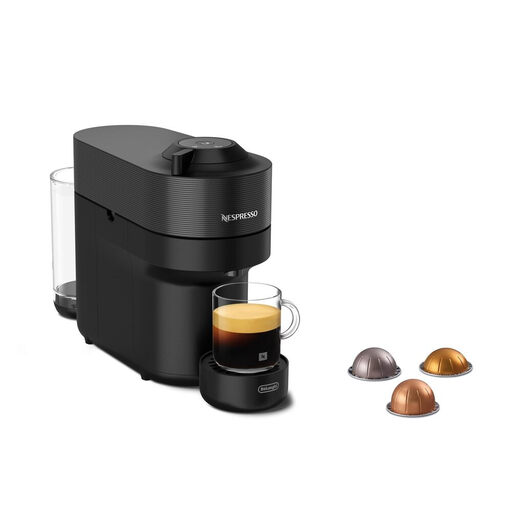 Image unavailable
Nespresso Vertuo Pop ENV90.B, 0.6 L
Worth considering if you’re looking for a Vertuo capsule machine for individual drinks, including espresso. Its name gives the tank capacity as 0.6 L; check the drink volumes available with this variant against what you usually make, and choose Vertuo capsules.
View on Joybuy
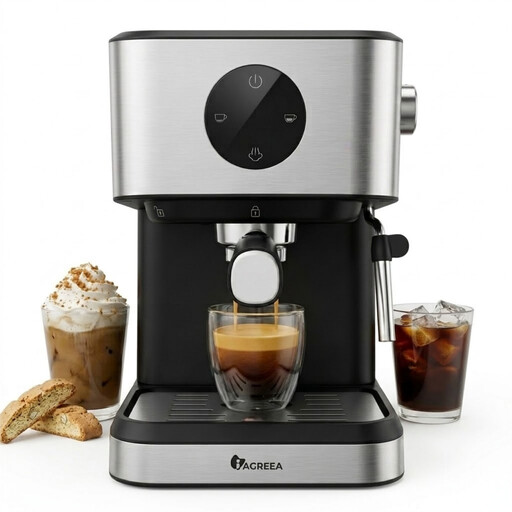 Image unavailable
IAGREEA, 20 bar portafilter machine, 50 oz tank
This portafilter machine is for anyone who wants to make espresso with ground coffee and is happy to do a little more by hand. Its name mentions a steam wand and cup warmer; the stated 20 bars alone aren’t enough to judge the coffee in the cup. Check how much space you’ll need and what’s involved in cleaning it after making milk-based drinks.
View on Joybuy
Frequently asked questions
How can I assess the noise and space needed for a bean-to-cup espresso machine?
Check the machine’s dimensions and the space needed to fill it with water and beans, remove the trays and clean it. For noise, look for measurements taken using a comparable method: UFC-Que Choisir’s test method considers noise, vibration and stability, while any manufacturer’s claim should be checked against the specific model.
How can I compare the coffee from two machines?
Compare machines tested using the same method rather than relying only on their stated pressure. The test published by UFC-Que Choisir in January 2026 looks at factors including temperature, consistency of volume across several cups, crema and flow rate.
What maintenance does a machine need if it’s used every day?
Clean the trays and, depending on the model, the brewing unit and milk system. You should also follow the descaling instructions in the manual. UFC-Que Choisir explains that limescale build-up can block the nozzles and affect the temperature and extraction pressure.
What should I do with used capsules and a machine at the end of its life?
For capsules, follow the Info-tri guidance on the product or packaging and check the collection options for their brand; Nespresso says it has collection points for its capsules in France. For the machine, check the Info-tri guidance and the take-back or collection options available locally.


