For fewer steps each morning
If you often make one cup at a time and have limited space, compare capsule and pod machines. Be sure to check which type of coffee they take and how much room you’ll need to fill the water tank.


For your daily coffee at home, start by comparing how much you’re happy to do for each cup. Capsules and pods keep things simple, a portafilter involves hands-on preparation, while a grinder lets you use whole beans with much of the preparation automated. According to Que Choisir, machines with grinders are generally larger and noisier than capsule machines. These factors, along with maintenance and keeping your coffee supply topped up, could affect your choice.
If you often make one cup at a time and have limited space, compare capsule and pod machines. Be sure to check which type of coffee they take and how much room you’ll need to fill the water tank.
A machine with a grinder is worth considering if you want to use whole beans and automate some of the preparation. Que Choisir recommends this type in particular for coffee enthusiasts and people who drink a lot of coffee. Remember to factor in its size, noise and maintenance, too.
A portafilter machine suits anyone who wants to fill and tamp the ground coffee themselves. De’Longhi describes these steps as part of using its manual machines, so you’ll need to do them every time you make a coffee.
Start with your routine, then check the space available, the drinks each model makes and the maintenance it requires.
| Consideration | What to check | Think about your needs |
|---|---|---|
| Preparation | Compare the number of steps involved for each cup and the water tank capacity. With a portafilter, you’ll need to add and tamp the ground coffee. For other types of machine, check the controls on the model you’re considering. | In the morning, I’d rather keep handling to a minimum. If I like the idea of preparing ground coffee myself, I could consider a portafilter machine. |
| Coffee supply | Check the exact format of the capsules or pods, and which varieties you’ll be able to buy regularly. For a machine with a grinder, check which types of coffee it’s designed for. | I want to be able to restock without changing my coffee habits. |
| Space and noise | Check the width, depth and height, as well as the clearance needed to fill the machine or remove its containers. According to Que Choisir, machines with grinders are generally larger and noisier than capsule machines, but check the specific model. | My machine needs to fit on the worktop and suit the times I use the kitchen. |
| Maintenance | Check the manual for cleaning and descaling instructions, and see how easy it is to access removable parts. If the machine makes milk-based drinks, check how to maintain the milk system, too. | I can set aside time for maintenance, but I want to know what’s involved before choosing. |
| Drinks | Check which drinks and settings are listed for the exact model. Don’t assume a machine has a milk system or specific recipes just because of the type of machine it is. | Will black coffee be enough, or will I also make drinks with milk? I want to choose features I’ll actually use. |
The system you choose determines which capsules you’ll need to look for later.
Make a note of the format compatible with the machine and check that you can get hold of the right capsules.
Filling the containers and cleaning the machine are extra tasks to factor in alongside making coffee. According to Que Choisir, machines with grinders generally take up more space than capsule machines.
Measure the space you have and check the manual to see how to access the containers and what maintenance the model needs.
As De’Longhi explains for its manual machines, you need to add and tamp the ground coffee, then lock the portafilter into place.
If you don’t want to do this for every cup, compare the controls on capsule, pod and grinder machines instead.
A spot may seem big enough, but there might not be enough clearance to fill the water tank or remove a container.
Check the full dimensions and the space needed to handle removable parts, especially if you’re placing the machine under a wall cupboard.
These models illustrate three ways to make coffee at home: soft pods, capsules and machines with a bean grinder. Compare them based on how you like to prepare your coffee, the space you have available and the type of coffee they use.
 Image unavailable
Worth considering if you’d like to make your everyday coffee from beans using a machine with a grinder. Check that you have enough space and that its maintenance requirements fit your routine.
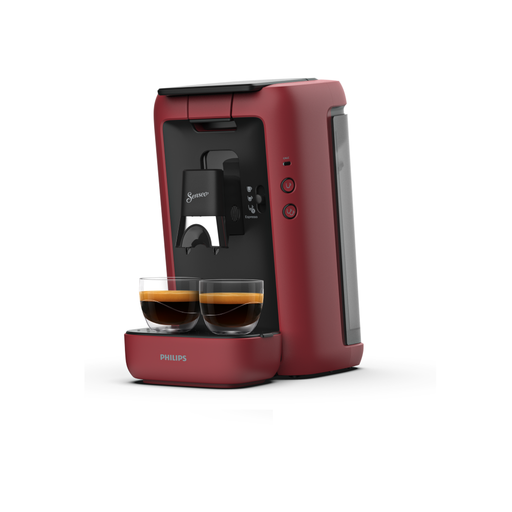 Image unavailable
An option for soft pod drinkers who’d rather not grind or tamp their coffee. Check the SENSEO pod format and make sure it’s available where you usually shop.
 Image unavailable
This machine with a grinder is designed for anyone who wants to make whole-bean coffee part of their routine. Before setting aside space for it, check its dimensions, access to the tanks and maintenance requirements.
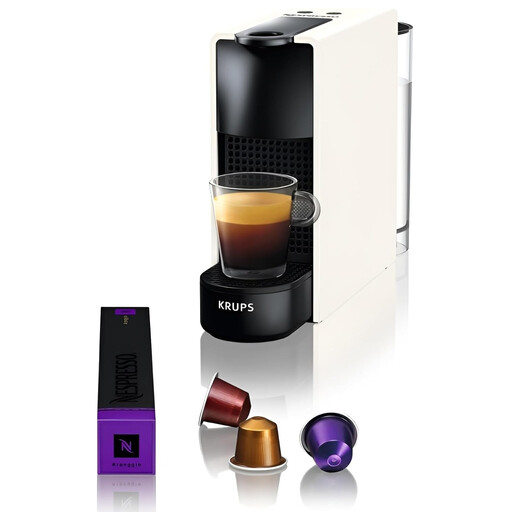 Image unavailable
Worth a look if you’d rather make coffee with capsules than handle ground coffee. The tank capacity is listed as 0.6 L; check that this and the capsule format suit your needs.
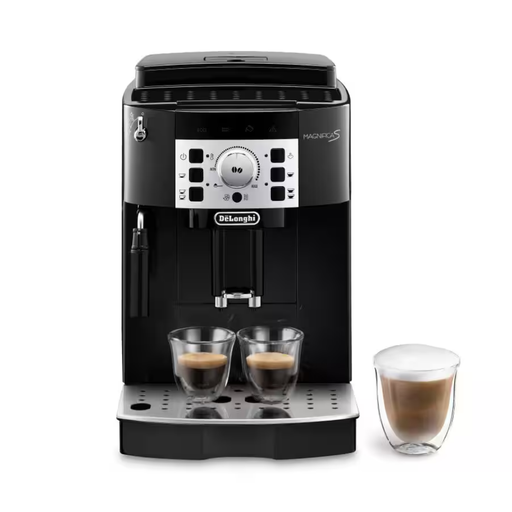 Image unavailable
Another automatic machine with a grinder for making coffee at home from whole beans. Compare its size and maintenance tasks with those of other grinder machines before choosing.
No, you’ll need capsules that are compatible with the machine’s system. Check its exact format and which capsules are available for it before you buy. A coffee delivery service won’t change which capsules the machine can use.
Yes. Follow the cleaning and descaling instructions in the manual for your model. Philips, for example, treats these as two separate maintenance tasks. The steps and products required depend on the machine.