For making both short and long coffees every day, start by deciding how much hands-on preparation you’re happy with. Capsules and pods make serving easier, a portafilter gives you more control over the brewing process, while an automatic grinder prepares coffee from beans for you. You can then narrow down the options by checking compatible coffee formats, available space and regular maintenance, to find a machine that suits your routine.
Which method is right for you?
Households looking for coffee without manual preparation
If several people have coffee at different times, capsules and pods are two options that keep the steps between cups to a minimum. Check that the machine’s compatible format suits the coffees you want to make.
Coffee lovers who want a hands-on espresso
A portafilter is for those who are happy to fill, tamp and clean the brewing components themselves. A steam wand may also be worth considering if milk-based drinks are part of your household’s routine.
Households that regularly use coffee beans
An automatic grinder lets you make coffee from beans with minimal effort when serving. In return, you’ll need to empty the containers and carry out model-specific maintenance, as Que Choisir points out.
What sets these machines apart?
Capsules
Best if: you want to make coffee with minimal preparation and are happy to use the capsule system chosen for your machine.
Bear in mind: your choice of coffee depends on the compatible format, and used capsules need to be sorted for recycling.
Soft pods
Best if: you want a simple way to make coffee using pre-measured portions.
Bear in mind: you’re limited to the pods accepted by the machine, without the adjustment steps involved in using a portafilter.
Portafilter
Best if: measuring out your coffee and getting hands-on with the brewing process are part of the appeal.
Bear in mind: filling and cleaning the portafilter takes effort every time you use it; the steam wand also needs rinsing after use.
Automatic grinder
Best if: your household often uses coffee beans and you’d like the machine to automate the brewing process.
Bear in mind: the containers, internal system and, depending on the model, milk system all add to the maintenance routine.
| What to consider |
What to check |
Who is it for? |
| Steps for each cup |
Compare the controls and the steps needed between cups of coffee. |
When everyone makes coffee at a different time, I want to prepare mine without measuring or tamping. Around 25% of consumers would put this simplicity first. |
| Everyday coffee choice |
Check which capsule or pod formats are accepted, or whether the grinder uses coffee beans. |
If my household drinks coffee often, I want to choose which coffees we use without being tied to a format that doesn’t suit me. For around 31% of consumers, this freedom of choice would be the priority. |
| Adjustments and milk-based drinks |
Look at the adjustments you’d like to make and, for milk, which parts need cleaning. |
I enjoy getting hands-on with espresso preparation or regularly serving milk-based drinks, even if that means more effort. Around 25% of consumers would put this level of control first. |
| Maintenance and waste |
Check the descaling and cleaning instructions, and find out how to sort any consumables for recycling. |
Before choosing, I want to know what tasks and waste will come with my daily coffee. Around 19% of consumers would make this their main concern. |
Things not to overlook
-
Underestimating maintenance for the grinder or milk system
A grinder may need some components emptied and rinsed, while parts connected to the milk system require particular care. Que Choisir recommends following the machine’s instructions for milk-based drinks and rinsing the steam wand after use.
Before choosing a model, check its manual to find out which parts need removing, how to clean them and what the descaling instructions are.
-
Assuming all capsules are compatible
A simple brewing process won’t be much use if the machine doesn’t accept the coffees your household wants to use. Check compatibility for the exact model rather than relying on the brand name alone.
Make a note of the coffees you’d like to prepare, then check that they’re compatible with the machine you’re considering.
-
Assuming recycling solves all the waste issues
Capsules are still individually packaged portions. ADEME says aluminium and plastic capsules can be sorted for recycling, while also encouraging people to limit individual packaging where possible.
If waste is an important factor in your decision, compare the types of consumables and check what they’re made of, as well as your local recycling guidance.
Brands to know by machine type
Nespresso
A capsule machine system to consider if you prefer portioned coffee and model-specific maintenance instructions.
- Nespresso offers machine-specific help with using and maintaining its machines.
- The brand recommends descaling its machines every three months or after around 300 capsules, adjusting this as needed for factors such as water hardness. Follow your model’s instructions.
SENSEO® / Philips
A range of soft pod machines designed for making coffee at home.
- Using pre-measured pods may suit coffee drinkers who don’t want to fill a portafilter.
- Check which pods are accepted, what cup sizes are available and which replacement parts are available for the model you’re considering.
Sage
The Bambino is aimed at coffee drinkers interested in portafilter brewing and steam-textured milk drinks.
- Sage lists a 54 mm portafilter, an 18 g dose and a steam wand for the Bambino; these specifications apply to this model.
- You’ll need to get to grips with the grind and tamping, then clean the components you’ve used.
De’Longhi
The brand offers several automatic grinder ranges, with drinks and controls varying by model.
- The Magnifica, Dinamica and PrimaDonna ranges let you explore different levels of coffee and milk features.
- According to De’Longhi, how often you need to descale depends in part on water hardness. Check the instructions for the machine you choose.
Philips
Some Philips grinders offer drink settings and a LatteGo milk system.
- Philips describes the relevant LatteGo jug as a two-part assembly with no tube, which can be rinsed under the tap or put in the dishwasher.
- Check the exact model number, its components and its maintenance instructions: LatteGo features don’t apply to every Philips model.
Machines for different needs
These machines let you explore three ways to make coffee at home: an automatic grinder, capsules and a portafilter. First choose the method that suits your daily routine, then check the specifications of the model you’re considering.
 Image unavailable
HiBREW H16, automatic espresso machine with grinder and milk system
For households that want to make coffee from beans regularly, with fewer manual steps. The model name lists six drink varieties and a milk system; check the components and cleaning steps for the latter.
View on Joybuy
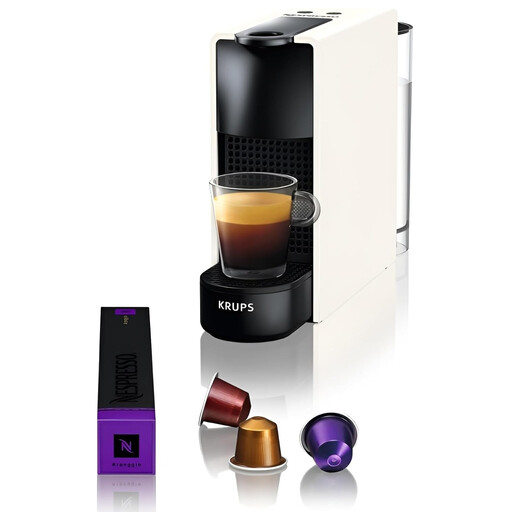 Image unavailable
KRUPS Nespresso Essenza Mini, white, 0.6 L
For making coffee with a capsule machine rather than filling a portafilter. This white version is listed with a 0.6 L capacity and a rated power of 1,200 W. Check that the Nespresso Original capsule format suits the coffees you like.
View on Joybuy
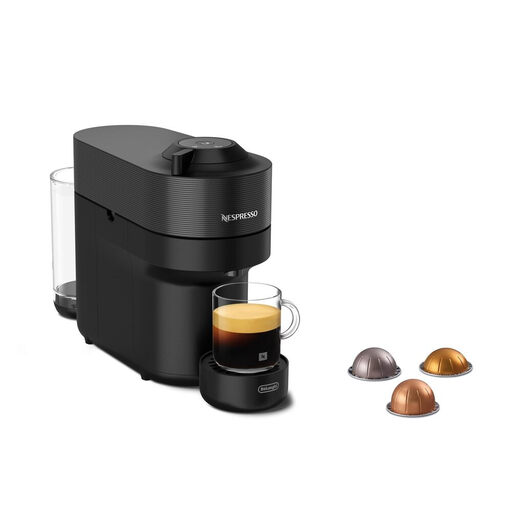 Image unavailable
Nespresso Vertuo Pop ENV90.B, black, 0.6 L
For households interested in capsule brewing and a choice of coffee sizes. This model uses Vertuo capsules, so check that their formats suit the cups you want rather than assuming capsules from another range will work.
View on Joybuy
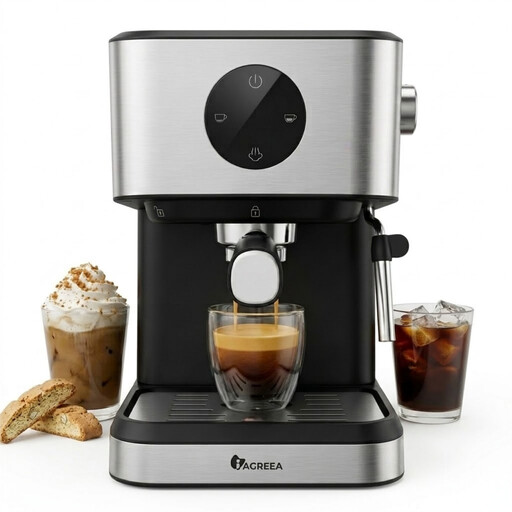 Image unavailable
IAGREEA, portafilter espresso machine with steam wand, 20 bar
For coffee drinkers who want to fill a portafilter themselves and use a steam wand for milk. The model name lists a claimed pressure of 20 bar and a 50 oz reservoir; the rated pressure alone isn’t enough to judge the coffee in the cup. Remember to clean the steam wand after use.
View on Joybuy
 Image unavailable
HiBREW H1C 6-in-1, black capsule machine
For coffee drinkers interested in a machine advertised as offering several ways to make coffee. The model name mentions ground coffee, hot and cold drinks, and 20 bar pressure. Check exactly which capsules it accepts and what accessories you’ll need before choosing.
View on Joybuy
Frequently asked questions
How often should you descale an espresso machine?
Follow your model’s indicator and instructions, as water hardness and how often you use the machine both matter. As a general guide, Que Choisir suggests descaling every two to three months. Nespresso recommends doing so every three months or after around 300 capsules for its machines, with adjustments for hard water.
What needs cleaning after making a milk-based drink?
Cleaning depends on the machine’s milk system: rinse the steam wand after use and follow the instructions for automatic systems. Before choosing, check which parts can be removed and how to clean them.
How should you sort coffee capsules for recycling in France?
According to ADEME, aluminium or plastic capsules go in the recycling container for paper and packaging. Check what your capsules are made of and follow your local authority’s guidance. For paper capsules, check local options for composting or collecting food waste.
What should you check about product marking and warranties in France?
For an appliance covered by the relevant rules, check for the CE marking, but don’t mistake it for independent certification, as DGCCRF explains. It also distinguishes between the statutory guarantee of conformity, the guarantee against hidden defects and any commercial warranty offered by the seller. Check the terms of the latter and don’t confuse it with your statutory rights.


