Households that make espresso regularly
If you enjoy choosing your beans and adjusting your coffee, an automatic bean-to-cup machine is worth comparing with the other formats. Just make sure you have space for the machine and time for its upkeep.


A bean-to-cup machine suits a household that makes espresso regularly, wants to choose its own beans and is happy with a larger, noisier appliance that needs regular maintenance. Capsules prioritise convenience and take up less space, while a portafilter machine involves more hands-on preparation. If you mainly drink filter coffee, a filter coffee machine meets a different need from an espresso machine.
How often you drink espresso isn’t the only thing to consider: preparation, available space and milk-based drinks all matter too.
If you enjoy choosing your beans and adjusting your coffee, an automatic bean-to-cup machine is worth comparing with the other formats. Just make sure you have space for the machine and time for its upkeep.
A capsule machine may suit you if speed, a compact design and a simple routine matter more than choosing your own beans. Check which capsule format the machine you’re considering accepts.
If you often make cappuccinos, compare frothing milk by hand with a steam wand or frother against using an automatic milk system. The latter has extra parts to clean after use.
Worth considering: if you regularly make espresso from beans and want easy-to-use settings on your chosen machine.
Things to bear in mind: the grinding noise, the space it takes up and cleaning the parts specified in the manual.
Worth considering: if quick preparation and minimal effort matter more than choosing your own beans.
Check: which capsule format the machine accepts and how to sort the capsules after use.
Worth considering: if you want to control the dose, tamping and espresso extraction.
Things to bear in mind: it takes more hands-on work and practice than using capsules or an automatic bean-to-cup machine.
Worth considering: if you mainly make filter coffee, particularly several cups at a time.
Remember: it won’t make the espresso you’d get from an espresso machine.
| Criteria | What to check | Think about your needs |
|---|---|---|
| Preparation and settings | Check which type of coffee the machine takes, what settings it actually offers and how many steps are involved in making your usual drink. | I often make espresso and want to choose my beans; or I’d rather make a quick drink without adjusting the settings. |
| Maintenance | Check the manual for instructions on rinsing the trays, accessing the brew group (depending on the model) and running descaling cycles. Que Choisir highlights the importance of cleaning for an espresso machine to work properly. | Cleaning the parts I use needs to fit into my routine, especially if I make several coffees a day. |
| Space and noise | Measure the available space, including room to access the trays and water tank. Que Choisir says bean-to-cup machines take up more space and are noisier than capsule systems or filter coffee machines. | In a small kitchen or early in the morning, I want to know where I’ll put the machine and whether the grinding noise will bother me. |
| Milk-based drinks | Compare the steam wand, standard frother and automatic milk carafe on the models you’re considering. Check which parts of the milk system need cleaning too. | If I regularly make cappuccinos, I may appreciate an automatic system; for occasional use, I’m happy to prepare the milk by hand. |
A machine might fit on your worktop but leave too little room to open the bean hopper or remove the water tank. Que Choisir also notes that bean-to-cup machines generally take up more space and make more noise than capsule machines or filter coffee machines.
Measure the available height and depth too, then check how much access each compartment needs. If early-morning noise matters, look for information about the specific model.
Rinsing the trays and running cleaning cycles are in addition to making your coffee. Depending on the model, a milk system will also need its parts cleaned.
Read the manual for the model you’re considering to find out which parts need cleaning and what the descaling instructions are before choosing a machine for everyday use.
An automatic milk system makes some drinks easier to prepare, but it adds parts to maintain even if you only occasionally make milk-based drinks.
Think about what you make during a typical week: a steam wand or manual frother may be enough for the odd cappuccino.
In December 2023, Que Choisir reported that some manufacturers limited their commercial warranty on bean-to-cup machines to 5 000, 8 000 or 15 000 coffees. These limits don’t apply to every machine.
Read the manufacturer’s warranty terms for the model you choose, paying particular attention to any cycle limits and related maintenance instructions.
These examples help you compare specific configurations. A brand name alone doesn’t tell you everything, so check the exact model and its milk system.
The Magnifica S ECAM22.140.B is an example of a bean-to-cup machine with a 1,8 L tank, according to De’Longhi’s product information.
Philips describes the 3300 Series EP3329/70 as a machine that offers five drinks.
The Purista is one of Melitta’s bean-to-cup machines. The brand also offers support tools to help maintain and troubleshoot its automatic machines.
These options include bean-to-cup machines for whole beans and, as an alternative, a portafilter machine for ground coffee or ESE pods. First, choose the preparation method that suits your habits.
 Image unavailable
Worth considering if you want to make coffee from beans and enjoy milk-based drinks too. Check the recipes available on the EP2230/10 and how to clean the LatteGo system before choosing.
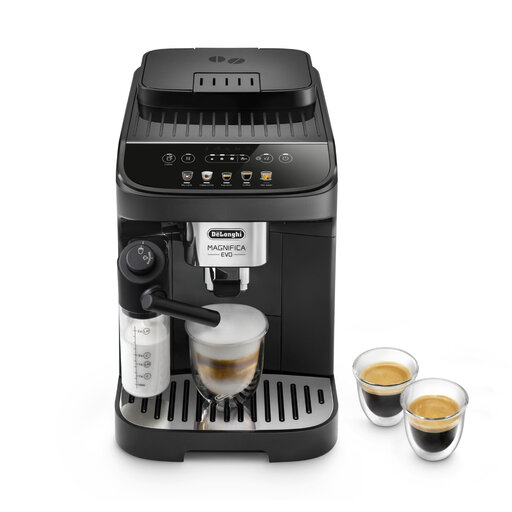 Image unavailable
This bean-to-cup machine is worth considering if milk-based drinks are a regular part of your routine. Check which recipes are available on the ECAM290.61.B variant and allow time to clean the LatteCrema carafe.
 Image unavailable
This machine is for anyone who wants to make espresso from beans and is also considering milk-based drinks. Before deciding, check the H16 manual for the drinks available and how to maintain the milk system.
 Image unavailable
Worth comparing if you mainly make espresso from beans and occasionally froth milk using a manual steam wand. De’Longhi lists a 1,8 L tank for the ECAM22.140.B; also check how much space you’ll need to access the trays.
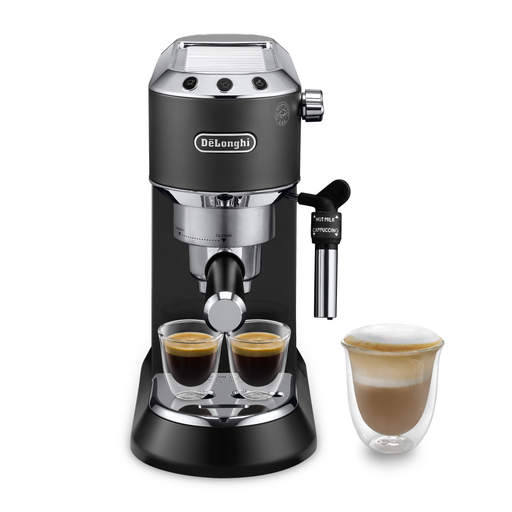 Image unavailable
This portafilter machine offers a more hands-on way to prepare coffee using ground coffee or ESE pods. It doesn’t grind beans, so if you want to use whole beans, you’ll need another way to grind them.
Rinse the trays and run the cleaning cycles required for your model, and descale it according to the manual. Access to the brew group and the steps involved vary by machine, so check the instructions before you buy.
Don’t assume so: follow the alerts and maintenance programme for the model you choose. Philips notes that, according to its AquaClean guidance, the number of cups you can make before descaling varies depending on factors including the coffees prepared and rinsing and cleaning cycles.
No. A steam wand or standard frother may be suitable if you’re happy to prepare the milk by hand. If you often make milk-based drinks, compare this with using an automatic carafe and factor in the need to clean its parts.
According to ADEME, capsules put in the household rubbish bin follow the same waste disposal route as other household waste. For a different collection method, check your local guidance for the material your capsules are made from.