Busy mornings
If you want to make coffee with minimal effort and clean up quickly between uses, start by looking at capsule and soft pod machines. Then check which consumables the model accepts.


For a quick everyday coffee, look at capsule or soft pod machines, and check which format they take. A portafilter machine is a better fit if you want to be hands-on with the preparation, while an automatic grinder lets you use whole beans without grinding them separately. According to Que Choisir, these types of machine suit different needs. Also consider how much space you have and what level of maintenance you’re happy with.
If you want to make coffee with minimal effort and clean up quickly between uses, start by looking at capsule and soft pod machines. Then check which consumables the model accepts.
A portafilter machine that uses ground coffee, or a machine with a grinder that uses whole beans, could suit you. It depends on how much time you want to spend on preparation and maintenance.
If you want to make cappuccinos or lattes part of your routine, check whether the specific model has a steam wand, a milk frother or an automatic milk system. Also check how to clean the parts that come into contact with milk.
For everyday coffee, start with how you like to make it, then check the consumables, the space available and the maintenance involved.
| What matters to you | What to check | Best for |
|---|---|---|
| Speed and available space | Measure the space, allowing room to open and fill the machine; check how many steps are involved in making a drink. | When there’s little time in the morning and worktop space is limited, a simple brewing process comes first. Around 33% of consumers prioritise speed and a compact size. |
| Choice of coffee | Check which capsule or pod format the machine accepts, or what type of ground coffee or whole beans it’s designed for. | If I drink several coffees a day, I want to choose a coffee that suits my taste without finding out after buying the machine that the format isn’t compatible. Around 27% of consumers prioritise this freedom of choice. |
| Preparation and settings | For a portafilter machine, check what’s involved in preparing a drink; for a grinder, check the settings available on the specific model. | Making my own coffee or adjusting my drink may matter more to me than minimising the steps involved. Around 20% of consumers prioritise this level of control. |
| Milk-based drinks | Check the milk system and which parts need rinsing or cleaning after use. | If I regularly make cappuccinos, I want a milk system that fits the preparation and cleaning into my routine. Around 20% of consumers prioritise this. |
A capsule designed for one system won’t necessarily work with another. The brand name alone may not tell you which format the machine accepts.
Check the exact system specified for the machine, then look up a few coffee varieties you’d like to use.
Que Choisir reminds shoppers that regular descaling is part of maintaining an espresso machine. The process depends on the model and how you use it.
Check the instructions before buying to find out which products are compatible, whether there are any alerts and what steps to follow.
A steam wand and an automatic milk carafe don’t involve the same steps. Parts that come into contact with milk need attention after use.
Check which parts can be removed, how they should be rinsed and how much space the milk system on your chosen model needs.
Nespresso offers capsule machines and a range of coffee to go with them.
The SENSEO range includes soft pod machines, with features that vary by model.
De’Longhi offers manual portafilter machines and automatic machines with grinders.
These models offer three ways to make coffee at home: an automatic grinder, soft pods and capsules. Compare how each machine works with your usual routine before choosing.
 Image unavailable
Worth considering if you regularly want to make coffee from whole beans and include milk-based drinks in your routine.
This model combines a grinder with the LatteGo system. Check that you have enough space and that its maintenance requirements suit your needs.
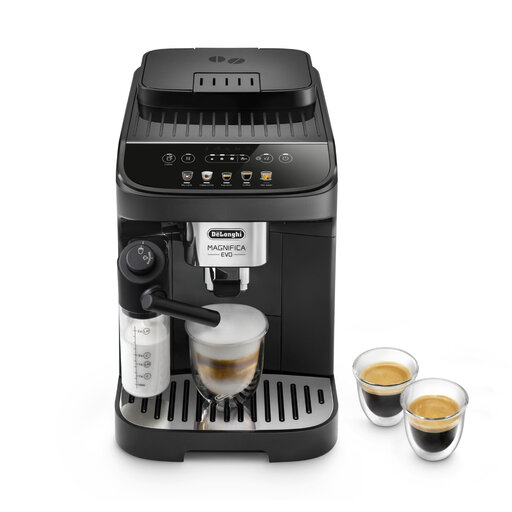 Image unavailable
Consider this model if you want an automatic machine that uses whole beans and can also make milk-based drinks.
This model features LatteCrema. Check how to clean its milk system before making it part of your routine.
 Image unavailable
This automatic machine with a grinder is designed for people who want to make their everyday coffee from whole beans.
If milk-based drinks matter to you, check how to use and clean the steam wand described for this model. Also measure the space you have available before buying.
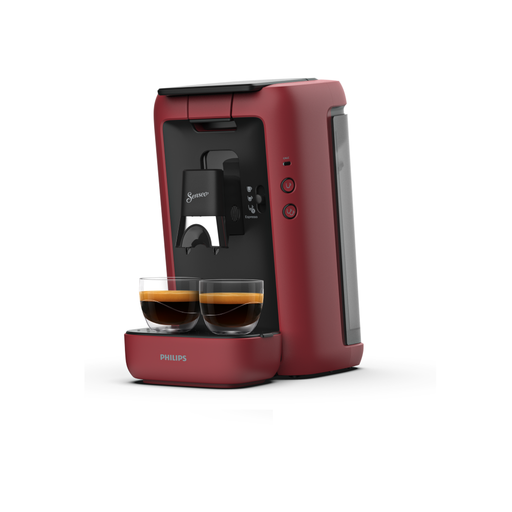 Image unavailable
Worth considering if you prefer portioned coffee made with soft pods.
Before choosing your pods, check which format this model accepts. Also read its descaling instructions.
 Image unavailable
This capsule machine may suit people who want to make coffee without measuring it out manually.
Its name indicates a 0,6 L tank and a power rating of 1200 W. Check which capsule format it accepts and make sure there’s enough room to fill the tank.
Start by checking which formats the machine accepts: portioned coffee systems aren’t automatically interchangeable. For ground coffee or whole beans, look at the preparation steps and settings available on the model.
Yes. Que Choisir recommends regular descaling. Follow the instructions for your model to find out which process and products to use. Maintenance needs can vary depending on factors such as the water you use and how often you make coffee.
According to ADEME, aluminium or plastic capsules should go in the recycling bin, bag or container for paper and packaging. Check what your capsules are made from before throwing them away.
Yes: check which parts come into contact with milk and how they should be rinsed. For example, Philips describes its SENSEO Latte Select HD7850/61 model as having an automatic milk frother and an Easy-clean function. Don’t assume other models have the same features.
Yes. In France, the Ministry of the Economy says it applies to new, second-hand and refurbished goods sold by a business to a private customer. You claim it from the business that sold you the product; it’s separate from any commercial guarantee that may also apply.