Which type is right for you?
For a household that makes several espressos a day, your choice mainly depends on how much hands-on preparation you’re happy to do between cups and what sort of coffee everyone prefers.
Households making several espressos a day
An automatic bean-to-cup machine is worth considering if you want to use whole beans and make coffees one after another without handling a portafilter for every cup. However, make room for the machine and allow time to clean its containers and brew group, as Que Choisir recommends in its care advice.
People short on time and space
A capsule or soft coffee pod machine lets you enjoy pre-measured portions. Before choosing a compact machine, check its dimensions, water tank capacity and the type of consumable it takes.
Coffee lovers who want to choose their coffee and how it’s made
A portafilter machine is a good choice if you want to use ground coffee and have more control over each extraction. An automatic grinder machine offers a different option: choose your beans and let the machine handle the grinding and preparation. Check the settings available on each model.
What should you compare for everyday use?
When comparing capsules, soft coffee pods, portafilter machines and grinders, start with the type of coffee you want and how you’ll prepare it. Then check what maintenance will involve in your kitchen.
| What to consider |
What to check |
Your needs |
| Preparation |
Check how many cups you can make at a time, what you need to do between coffees and the water tank capacity of the model you’re considering. |
Several people drink coffee one after another: I’d rather not have to refill the water or set up an accessory between every cup. |
| Choice of coffee |
Find out which formats the machine takes: capsules, soft coffee pods, ground coffee or beans. For a portafilter or grinder machine, look at the settings you’ll actually use. |
I’d like to switch between different coffees to suit everyone at home, rather than rely on a single pre-measured format. |
| Consumables |
Check the exact compatibility of the coffee, filters and cleaning products, and make sure they’re available for the model you choose. |
If we make coffee every day, I want to be able to find the consumables we need easily. |
| Maintenance |
Check the manual for any water hardness settings, descaling instructions and guidance on cleaning the containers or brew group. Check separately what you need to do to maintain the milk system. |
I don’t mind rinsing it regularly, but I want to know what I’ll need to do after making a cappuccino. |
| Available space |
Measure the width and depth, and allow room to access the water tank, container and coffee. If you choose a separate grinder, you’ll need space for that too. |
My worktop is small, so the machine’s dimensions alone aren’t enough to make a decision. |
| Recycling and repairs |
For capsules, check your local recycling and collection guidelines. For the machine, ask about parts for the exact model you’re considering. |
I want to follow the recycling guidelines that apply where I live and know what repair options are available before I choose. |
A guide to the brands
These points relate to the ranges and services mentioned, not to the availability or features of every machine sold under these brands.
Nespresso
A capsule system to consider if you want pre-measured portions and plan to use its associated collection services.
- Nespresso says it offers collection options for its aluminium capsules.
- The brand recommends checking your local council’s guidance before putting them in the yellow recycling bin; this option isn’t available everywhere.
De'Longhi
A brand to consider if you’re choosing between a portafilter and an automatic grinder machine, and want to check the manual for the model you have in mind.
- De'Longhi provides product manuals and recommends taking water hardness into account when maintaining its machines.
- The steps and accessories required vary by model, so check the manual.
Philips / Saeco
Automatic machine ranges to consider if water filtration and maintenance are important to your decision.
- Philips offers the AquaClean filter for certain compatible Saeco machines.
- According to Philips, the time between descaling depends on factors including the drinks made and the rinse cycles. Check that the filter is compatible with your chosen model and how to replace it.
Krups
A brand of domestic coffee machines to compare model by model, particularly for access to manuals and compatible accessories.
- The Krups manual consulted is for a machine intended for domestic use; it doesn’t tell you what repair options are available for every machine from the brand.
Machines for three different ways of making coffee
These Joybuy models cover three ways to make several coffees at home: an automatic grinder machine, soft coffee pods and a portafilter. Compare how each one works and what maintenance it involves before choosing a model.
 Image unavailable
Philips EP2230/10 Series 2200 LatteGo
This automatic grinder machine is designed for households that want to use whole beans and have a system for making milk-based drinks. Check how to clean LatteGo and which filters are compatible before making it part of your routine.
View on Joybuy
 Image unavailable
HiBREW H16 with grinder and milk system
The H16 combines a grinder with a milk system and offers six types of coffee. If these drinks are a regular choice at home, check the manual for details of how to clean the milk circuit and machine.
View on Joybuy
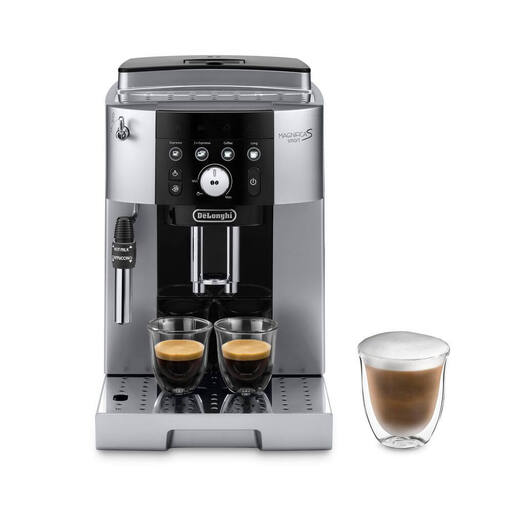 Image unavailable
De'Longhi Magnifica S Smart ECAM250.23.SB
This automatic grinder machine is a good choice if you want to make coffee from beans without handling a portafilter for every cup. Its manual steam wand involves extra steps for milk-based drinks and needs cleaning after use.
View on Joybuy
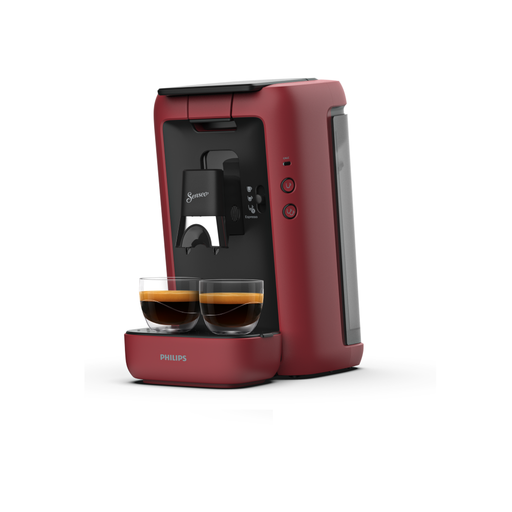 Image unavailable
Philips SENSEO Maestro CSA260/91, intense red
This soft coffee pod machine is a good choice if you prefer pre-measured portions. It’s designed for SENSEO pods, so check that this format and the compatible coffees suit your household’s habits.
View on Joybuy
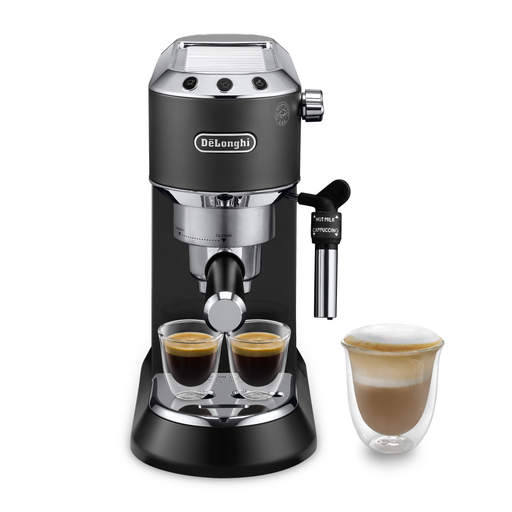 Image unavailable
De'Longhi Dedica Style EC685.BK, black
This portafilter machine is designed for those who want to make coffee by hand using ground coffee or compatible ESE pods. The steam wand and portafilter need cleaning after use; also check the water tank capacity if you’ll be making several coffees one after another.
View on Joybuy
Frequently asked questions
Is an automatic grinder machine right for every household that drinks several coffees a day?
No. It’s a good choice if you want to use whole beans and make cups without handling a portafilter by hand, but you’ll need to allow space for the machine and time for maintenance. If pre-measured portions matter more to you, compare capsule and pod machines too.
Should I take water hardness into account?
Yes, if the machine’s manual includes a setting for it. De'Longhi recommends finding out your water hardness for maintenance, so check the method given for your model and follow its descaling instructions.
Does a water filter mean you won’t need to descale?
No. Philips says that, for compatible AquaClean systems, the time between descaling depends on factors including the drinks made and the rinse or cleaning cycles. Check the maintenance and filter replacement instructions for the machine you’re considering.
Can all aluminium capsules go in the yellow recycling bin?
Don’t assume so: collection guidelines vary by local council. For its capsules, Nespresso recommends checking local guidance and offers other collection options if the yellow bin isn’t suitable.
Will spare parts for a coffee machine always be available?
No. In France, the DGCCRF explains that the requirement to make spare parts available doesn’t apply to every product category. Before buying, ask the retailer what applies to the model you’re considering.


