For making coffee at home every day, start by choosing a type of machine based on how much effort you’re happy to put in: capsules and pods keep things simple, a portafilter gives you more control over the preparation, while a bean-to-cup machine is ideal if you want to use whole beans. Then check the space you have, which consumables are compatible, the cost per cup and the maintenance required for the model you’re considering. No one type has every advantage.
Who are these machines for?
People in a hurry with limited space
If you want to make coffee with minimal effort and have a small worktop, compare the machines’ dimensions and how easy they are to use each day. If you choose capsules or pods, check which format you’ll need to buy, too.
Daily coffee drinkers mindful of the cost per cup
If you drink several coffees a day, the cost of consumables and maintenance matters just as much as the machine itself. Whole beans offer another way to buy your coffee, provided you’re happy to maintain a grinder.
People who enjoy tailoring their coffee
If you like choosing your coffee and getting involved in how it’s made, it’s worth comparing a portafilter machine with an automatic one. Settings, grinders and steam wands vary from model to model, so choose a machine with steps you’ll genuinely want to repeat every day.
How do the machines compare?
UFC-Que Choisir identifies four types of domestic espresso machine. Your first decision is whether you prioritise convenience, hands-on preparation or using whole beans. You can then compare the individual models.
Capsules
Worth considering: if you want to make coffee quickly with minimal effort.
Bear in mind: you’ll need to buy capsules that match the machine’s exact system.
Soft pods
Worth considering: if you prefer a simple way to make coffee using a specific pod system.
Bear in mind: you’ll need to check which pod format the machine’s pod holder accepts.
Portafilter
Worth considering: if measuring and preparing your coffee is part of the appeal.
Bear in mind: you’ll need to do more yourself and clean the machine after use. Don’t assume a grinder is built in.
Bean-to-cup
Worth considering: if you drink coffee regularly, want to choose your beans and would like the machine to prepare your coffee for you.
Bear in mind: these machines take up more space and need regular cleaning and descaling.
| Criteria |
What to check |
Who is this important to? |
| Speed and size |
Measure the space available and compare how many steps it takes to make a coffee, as well as the water tank capacity. |
I want to make coffee before heading out without lots of fiddly steps or taking up the whole worktop. Around 40% of consumers put this everyday convenience first. |
| Cost per cup and choice of coffee |
Compare the consumables you’d actually use, how often you’d make coffee and the maintenance involved. |
If I make coffee at home regularly, I want to keep ongoing costs under control and choose my own coffee. This is the top priority for around 30% of consumers. |
| Drinks and preparation |
Make a list of the drinks you want, then check the settings and whether the machine has a steam wand or milk system. |
If I switch between espresso, longer coffees and milky drinks, I want to know which settings and steps each machine offers. Around 20% of consumers prioritise their choice of drinks or control over preparation. |
| Compatibility and waste |
Identify the exact capsule or pod system and check which products are available, as well as the relevant recycling guidance. |
Before committing to a system, I want to be able to find consumables I like and dispose of their packaging responsibly. Around 10% of consumers make this their top criterion. |
What to look out for
-
Mixing up capsule systems
A capsule described as compatible with Nespresso Original shouldn’t be assumed to work with Vertuo or Dolce Gusto. UFC-Que Choisir points out that capsule machine brands generally accept a specific type of capsule.
Check the exact system name before choosing a machine, then look for the coffees you’d like to buy in that format.
A supply of capsules for a different system may be unusable with the machine you choose.
-
Looking only at the machine, not the coffees you’ll buy later
With everyday use, you’ll pay for every coffee you make. In its general comparison, UFC-Que Choisir says the cost per cup is two to three times lower with a grinder than with pod espresso. This doesn’t predict what your own consumables will cost.
Compare the coffees you actually plan to use and how often you’ll make them before choosing between pods, capsules and beans.
-
Underestimating the upkeep of a grinder or milk system
Trays, the water circuit and milk components need to be maintained according to the model. UFC-Que Choisir recommends descaling on average every two to three months, while noting that usage and the water you use affect how often maintenance is needed.
Check the instructions for cleaning and descaling guidance, and make sure you’re happy with the routine before choosing a milk function.
-
Assuming recyclable capsules mean no waste
Being able to recycle a capsule doesn’t get rid of its individual packaging. ADEME recommends avoiding single-serve portions where possible to reduce waste.
If this matters to you, compare bean-to-cup and portafilter machines as well. For capsules, follow the recycling guidance for their material and the facilities available near you.
Brands to know when comparing systems
Nespresso
The range includes machines and capsules for systems such as Original and Vertuo.
- The two systems make it easy to identify which type of capsule to look for when choosing a machine.
- Compatibility with Original doesn’t mean a capsule will work with Vertuo. Check the exact system before buying.
Philips Senseo
Senseo machines are designed for people who want to use soft pods in a clearly defined system.
- Philips describes its Senseo range as simple to use.
- Check which type of pod your chosen Senseo model uses before stocking up.
De'Longhi
The brand offers automatic bean-to-cup machines and manual espresso machines, giving you two distinct ways to make coffee.
- De'Longhi says its automatic machines make drinks from beans ground by the machine. Some manual machines offer settings to adjust the preparation.
- Grinders, settings and steam wands vary by model, so check the features of the specific machine rather than assuming they’re available across the whole range.
NESCAFÉ Dolce Gusto
NESCAFÉ describes this capsule system as suitable for several types of coffee and milky drinks.
- The brand offers a choice of shorter and longer drinks, depending on what’s available.
- Check which drinks and capsules are compatible with the specific machine you’re considering.
Machines available on Joybuy
These models give you the chance to compare a bean-to-cup machine, capsule machines and a semi-automatic espresso machine. Start by choosing the type that suits your routine, then check the features and consumables for the model you’re interested in.
 Image unavailable
Philips EP2230/10 Series 2200 LatteGo, black
Worth considering if you want to use whole beans for your regular coffees and have a LatteGo system. This model is described as an espresso machine with a grinder. Check how much space it needs and what’s involved in cleaning the milk system.
View on Joybuy
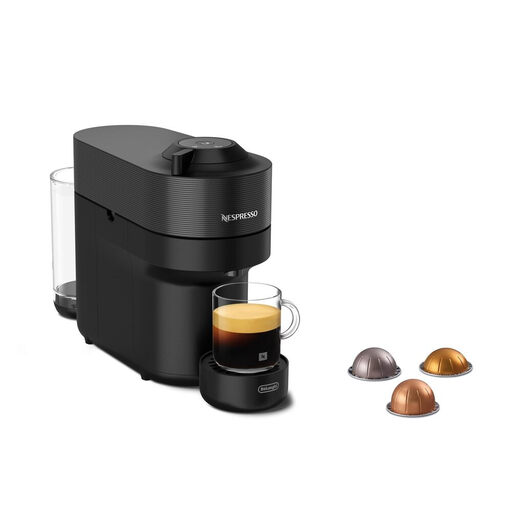 Image unavailable
Nespresso Vertuo ENV90.B Vertuo Pop, black, 0.6 l
Worth considering if you want a capsule machine for your everyday coffee. The water tank is listed as 0.6 l. Choose capsules for the Vertuo system and consider how often you’ll need to refill it for your needs.
View on Joybuy
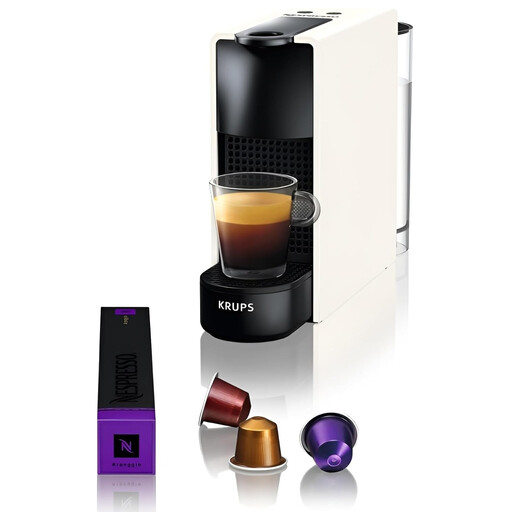 Image unavailable
KRUPS Nespresso Essenza Mini, white, 0.6 l, 1,200 W
Worth considering if you prefer a capsule machine from the Essenza Mini range. The model name indicates a 0.6 l water tank and a power rating of 1,200 W. Check which capsule system it accepts and how much space you have before choosing.
View on Joybuy
 Image unavailable
HiBREW H1C 6-in-1, black
Worth considering if you want to compare several advertised ways of making coffee in one machine. The product listing describes it as suitable for capsules and ground coffee, with a stated pressure of 20 bar and hot and cold functions. Check exactly which formats it accepts and whether any accessories are needed before buying.
View on Joybuy
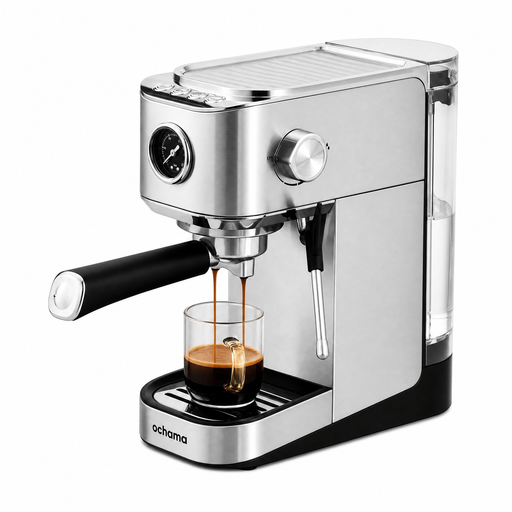 Image unavailable
ochama semi-automatic espresso machine, 0.9 l
Worth considering if you want to be more involved in making your coffee and use a steam milk frother. The model is listed with a removable 0.9 l water tank, 20 bar pressure, a cup warmer and a pressure gauge. Check what’s involved in making and cleaning it as part of your daily routine.
View on Joybuy
Frequently asked questions
Will a capsule compatible with Nespresso Original also work in a Vertuo machine?
Don’t assume it will work with Vertuo. Always check the system shown on the capsule and the machine. Carte Noire explicitly labels some of its capsules as Original, while Nespresso describes Orafio as a Vertuo capsule.
How often should you descale an espresso machine?
Follow your machine’s instructions and alerts, as the recommended frequency depends in part on the water you use and how often you use the machine. As a general guide, UFC-Que Choisir recommends descaling every two to three months and highlights the importance of cleaning the machine’s components regularly.
What should you do with used coffee capsules?
In France, ADEME advises putting aluminium or plastic capsules in the recycling collection for paper and packaging. Whether paper capsules can be composted depends on the product and the composting or collection facilities available near you.
What should you do with a coffee machine at the end of its life?
You can take an electrical machine to a collection point or waste recycling centre, or return it to a retailer that offers take-back, following guidance from the ministry responsible for ecological transition. If it’s still usable, you could also consider having it repaired or donating it to an organisation that reuses equipment.


