For pre-portioned coffee with minimal effort, consider capsule or pod machines, after checking which format they accept. A portafilter machine is a good choice if you want more control over the preparation. A bean-to-cup machine is better suited to regular coffee drinkers who use whole beans, as long as you’re happy to deal with the cleaning, noise and space it requires. If several people use the machine one after another, compare its capacity and the test results for the specific model.
Who are these machines for?
Households looking to keep things simple
For pre-portioned coffee every day, capsules and pods are both worth considering. Check which format the machine accepts, how much worktop space it takes up and the water tank capacity if several people will be using it.
People who prefer to choose their own beans
A bean-to-cup machine lets you use whole beans without having to measure out ground coffee for every cup. However, UFC-Que Choisir notes that these machines are noisier and take up more space than capsule systems. You’ll also need to factor in the cleaning.
People happy to make their espresso by hand
A portafilter machine is for those who are happy to handle ground coffee and rinse the parts they’ve used. Check the manual for the model’s cleaning and descaling instructions.
What should you compare before choosing?
Start with the drinks you make most often, then consider how each machine’s operation, capacity and cleaning requirements fit into your daily routine.
| What to consider | What to check | Your needs |
|---|
| Preparation method |
Compare capsules, soft pods, ground coffee with a portafilter and whole beans with a grinder. Check which drinks the machine can make and which coffee formats it accepts. |
I want a pre-portioned serving with minimal effort, or I’d rather choose my own coffee and be more involved in making it. |
| Making several cups |
Check the capacity of the water tanks and trays, and whether the machine can make two cups at once. If you’ll be making drinks one after another, look for tests of the specific model. UFC-Que Choisir, for example, measures how consistent the volume is from cup to cup in its tests of bean-to-cup machines. |
When several people have coffee one after another, I want to know how often I’ll need to refill the machine and how much handling is involved. |
| Cleaning and maintenance |
Check which parts need rinsing, how easy the trays are to access and the descaling process in the manual. The frequency depends in part on water hardness, as De’Longhi explains for its bean-to-cup machines. |
I can set aside time for cleaning, but I need to know what the machine I choose will require. |
| Noise and space |
Measure the space available and check tests of the specific model for noise and vibration. UFC-Que Choisir describes bean-to-cup machines as noisier and bulkier than capsule systems. |
In an open-plan or small kitchen, how the machine runs and its dimensions matter just as much as the type of coffee it makes. |
| Consumables |
Check which format is compatible and how easy it is to buy. For aluminium or plastic capsules used in France, ADEME advises putting them in the recycling bin, bag or container for paper and packaging. |
I want to be able to find coffee that suits my machine and know how to dispose of the packaging after each use. |
What might you overlook?
-
Assuming a bean-to-cup machine cleans itself
The trays need to be rinsed regularly, and other parts may need cleaning depending on the model. UFC-Que Choisir warns that ignoring a descaling prompt can lead to a blockage caused by limescale.
Before choosing, check the manual to see which parts are accessible, what needs cleaning and how to run the descaling process.
Allow time to rinse the trays and run the maintenance programmes.
-
Judging ease of use by machine type alone
According to UFC-Que Choisir, a bean-to-cup machine may take up more space and make more noise than a capsule system. That alone doesn’t tell you how a specific model performs when making several cups.
For an open-plan kitchen or repeated use, check the dimensions and look for tests of the exact model that cover noise, vibration and how consistently it makes drinks.
-
Assuming capsules need no extra thought when it comes to recycling
Using capsules leaves you with packaging to dispose of after each use; the material determines how it should be sorted.
In France, ADEME advises putting aluminium or plastic capsules in the recycling stream for paper and packaging. Also check whether there are collection schemes available near you.
Which brands can help guide your choice?
These examples showcase different types of machine and approaches to maintenance. Always check the documents for the specific model you’re considering.
Nespresso
The brand offers capsule machines, as well as user and maintenance guides for each machine.
- Nespresso France provides maintenance instructions for its models.
- Nespresso France says that if parts are unavailable, repairs or after-sales support may not be possible. Check what’s available for the model you’re considering.
SENSEO / Philips
SENSEO is a range of soft pod machines, while Philips offers support for its machine models.
- Philips France publishes descaling advice and lets you search for support and parts by product.
- Using pods doesn’t mean you can skip descaling: follow the instructions for your model.
De’Longhi
The brand offers bean-to-cup and traditional espresso machines, each with its own maintenance instructions.
- De’Longhi France explains that water hardness affects how often its bean-to-cup machines need descaling.
- Advice for one type of machine is no substitute for the manual for the model you buy.
Espresso machines available on Joybuy
These models showcase the four preparation methods covered here: soft pods, whole beans with a grinder, capsules and a portafilter. Compare the coffee format and cleaning requirements before choosing.
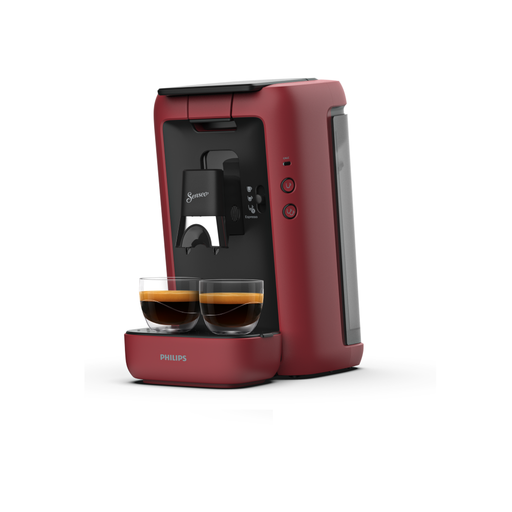 Image unavailable
Philips SENSEO CSA260/91 Maestro, intense red
A soft pod option if you prefer pre-portioned coffee. Check that the pods for your usual coffees are compatible with the machine, and consult the manual for descaling instructions.
View on Joybuy
 Image unavailable
Philips EP2230/10 Series 2200 LatteGo
This model with a grinder is designed for households that want to use whole beans. LatteGo is part of its name; if milk-based drinks are important to you, check which drinks it can make and what cleaning is involved in the manual.
View on Joybuy
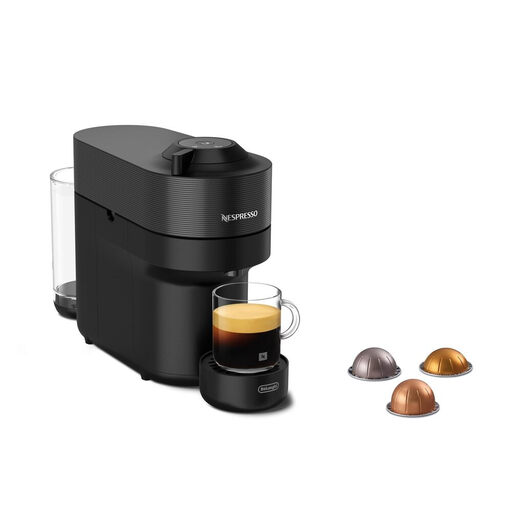 Image unavailable
Nespresso Vertuo Pop ENV90.B, 0.6 L, black
This Vertuo capsule machine is a good fit if you’re looking for pre-portioned coffee. Its water tank is listed as 0.6 L; check the capsule format and how often you’ll need to refill it based on the number of coffees you make.
View on Joybuy
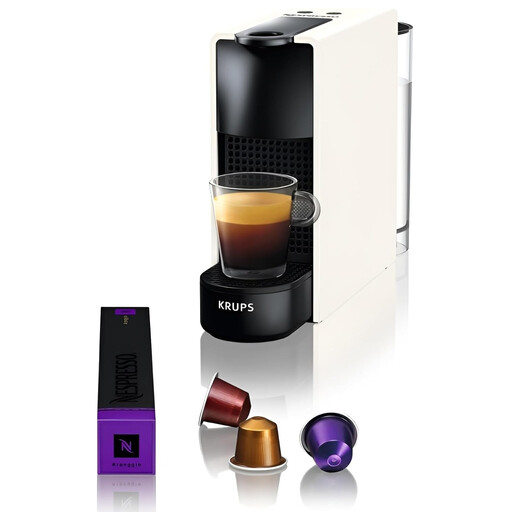 Image unavailable
KRUPS Nespresso Essenza Mini, 0.6 L, 1200 W, white
Another capsule option for households that prefer pre-portioned coffee. The water tank is listed as 0.6 L; check which capsule format it accepts and measure the space available if your kitchen is short on room.
View on Joybuy
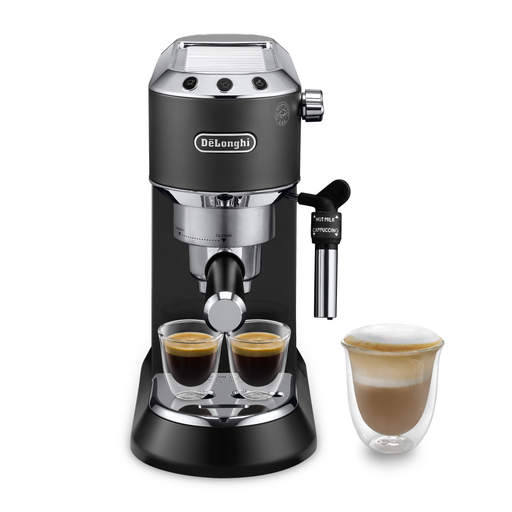 Image unavailable
De’Longhi Dedica Style EC685.BK, 15 bar, black
This portafilter machine is a good choice if you’re happy to prepare the coffee yourself and rinse the parts you’ve used. Check the water tank capacity against how often you’ll be making coffee, and follow the manual for model-specific maintenance.
View on Joybuy
Frequently asked questions
What should I check if I’ll be making several coffees one after another?
Check the capacity of the water tanks and trays, then look for tests of the model covering consecutive drinks. UFC-Que Choisir measures how consistent the volume is from cup to cup for bean-to-cup machines; being in this category alone doesn’t guarantee how a particular machine will perform.
How often should I descale an espresso machine?
Follow the alert and the instructions for your model: descaling frequency varies between machines. De’Longhi France explains that, for its bean-to-cup machines, it depends in part on water hardness.
Where should I put aluminium or plastic capsules for recycling in France?
ADEME advises putting them in the recycling bin, bag or container for paper and packaging. If you’re considering a collection scheme offered by a brand, check that it’s available near you.
How can I check cleaning requirements and after-sales support before buying?
Look for the manual, parts and cleaning products for the exact model, as well as details of the repair services available. For example, Nespresso France says that if parts are unavailable, repairs or after-sales support may not be possible.


