If you regularly make espresso, start by choosing the coffee you want to use and deciding how much hands-on preparation you’re happy with each day. A bean-to-cup machine automates the process using whole beans, while a portafilter gives you more control over manual preparation. Capsules and pods make things simpler, but you’ll need to choose a compatible system. Whichever format you choose, check how much space the machine needs and what maintenance it requires.
Who are these machines for?
For people who regularly make coffee with whole beans
You want to choose your own beans for espresso or longer coffees, and you’re happy to make room for a grinder and keep it maintained. Que Choisir notes, in particular, that a grinder takes up more space than a capsule machine.
For people in a hurry with limited space
You make one or two drinks at a time and want a simple routine in a small kitchen. A capsule machine could suit you, provided you check which capsule system it accepts.
For people who prefer to make coffee by hand
You want to use ground coffee in a portafilter and have more control over the preparation. This also means emptying and cleaning the portafilter after use.
How do the four formats compare?
Bean-to-cup
Worth considering : if you regularly use whole beans and want the machine to automate the preparation.
Bear in mind : according to Que Choisir, these machines take up more space and make more noise than capsule machines, and require model-specific maintenance.
Capsules
Worth considering : if you want an easy way to prepare coffee using ready-to-use portions.
Bear in mind : the capsules you can use depend on the machine’s system, and used capsules need to be sorted appropriately.
Soft coffee pods
Worth considering : if you want to make coffee with pods and, depending on the model, prepare one or two cups.
Bear in mind : you’ll need compatible pods and will have to descale the machine. Philips, for example, recommends regular maintenance for its SENSEO® machines.
Portafilter
Worth considering : if you want to use ground coffee and have a say in the dose and preparation.
Bear in mind : there’s more hands-on preparation and you’ll need to clean the portafilter. Check separately which other formats, if any, the machine accepts.
| What to consider | What to check | Who it matters to |
|---|
| Coffee choice and availability |
Which formats the model accepts; whether the beans, ground coffee, capsules or pods you want to use are readily available. |
If I make coffee regularly, I want to choose my coffee without being tied to a format that doesn’t suit me. Around 31% of consumers put this first. |
| Ease of use and space |
Dimensions for the space you have in mind; cup sizes and access to the water tank. |
In a small kitchen, I’d rather make a drink with minimal effort and fit the machine in without it getting in the way. Around 25% of consumers prioritise this over other considerations. |
| Maintenance |
Descaling instructions; parts that need cleaning and how to contact support for the model you’ve chosen. |
If I use the machine regularly, I need a cleaning routine I can stick to. Around 25% of consumers make maintenance their top priority. |
| Manual preparation |
Compatible filter and coffee formats; cleaning steps after making a drink. |
I want to be involved in making my coffee rather than always using a ready-to-use portion. Around 19% of consumers put this flexibility first. |
What should you watch out for before buying?
-
Choosing the machine before the coffee
The format you choose determines which coffees you can use and which consumables you’ll need to buy regularly.
Decide whether you want to use whole beans, ground coffee, capsules or pods, then check that the specific model is compatible.
-
Underestimating the upkeep of a grinder
The containers and, depending on the model, the brew unit or milk system need cleaning. De’Longhi says that how often you need to descale depends, among other things, on water hardness and usage.
Read the instructions to find out which parts need maintaining and decide whether the routine suits you.
-
Assuming used capsules sort themselves out
Used capsules need to be sorted according to their material. In France, ADEME says that aluminium and plastic capsules should go in with paper and packaging for recycling.
Check what your chosen capsules are made of and consult your local recycling guidelines.
-
Confusing a commercial guarantee with your legal rights
In France, the legal guarantee of conformity covers new, second-hand and reconditioned goods sold by a business to a consumer, according to the Ministry of the Economy. It is separate from any additional commercial guarantee.
Make a note of the business you bought from, and keep your proof of purchase and the product description in case you need to report a lack of conformity.
Brands to know
De’Longhi
The brand offers bean-to-cup espresso machines and manual machines for home use, with features that vary across its ranges.
- De’Longhi describes its grinders as machines that make drinks using beans freshly ground to order.
- How often you need to descale depends on your water and how much you use the machine. Check the instructions for the model you’re considering.
Nespresso
A capsule system worth considering if you want to make espresso or lungo using ready-to-use portions.
- Nespresso says it has more than 2,000 collection points for used capsules in France.
- Check which capsule system the machine accepts and whether there’s a collection point near you.
Philips SENSEO®
A soft pod system for making coffee with ease, with drink options that vary by model.
- Philips provides manuals, troubleshooting help and information about parts and accessories for the SENSEO® Original HD7806/12.
- Philips recommends regular descaling for its SENSEO® machines. Check the instructions for your model.
Coffee machines available on Joybuy
These models offer several ways to make espresso at home: SENSEO® pods, whole beans, Nespresso capsules and a portafilter. One model also combines espresso and filter coffee. Start by choosing the format that suits your routine, then take a closer look at each model.
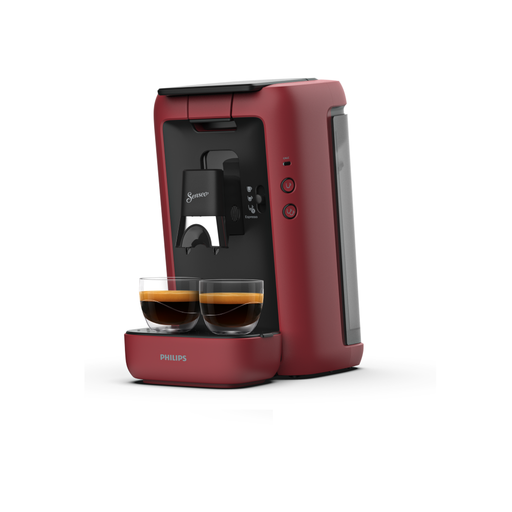 Image unavailable
Philips Senseo Maestro CSA260/91, deep red
Worth considering if you prefer to make coffee using the SENSEO® system. Check which pods are compatible with this model and how to descale it.
View on Joybuy
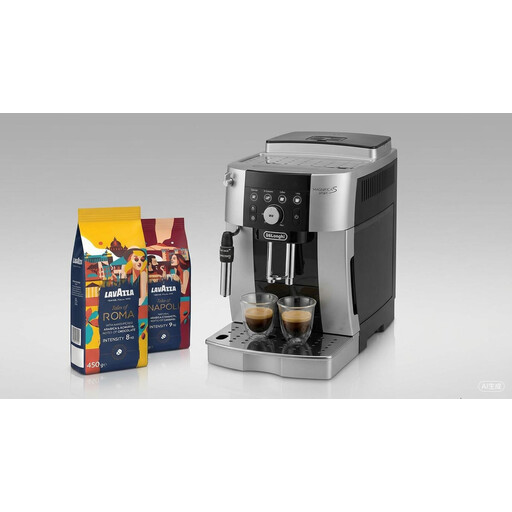 Image unavailable
Barrista Summer: DeLonghi Magnifica ECAM250.23.SB with Lavazza Tales of Napoli & Roma, 450g (2packs)
An automatic espresso machine worth considering if you want to use whole beans. The advertised bundle also includes the Lavazza coffees named in the title. Make sure you have enough space for the machine and check its maintenance instructions.
View on Joybuy
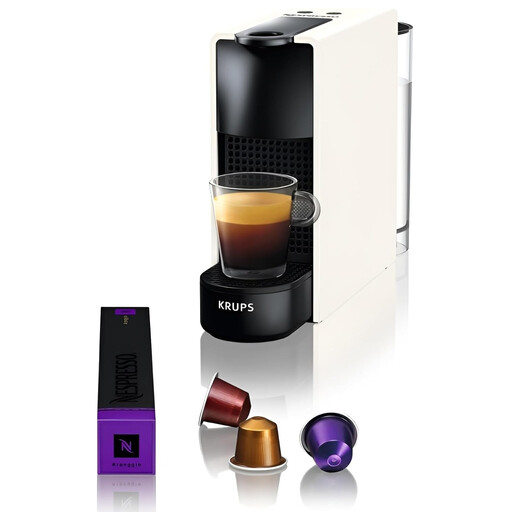 Image unavailable
KRUPS Nespresso Essenza Mini, pure white
For anyone who wants to make espresso or lungo with capsules: the Joybuy listing for this model specifies both drinks. The water tank capacity is listed as 0,6 L and the power as 1200 W. Check capsule compatibility before buying.
View on Joybuy
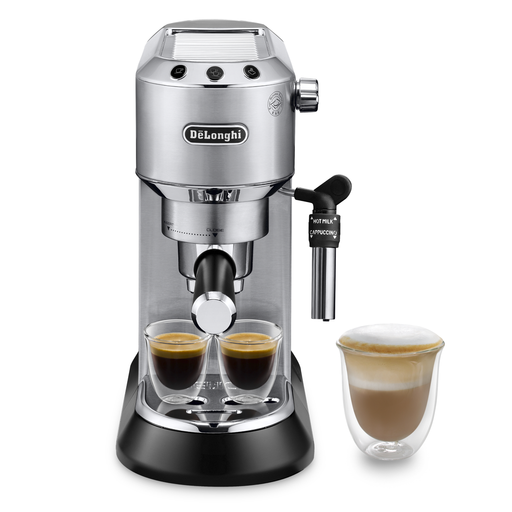 Image unavailable
De’Longhi Dedica Style EC685.M, silver
An espresso machine worth considering if you prefer to make coffee with a portafilter. Check which coffee formats this model accepts and what cleaning it needs after use.
View on Joybuy
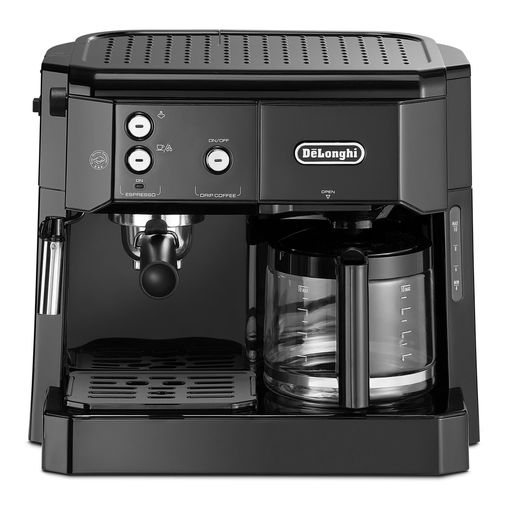 Image unavailable
De’Longhi Combo BCO411.B, espresso and filter coffee machine, black
Worth considering if you want to make filter coffee as well as espresso. As this machine combines two functions, check you have enough space and read the maintenance instructions for each.
View on Joybuy
Frequently asked questions
Can you use any capsule in a capsule machine?
No, you need to choose capsules that are compatible with the system specified for your machine. Que Choisir points out that most brands only accept one type of capsule. Check the system name on the machine and the capsules.
Should you descale a machine that’s still working?
Yes. Follow the alerts and instructions for your model rather than waiting for it to break down. De’Longhi says descaling frequency depends on water hardness and how often you use the machine. Philips also recommends regular descaling for its SENSEO® machines.
Where should you dispose of aluminium or plastic coffee capsules?
In France, ADEME advises putting them in the recycling bin, bag or container for paper and packaging. Check what your capsules are made of and consult your local recycling guidelines too.
Does a second-hand machine bought from a business come with the legal guarantee of conformity?
Yes. In France, according to the Ministry of the Economy, this guarantee also applies to second-hand and reconditioned goods sold by a business to a consumer. If the product isn’t as described, contact the business you bought it from. Keep your proof of purchase and the product description.


