Start by choosing the type of machine that best suits what matters most to you: straightforward preparation, control over your drinks or a regular routine using whole beans. With capsules and pods, check which format the machine accepts and how much each serving costs. A portafilter involves more hands-on steps, while a bean-to-cup machine needs space and regular maintenance. Compare costs for the same number of drinks, including coffee and maintenance products, rather than focusing only on the price of the machine.
Who is each type of machine for?
Your daily routine and how hands-on you want to be are more important than extra features when choosing a machine.
Households looking for a simple coffee-making routine
If you want to make coffee quickly in just a few steps and save space in your kitchen, consider capsule and pod machines. Que Choisir highlights how easy portioned coffee is to use; next, check which format the machine accepts and the ongoing cost.
People who want to get hands-on with their coffee
A portafilter machine is worth considering if you want to master dosing and tamping the coffee, as well as cleaning the equipment. If you enjoy milk-based drinks, check the features of the specific model: for example, De’Longhi’s machines vary in what they offer.
Households that regularly make several coffees
A bean-to-cup machine could suit a regular routine using whole beans, provided you’re happy with the space it takes up and the maintenance it requires. Que Choisir recommends following the machine’s descaling prompts in particular.
What sets these machines apart?
Before comparing models for your home coffee routine, decide what matters most to you. The convenience of a single portion, the hands-on process of a portafilter and the use of whole beans each meet different needs.
Capsules
Worth considering: if you make a low to moderate number of coffees and want quick preparation in a compact space.
You’ll need to accept: buying capsules designed for that specific machine system and their ongoing cost.
Soft pods
Worth considering: if you prefer making coffee one portion at a time with minimal effort.
You’ll need to accept: checking which pods are compatible and descaling the machine as set out in its instructions.
Portafilter
Worth considering: if you want to choose your ground coffee and take a more hands-on approach to making it.
You’ll need to accept: dosing the coffee and cleaning the machine after use; grinding and milk features depend on the model.
Bean-to-cup
Worth considering: if your household regularly makes coffee with whole beans and you’d like to automate some of the process.
You’ll need to accept: a larger footprint and regular cleaning of the parts listed in the instructions.
| Factor |
What to check |
Who is it for? |
| Running costs |
Compare the same number of drinks over the same period, including coffee, descaling and any other consumables you need. |
When I make coffee often, I want to know what my routine will cost over time, not just what I’ll pay upfront; around 33% of consumers would make this their top priority. |
| Speed and space |
Measure the space available, including room to open the machine or remove its tank, then consider the steps involved in making coffee. |
In a small kitchen, I want to make coffee without adding extra steps or cluttering the worktop; nearly 27% of consumers would prioritise simplicity and a compact design. |
| Drinks and control |
Check which drinks and settings the specific model offers, and whether it has a steam wand if you make milk-based drinks. |
If I like to vary my drinks, I’d rather choose the steps or settings I’ll actually use; around 20% of consumers would put this control first. |
| Maintenance |
Read the cleaning and descaling instructions, and check how easy it is to access the trays and removable parts. |
I want to fit cleaning into my routine without discovering too late that it involves awkward steps; around 20% of consumers would make maintenance their top priority. |
Things not to overlook
-
Choosing based on the upfront cost alone
Portions and cleaning products are part of owning a machine throughout its life. Que Choisir recommends considering the cost per cup, especially if you drink coffee frequently.
Compare machines over the same number of drinks, including the consumables each one requires.
Remember to factor in descaler and any filters as recurring purchases too.
-
Assuming capsules or pods are compatible because they look similar
The shape of a portion alone doesn’t tell you whether it will work with your machine. Que Choisir distinguishes between systems and notes that many capsule machines accept only one type of capsule.
Check the system specified in the instructions against the exact compatibility information on the portions you plan to use.
-
Underestimating maintenance
Having a bean-to-cup machine doesn’t mean you can skip cleaning its parts. Pod machines need descaling too: Philips sets out a specific procedure for SENSEO machines.
Before buying, check the instructions for the model to see how easy it is to access the trays and what’s involved in cleaning.
These tasks take time and may require a suitable descaling product.
-
Choosing features your household won’t use
Milk-based drinks, built-in grinders and available settings vary by model. A milk feature also means extra parts to clean.
Start with the drinks you usually make, then check the features and maintenance instructions for the machine you’re considering.
Brands to consider
These brands can help you explore particular types of machines, but their features will vary from model to model.
Philips / SENSEO®
Worth considering, in particular, for soft pod machines and their maintenance instructions.
- Philips publishes user manuals and descaling instructions for SENSEO.
- Check the exact model number: this information doesn’t mean that every pod will work with every machine.
De’Longhi
A brand to explore for portafilter and bean-to-cup machines.
- De’Longhi describes manual and automated brewing features across its range, depending on the model.
- A grinder, tamping and milk preparation aren’t standard features across the whole range, so check the specific model you’re interested in.
Krups
Another brand to consider if you’re looking for a bean-to-cup machine.
- The Intuition Essential EA870810 is a specific model you can compare against your needs.
- Check the drinks it makes, its cleaning requirements and the support available for the model you’re considering, rather than making assumptions about the whole brand.
Machines available at Joybuy
These models show three ways to make espresso at home: with a bean-to-cup machine, a portafilter or capsules. Compare them based on how often you make coffee, the space you have available and the maintenance you’re happy to take on.
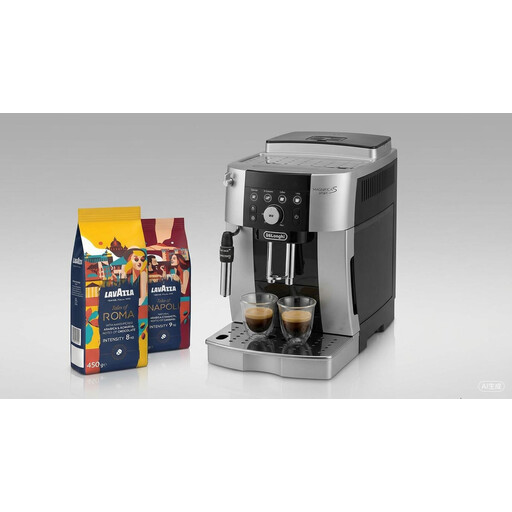 Image unavailable
DeLonghi Magnifica ECAM250.23.SB with Lavazza Tales of Napoli & Roma coffee, 450 g (2 packs)
This automatic bean-to-cup machine is suited to a household that regularly makes coffee with whole beans and is happy to keep up with the required maintenance.
The advertised bundle includes two 450 g packs of Lavazza Tales of Napoli & Roma; check what’s included in the bundle on offer.
View on Joybuy
 Image unavailable
Philips Series 2200 EP2230/10 LatteGo
This bean-to-cup machine could suit a household that also wants to make milk-based drinks.
The model name includes the LatteGo system. If you’re thinking of using an AquaClean filter, check that it’s compatible and expect to buy it separately, as it’s listed as not included.
View on Joybuy
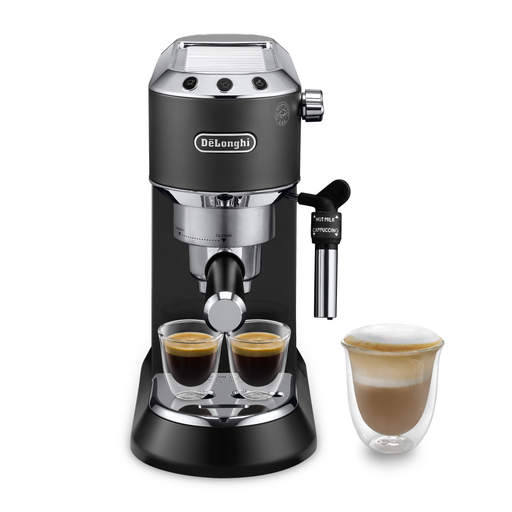 Image unavailable
Black De’Longhi Dedica Style EC685.BK
This portafilter machine is worth considering if you want to use ground coffee and are happy to make coffee by hand and clean the machine after use.
The product description states 15 bar. Before buying, confirm the water tank capacity, as the information listed for this model varies.
View on Joybuy
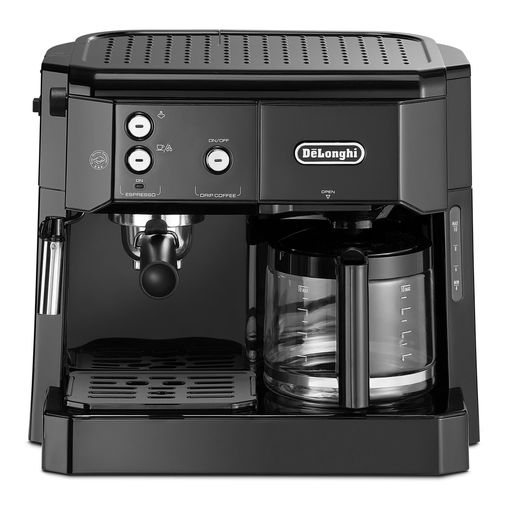 Image unavailable
De’Longhi BCO411.B, black espresso and filter coffee combination machine
This combination machine is worth considering if your household uses both a pump espresso machine and a filter coffee machine.
Make sure you have enough space and check the instructions for details on maintaining each function.
View on Joybuy
 Image unavailable
White KRUPS Nespresso Essenza Mini, 0.6 L, 1 200 W
This capsule machine could suit anyone looking for a straightforward single serving, provided it fits the space available.
The product name lists a 0.6 L tank and 1 200 W power rating. Check that the capsules you choose are listed as compatible with the Nespresso Original system.
View on Joybuy
Frequently asked questions
How do I compare the running costs of these machines?
Compare them over the same period and for the same number of drinks, including the cost of coffee or portions, descaling, any filters and other consumables you need. In its comparison, Que Choisir says that coffee sold in capsules or pods costs more than whole beans or ground coffee. Your choice will also depend on how often you drink coffee and which products you actually use.
Do pod machines need descaling too?
Yes. Descaling isn’t just for bean-to-cup machines. Philips provides instructions for descaling its SENSEO machines, while Que Choisir recommends descaling a bean-to-cup machine when prompted. In both cases, follow your model’s instructions for the products and steps to use.
Will all capsules or pods work with the same machine?
No. Choose portions that are explicitly listed as compatible with your machine’s system. Que Choisir notes that many capsule machines accept only one type of capsule, so check the instructions and packaging before buying supplies.
What should I do if a machine bought from a retailer in France isn’t as described?
If a machine sold by a retailer to an individual doesn’t match the agreed description or has a fault, it may be covered by the legal guarantee of conformity. The French Ministry of the Economy explains that this mandatory guarantee covers new, second-hand and refurbished goods. Keep your proof of purchase and contact the retailer with details of the problem.


