If you make espresso regularly at home, start by considering how much effort you’re happy to put into each cup and what kind of coffee you want to use: capsules or soft pods for pre-portioned coffee, a portafilter if you want to control the dose, or a bean-to-cup machine for automatic preparation using whole beans. Then compare the cost of coffee based on your usual consumption, the space available, format compatibility and the maintenance required for each machine.
Who are these machines for?
Households keeping an eye on ongoing costs
If you make several espressos regularly, compare the cost of coffee per cup based on how much you actually drink, without forgetting maintenance and the initial outlay. A lower cost of coffee alone isn’t enough to determine the overall cost of a machine.
People who want to keep things simple
Pre-portioned coffee means you don’t have to measure it out for every cup. However, check which format the machine accepts, how used portions are disposed of and what maintenance is required: easy preparation doesn’t mean a machine is maintenance-free.
Coffee lovers who want to choose their coffee
A portafilter lets you control the amount of ground coffee; a grinder lets you choose your beans while automating preparation. The right choice depends on how much time you want to spend adjusting settings and cleaning.
How do the different systems compare?
Capsules
Worth considering: if you want pre-portioned coffee with minimal day-to-day effort.
Bear in mind: the capsules you can use depend on the machine’s system; ongoing costs and disposal matter too.
Soft pods
Worth considering: if you want pre-portioned coffee in a standardised format, as described by UFC-Que Choisir.
Bear in mind: the drinks you can make and how they’re prepared depend on the machine and the pods you choose.
Portafilter
Worth considering: if you want to choose your ground coffee and control the dose.
Bear in mind: filling, emptying and cleaning the portafilter add extra steps every time you make a coffee.
Bean-to-cup grinder
Worth considering: if you make coffee often, want to choose your beans and prefer an automatic process.
Bear in mind: according to UFC-Que Choisir, the initial outlay is generally higher than for a capsule machine, and maintenance is still required.
| Criteria | What to check | Who is it for? |
|---|
| Cost of use |
Compare the cost of coffee per cup based on how many coffees you usually make, then factor in maintenance supplies and the initial outlay. |
If I make coffee every day, I want to know what this habit will cost over time; around 36% of consumers would put the overall cost first. |
| Day-to-day effort |
Look at how you make a cup, the tank capacity and how the grounds container is emptied. |
When several coffees are made one after another at home, I’d rather keep handling to a minimum; around 29% of consumers would make simplicity their priority. |
| Choice of coffee |
Check which coffee the machine accepts and what adjustments the model actually offers. |
I want to try different coffees or control how they’re prepared, even if that takes more effort; nearly 21% of consumers would prioritise this freedom. |
| Space and portions |
Measure the space needed to use and fill the machine; check the portion format and how it can be disposed of. |
In a small kitchen, I need to be able to fit the machine in and manage used portions; around 14% of consumers would make these constraints their main consideration. |
Mistakes to avoid before buying
-
Comparing only the initial outlay
If you make coffee every day, the cost of the coffee you use regularly can matter just as much as the machine itself. So you can’t choose between a grinder and a capsule machine based on the upfront cost alone.
Estimate how many cups you’ll make in a year and compare the coffee each system needs, then check the maintenance supplies listed in the instructions.
-
Assuming all capsules will fit
UFC-Que Choisir points out that many machine brands accept only one type of capsule. So two compact machines may use different formats.
Check the exact system before looking at the coffees you might buy regularly.
A specific format may also mean you need to plan ahead to keep it in stock.
-
Planning to descale without checking the instructions
How often you need to descale and which product to use vary by machine. Nespresso advises against using vinegar in its machines; Philips specifies a citric acid-based descaler for SENSEO.
Before buying, check the alerts, procedure and approved descaling product for the model you’re considering.
-
Confusing capsule recycling with having no waste
Sorting or collecting used capsules helps manage them, but doesn’t eliminate their individual packaging. ADEME recommends avoiding this packaging where possible.
If this matters to you, consider how many portions you’ll use each day and what recycling options are available where you live.
Brands to know when choosing
Nespresso
A pre-portioned capsule coffee system to consider if you want to keep preparation simple.
- Nespresso offers in-store collection of used capsules in France.
- Check which capsule system the machine uses. For maintenance, the brand recommends descaling every 3 months or after around 300 capsules, and advises against using vinegar.
SENSEO / Philips
A range of soft pod machines for portioned coffee; UFC-Que Choisir describes this format as standardised.
- Pod format is worth comparing if you want to vary where you buy your coffee.
- Philips recommends descaling SENSEO machines every 3 months, or when the CALC light comes on, depending on the model, using a citric acid-based descaler.
De’Longhi
The brand offers several bean-to-cup espresso ranges, including Magnifica, Dinamica, Eletta Explore and PrimaDonna, with drinks options varying by model.
- Grinders let you make coffee automatically from beans you’ve chosen.
- According to De’Longhi, how often you need to descale depends in part on water hardness; follow the alert and instructions for your machine.
Machines for different needs
These models illustrate three ways to make espresso at home: a bean-to-cup grinder, a portafilter and capsules. Compare them based on how often you make coffee and what kind of coffee you want to use; Nespresso Original and Vertuo capsules come in two different formats.
 Image unavailable
Philips EP2230/10 Series 2200 with LatteGo
For making espresso regularly with an integrated grinder. If you’re choosing this model for its milk-based drinks, remember to clean the LatteGo system too, and check which maintenance supplies you’ll need.
View on Joybuy
 Image unavailable
De’Longhi Magnifica S ECAM22.140.B, black
For a household that wants to choose its beans without measuring out every espresso by hand. Remember to empty the grounds container, and check the instructions for the descaling procedure for this variant.
View on Joybuy
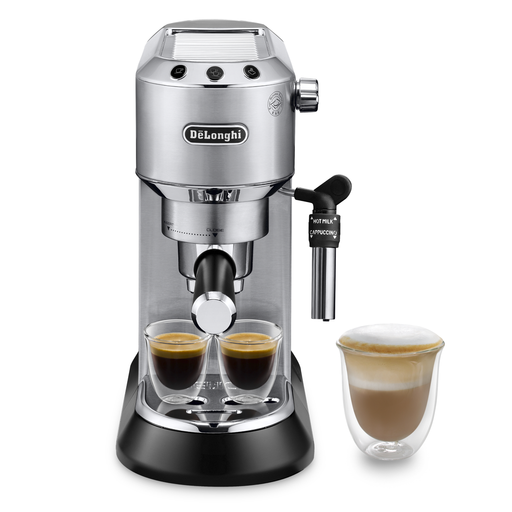 Image unavailable
De’Longhi Dedica Style EC685.M, silver
For anyone who wants control over preparation with a portafilter. You’ll need to fill and empty it every time you use it, so check you have enough room for the process and your accessories.
View on Joybuy
 Image unavailable
KRUPS Nespresso Essenza Mini, white, 0.6 L
For pre-portioned coffee with minimal effort. The tank capacity is listed as 0.6 L; check whether that suits your routine, and choose Nespresso Original or compatible capsules rather than Vertuo capsules.
View on Joybuy
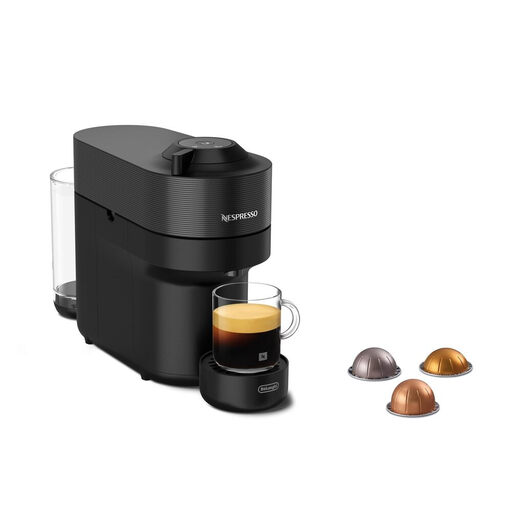 Image unavailable
Nespresso Vertuo ENV90.B Vertuo Pop, black, 0.6 L
For easy preparation with Vertuo capsules. The tank capacity is listed as 0.6 L; before choosing, check that you’re happy with buying Vertuo capsules and managing them after use.
View on Joybuy
Frequently asked questions
Will a grinder always work out cheaper than a capsule machine?
No, not necessarily when you look at all your costs. UFC-Que Choisir says a grinder generally has a higher initial outlay; to compare the two systems at home, calculate the cost of coffee for your usual number of cups and include each model’s maintenance supplies.
When should you descale an espresso machine?
Follow your model’s instructions and alerts, as how often you need to descale depends in part on usage and water hardness. Nespresso recommends doing so every 3 months or after around 300 capsules; Philips recommends every 3 months for SENSEO, or following the CALC light depending on the model; De’Longhi says to follow the alert on its bean-to-cup machines.
Can you use vinegar to descale any machine?
No. Use the product specified in your machine’s instructions. Nespresso advises against vinegar for its machines, while Philips specifies a citric acid-based descaler for SENSEO.
What should you do with used coffee capsules in France?
According to ADEME, aluminium or plastic capsules should go in the sorting bin, bag or container for paper and packaging. Check the collection rules where you live; some brands also offer in-store collection.


