Which criteria should you prioritise?
First, compare the four types of machine against your habits, then look at how quickly the specific model can prepare coffee and what’s involved in maintaining it. A feature common to a type of machine doesn’t guarantee the same experience with every model.
Capsule machine
Worth considering: if simple preparation and a compact machine are priorities for your household.
The trade-off: your choice of coffee depends on which capsule format the model takes. Capsules also add to running costs and create waste that needs sorting.
Soft pod machine
Worth considering: if you want a guided preparation process and can find pods to suit everyone’s tastes.
The trade-off: the number of cups and preparation speed vary by model. Also check which pod holders and spare parts are available for the model you’re considering.
Espresso machine with a portafilter
Worth considering: if your household prefers to choose its own coffee without relying on a capsule format, and is happy to handle the preparation steps.
The trade-off: before choosing one for making coffees in quick succession, check how to fill it, adjust the settings and clean the specific model.
Bean-to-cup machine
Worth considering: if you drink coffee regularly and want to choose your beans and keep the cost per cup down.
The trade-off: according to Que Choisir, these machines take up more space and make more noise than capsule systems. They also need regular maintenance.
| Criterion |
What to check |
Who this matters to |
| Coffees one after another |
Tank capacity and access; preheating and time between cups. |
When several coffees are made in a row, I want to avoid waiting and interruptions to refill the tank. Around 31% of consumers may prioritise this pace of preparation. |
| Range of drinks |
Available formats and recipes; cleaning the milk system, if needed. |
If everyone drinks something different, I want to check that the machine can actually make the drinks our household usually enjoys. This variety may be the top priority for around 25% of consumers. |
| Consumables |
Compatible format and available coffees; running costs based on household consumption. |
When making several coffees a day, I want a choice of consumables without discovering too late that I’m tied to one format. Running costs and flexibility may be the top priorities for around 25% of consumers. |
| Space and maintenance |
Overall size, including room to access the trays; parts to clean and descaling process. |
In a shared kitchen, I want the machine to be easy to fit in and its cleaning not to be left to the next person. Around 19% of consumers may prioritise these considerations. |
Brands to know for this choice
No brand information to display.
Bean-to-cup machines on Joybuy
These bean-to-cup machines are for households looking to use coffee beans. To compare the models for a shared household, check which drinks you want, how quickly you need to make them and the maintenance steps required for each model.
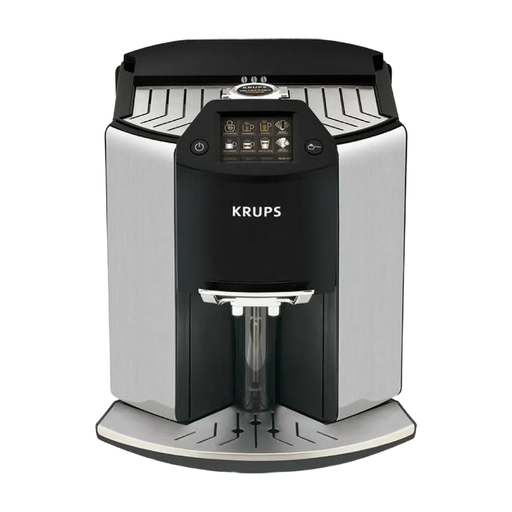 Image unavailable
Krups Barista EA907D10, 1,7 L
Worth considering if several people want to choose their drinks on an automatic coffee machine. The model name indicates a 1,7 L tank and a power rating of 1 450 W. Check the time between consecutive coffees and the maintenance steps in the manual.
View on Joybuy
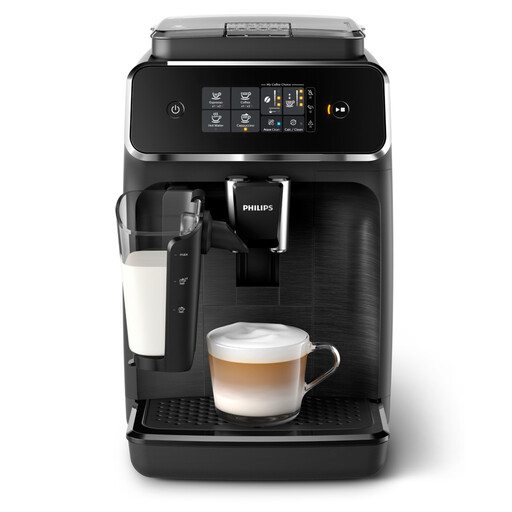 Image unavailable
Philips Series 2200 EP2230/10 LatteGo
Worth considering if milk-based drinks are part of your household’s routine: this version is called LatteGo. Check which drinks it offers, how to clean the milk system and how quickly it can make consecutive coffees on the EP2230/10.
View on Joybuy
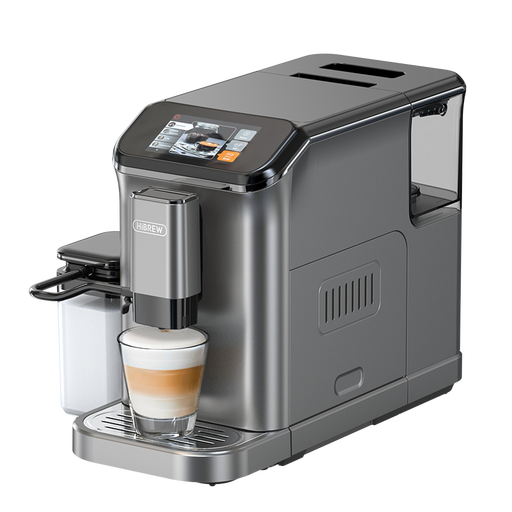 Image unavailable
HiBREW H16, grinder and milk system
Worth considering if your household wants to choose from several drinks. The product name lists six types of coffee, a milk system and a touchscreen. Check the manual for cleaning steps and making drinks one after another.
View on Joybuy
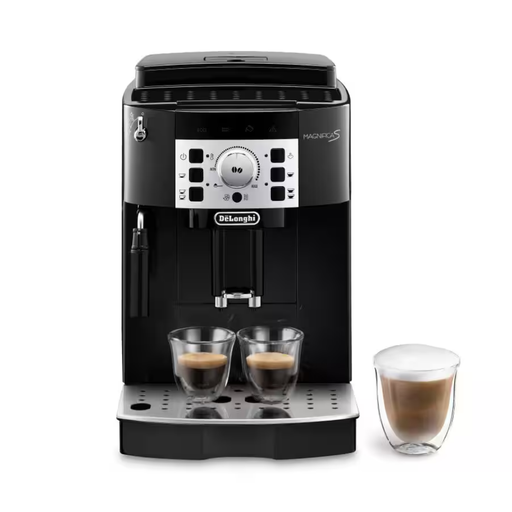 Image unavailable
DE'LONGHI Magnifica S ECAM22.140.B
Worth considering for a household looking for an automatic espresso machine with a grinder. Before choosing this version, check how much space it takes up, which drinks it can make and the cleaning steps listed in the manual.
View on Joybuy
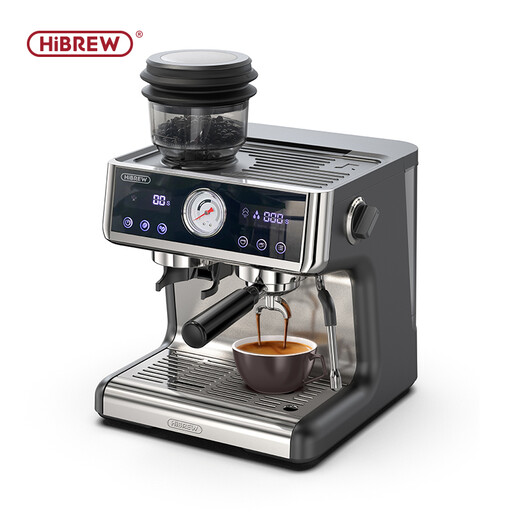 Image unavailable
HiBREW H7A, dual boiler and 2,8 L tank
Worth considering if frequent refills are a problem for your household. The product name lists a 2,8 L tank, a dual boiler and a 20-bar pump. These features alone don’t tell you how quickly it can make several coffees. Also check how much space it needs and what maintenance is involved.
View on Joybuy
Frequently asked questions
How can you assess a machine for making several coffees in a row?
As well as the tank capacity, check the preheating time, preparation speed and what you need to do between cups. Que Choisir’s testing protocol also measures how consistently the machine serves coffees one after another.
Will all capsules work in a capsule machine?
No. Compatibility depends on the system and model. Que Choisir says that most brands accept just one type of capsule, so check the format specifically listed in the manual rather than judging by how the capsules look.
How often should you descale an espresso machine?
Follow the alerts and instructions for your model, as the recommended frequency depends on factors including water hardness and how much you use the machine. Que Choisir recommends descaling every two to three months on average, but this doesn’t mean the same schedule applies to every machine.
How can you check repair options before buying?
Look up support for the exact model and check for its manual, spare parts and available accessories. Philips’ support page for its HD7806/12 pod machine is an example of the kind of information to look for, but it doesn’t tell you whether parts are available for other models.
What should you do with used capsules in France?
ADEME advises putting aluminium or plastic capsules in the recycling bin for paper and packaging. For paper capsules, check what they’re made of and look into the composting or collection options available locally.


