What sets the machines apart?
UFC-Que Choisir identifies four types of domestic espresso machine: capsule, soft pod, portafilter and bean-to-cup. The differences matter most when you’re deciding how the preparation steps and repeat purchases will fit into your household routine.
Capsules
Worth considering: if you prefer single-serve preparation with minimal handling.
Bear in mind: you’ll need to keep buying capsules that fit your chosen system; formats aren’t automatically interchangeable.
Soft pods
Worth considering: if you’d rather insert a coffee pod than grind and tamp coffee yourself.
Bear in mind: the drinks and pods available depend on the system and model.
Portafilter
Worth considering: if measuring and preparing ground coffee is part of the experience you’re looking for.
Bear in mind: you’ll need to do more with each cup and clean the portafilter afterwards.
Bean-to-cup
Worth considering: if you make coffee often and want to choose your beans without grinding them by hand.
Bear in mind: the machine will need regular maintenance, even when preparation is automated.
If you regularly make espresso at home, start with your main priority to narrow down the options, even if several factors matter to you.
| Factor |
What to check |
Who it matters to |
| Ease of use and size |
Measure the space you have and compare the steps involved in making and clearing away a cup. |
If you want your coffee ready with minimal effort and have limited worktop space, ease of use takes priority over settings; around 33% of consumers rank it first. |
| Ongoing costs and availability |
Compare the compatible consumables for your preferred cup size and the number of drinks you usually make. |
If you make several coffees a day, being able to choose where you buy your coffee and manage repeat purchases becomes key; around 27% of consumers make this their priority. |
| Control over preparation |
Decide whether you want to handle ground coffee, choose your own beans or use pre-measured doses. |
For around 20% of consumers who prioritise control, taking part in the preparation or choosing their beans matters more than saving a few steps. |
| Milk-based drinks and maintenance |
Check that the machine has a milk function, and consult the instructions for cleaning and descaling. |
If milk-based drinks are part of your routine, you’ll also need to be happy with the extra cleaning involved; around 20% of consumers put this first. |
Machines to consider on Joybuy
These models show three ways to make espresso regularly at home: bean-to-cup, portafilter and capsule. Compare each model based on how you want to prepare your coffee, the consumables it uses and the maintenance you’re happy to take on.
 Image unavailable
Philips EP2230/10 Series 2200 LatteGo glossy black
Worth considering if you regularly make espresso from beans and want a LatteGo model for milk-based drinks. Check the instructions for cleaning requirements specific to this model.
View on Joybuy
 Image unavailable
De’Longhi Magnifica S ECAM22.140.B black
Choose your own beans while automating espresso preparation. De’Longhi lists a grinder, manual coffee strength adjustment and a steam wand among this model’s features; using the wand means an extra cleaning step.
View on Joybuy
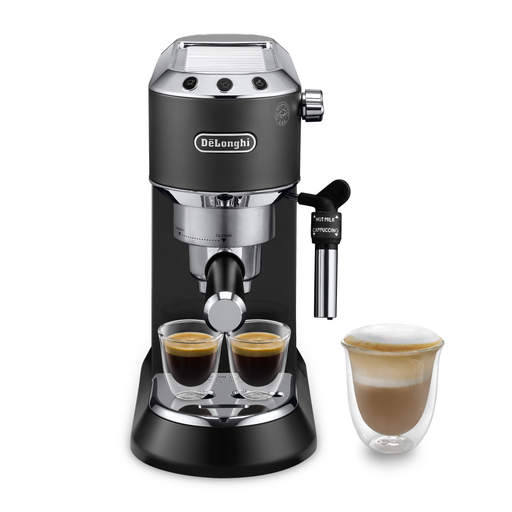 Image unavailable
De’Longhi Dedica Style EC685.BK black
Worth a look if you prefer to take part in the preparation with a portafilter and don’t mind cleaning it after use. The model name indicates a pressure of 15 bar, but that figure alone doesn’t tell you what the espresso will be like in the cup.
View on Joybuy
 Image unavailable
HiBREW H1C 6-in-1 black
Worth considering if you want to keep preparation simple without committing straight away to just one type of coffee dose. The model name mentions capsules, pods and ground coffee; check exactly which formats it accepts before choosing your consumables.
View on Joybuy
 Image unavailable
KRUPS Nespresso Essenza Mini white
For making coffee with a capsule machine rather than a manual portafilter. The model name lists a 0,6 L water tank and 1 200 W power; check which capsule system it’s compatible with before buying.
View on Joybuy
Frequently asked questions
Are Nespresso Original and Vertuo capsules interchangeable?
Don’t assume they are: Nespresso says Vertuo capsules are designed for Vertuo machines. Choose your machine’s system, then check the compatibility information for each capsule.
Can a soft pod machine replace a portafilter machine?
Not if you want the same level of involvement in preparing your coffee: a pod machine uses pre-packed doses, while a portafilter machine requires you to prepare ground coffee. Choose based on the steps you want to take, not just the name given to the drink.
How can I compare the cost of making several coffees a day?
Start with the number of drinks you usually make and the consumable that’s actually compatible with each machine. Then factor in maintenance and milk, if you use it. Compare like-for-like cup sizes: a capsule, a pod and a portion of beans don’t automatically make the same drink.
What maintenance does a bean-to-cup machine need?
Follow the cleaning instructions in the manual and descale the machine as directed, taking its requirements and your water hardness into account. If the model has a steam wand or milk system, check what needs to be done after each milk-based drink too.
How should you recycle coffee capsules in France?
According to ADEME, aluminium and plastic capsules go in the recycling bin for paper and packaging. Paper capsules can be composted at home or collected with food waste, depending on local facilities; check your local authority’s guidance.


