
Livraison le jour même ou le lendemain

Qualité garantie

Débloquez vos offres de bienvenue: Livraison GRATUITE | Jusqu'à -80 % | 30 jours d'essai gratuits à JoyPlus
Téléchargez l'application
You want to make great espressos at home, but product listings often start to look the same: 15 or 20 bars, built-in grinder, milk frother, capsules compatible with several formats… Yet these features alone aren't enough to tell you whether the machine will suit your kitchen and your habits.
The main pitfalls are usually hidden in the advertised pressure, the maintenance — often underestimated — and the actual footprint on your worktop. The right espresso machine is first and foremost the one that matches the way you drink coffee: a short espresso, a long coffee, a cappuccino, a latte, iced drinks or something for on the go.
A 20-bar espresso machine typically shows the maximum pressure of its pump. However, it doesn't run continuously at that level during extraction. The fineness of the grind, the tamping, the coffee dose and temperature stability all matter just as much.
On some manual models, a pressure gauge lets you keep an eye on the pressure during extraction. But it won't work miracles if the grinder is poorly adjusted or the coffee has been badly stored.
An espresso machine with a steam wand or a grinder naturally demands more attention than a simple filter coffee maker. In particular, you need to plan for:
Automatic rinse programmes and removable parts make the routine easier, but they don't replace daily maintenance.
A compact machine can become frustrating to use if its water tank is difficult to remove or if your mugs don't fit under the spout. Check its width, the height available under your cupboards, the tank capacity and the maximum cup height.
With a capsule coffee machine, also look at the formats it accepts. Compatibility claimed with Nespresso OriginalLine, Dolce Gusto, K-Cup or ESE pods doesn't mean these systems are interchangeable.
A bean-to-cup coffee machine grinds the beans on demand and usually lets you adjust the fineness of the grind. It's particularly suited to those who drink several coffees a day and want to vary the strength or cup size.
A manual machine works with ground coffee and, sometimes, ESE pods. It gives you more control over the dose and tamping, but it takes a bit of practice to get consistent results.
A capsule coffee machine focuses on speed and consistency. It can be very practical in the office, in a small home or for occasional use. However, do compare the cost per cup and make sure the capsule system suits you before you decide.
For one or two people, a 0.6 to 1.2 litre tank can be more than enough. On the other hand, a household that makes several drinks every day will be more comfortable with a capacity between 1.5 and 2.2 litres.
The bean hopper capacity, the presence of a grounds container and the ability to fill the tank from the front also become essential if the machine has to sit under a cupboard.
A cappuccino machine or a latte machine needs a steam wand or a suitable frothing system. A manual wand gives you more control over the milk texture, while an automatic system prioritises simplicity.
The hot water function can be used to make an Americano, a tea or an infusion. Cold extraction functions are interesting for iced drinks, but they don't turn the machine into a storage appliance: always use fresh water and clean the parts after each use.
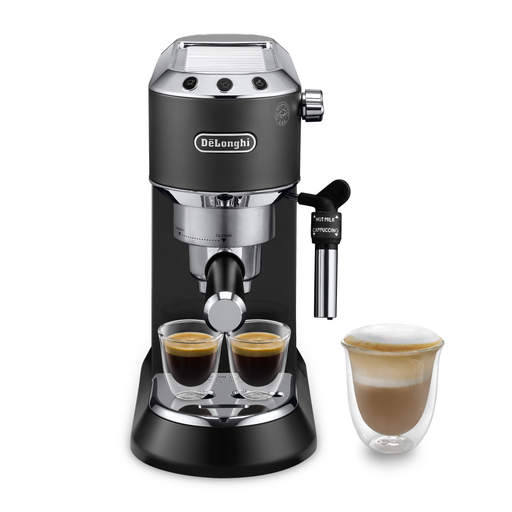
Why this choice suits this profile: At just 149 mm wide, this manual machine slips easily into a small kitchen. It accepts both ground coffee and ESE pods.
Its dimensions, its 1 litre tank and its clearly stated set of filter baskets let you quickly check that it will fit into your setup.
15-bar pump, adjustable steam wand, three temperatures and removable drip tray.
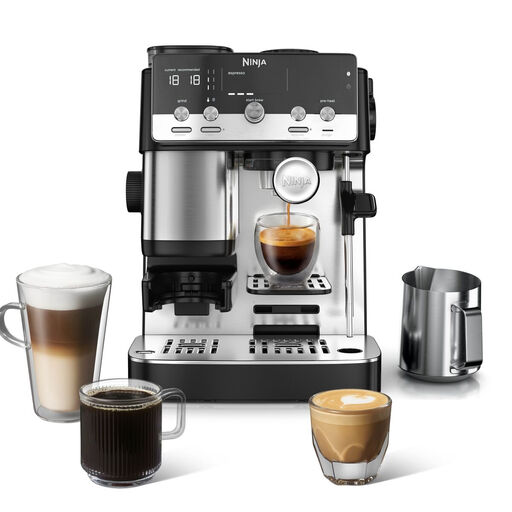
Why this choice suits this profile: This model combines espresso, Americano and milky drinks in a compact format, with a built-in conical burr grinder.
The dose-by-weight system and guided controls reduce guesswork around coffee quantity and grind setting.
Built-in conical burr grinder, automatic milk frothing and removable parts that are dishwasher-safe according to the product sheet.
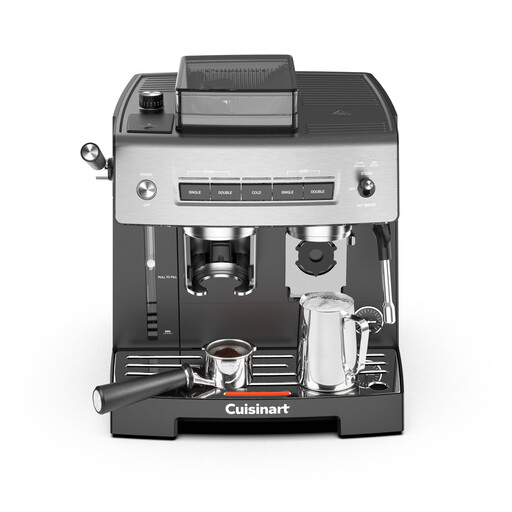
Why this choice suits this profile: Its 2.2 litre tank, built-in grinder and compatibility with mugs up to 600 ml make it a machine suited to frequent use, at home or in the office.
The 16 grind settings, assisted tamping and rinse and descale programmes make adjustments and maintenance easier to keep on top of.
Conical burr grinder, extraction rated at 20 bars, steam wand, hot water and cold extraction function.
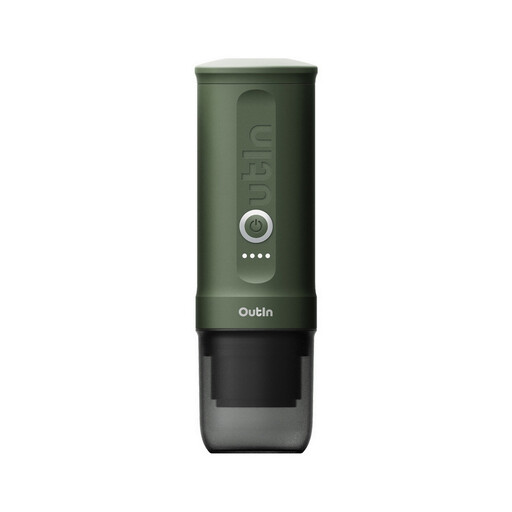
Why this choice suits this profile: This portable coffee machine works with ground coffee or Nespresso OriginalLine capsules and charges via USB-C.
At 80 ml, its capacity is clearly limited: it's suitable for an espresso on the go, not for making several large cups.
Approximately 670 g format, pump rated at 20 bars, built-in heater and USB-C charging.
We've put together a comprehensive, real-time updated selection of products that meet these demanding criteria and European safety standards.
A programmable filter coffee maker can be more suitable than an espresso machine if you want to make several cups at once. The H.Koenig MG30 has a 1.5 litre tank, programming via an LCD screen and a keep-warm function. With its 750 ml tank, the ochama model is aimed more at small spaces and office use.
The right choice therefore depends less on the number of bars displayed and more on the volume you want, the type of coffee you drink and the time you're willing to spend on preparation.
Go for a model with a steam wand or an automatic frother. A manual machine like the De'Longhi Dedica takes a bit of practice to get well-textured milk foam. An automatic model with a built-in frothing system is simpler for everyday use.
Its lifespan depends on build quality, how regularly you descale it, the hardness of your water and whether you follow the manufacturer's recommendations. Cleaning the wand, emptying the drip tray and never running the pump dry all help to reduce wear and tear.
On top of the purchase price, you need to factor in the coffee, filters or capsules, water and descaling products. Whole bean or ground coffee generally gives you more freedom to choose your supply. Capsules focus on speed, but their cost per cup is worth comparing across brands and formats.