
Livraison le jour même ou le lendemain

Qualité garantie

Débloquez vos offres de bienvenue: Livraison GRATUITE | Jusqu'à -80 % | 30 jours d'essai gratuits à JoyPlus
Téléchargez l'application
An espresso machine can quickly disappoint if you only focus on the number of bars or its appearance. Automatic coffee machines, pod models, semi-automatic appliances and portable machines: the real differences lie in preparation, maintenance, size and ongoing cost.
Before you place an order, there are three pitfalls that are particularly easy to avoid.
The right choice depends above all on how you drink your coffee.
References to espresso 15 bar, espresso 19 bar and espresso 20 bar refer to the maximum pressure claimed by the pump or system. On their own, they don't allow you to compare the taste you'll get in the cup.
For regular use, also consider the following:
A manual steam wand gives you more control, but takes a bit of practice. An automatic milk system simplifies preparation, at the cost of more fiddly cleaning and several parts to rinse.
In a small kitchen, measure the available width, depth and height, especially if there's a cupboard above the machine. A compact coffee machine often has a smaller water tank, which may mean more frequent refills.
Look for features clearly listed in the specification:
Parts that come into contact with water and coffee must be used and cleaned according to the instructions in the manual. Electrical appliances must never be immersed in water.
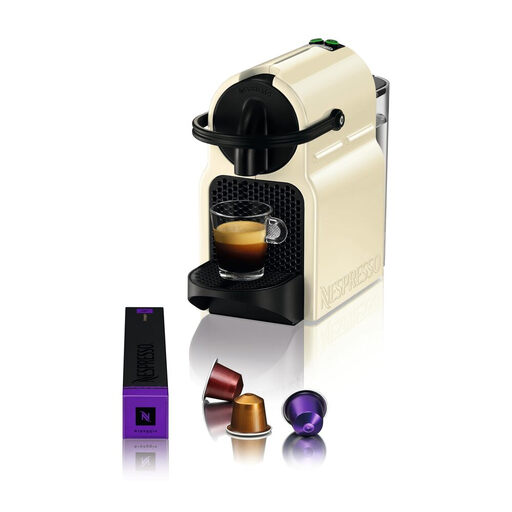
Why this model suits you: This pod coffee machine offers two programmable sizes, Espresso and Lungo, and reaches operating temperature in 25 seconds according to the manufacturer. Its dimensions of 120 × 321 × 230 mm mean it can fit on even the most cramped worktops.
One-touch preparation minimises dosing errors, while automatic ejection reduces handling after each cup. However, do check the price and availability of compatible pods.
Pump rated at 19 bars, removable 0.7-litre water tank, foldable drip tray and automatic shut-off after 9 minutes.
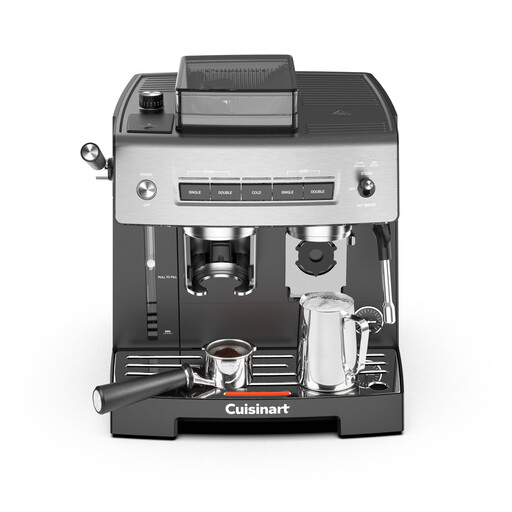
Why this model suits you: This espresso machine with grinder features a conical burr grinder, 16 grind settings and a 54 mm stainless steel portafilter. It's designed for those who want to fine-tune their preparation.
The settings are detailed in the product specification, so you're not relying solely on the "20 bar" claim. The machine accepts both beans and ground coffee.
2.2-litre water tank, approximately 227 g bean hopper, steam wand, hot water outlet and compatibility with a travel mug up to 600 ml.
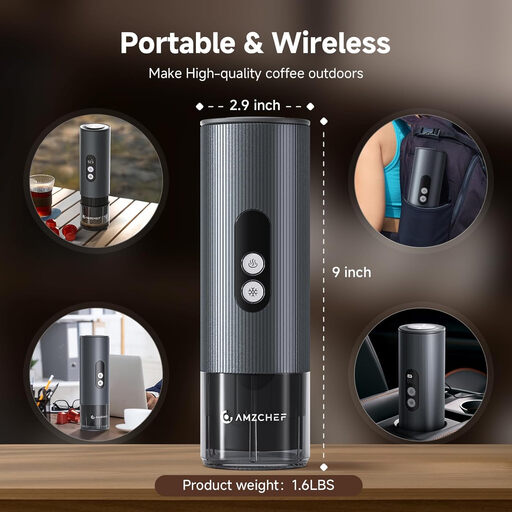
Why this model suits you: With dimensions of 7.3 × 7.3 × 23 cm and a rechargeable 9,000 mAh battery, it's ideal for the office, camping, the car or travel when there's no mains socket nearby.
It accepts NS pods and ground coffee thanks to its reusable filter. However, its maximum capacity of 80 ml should be considered before planning multiple drinks or large cups.
Pump rated at 20 bars, integrated heating system, USB-C charging and the ability to use cold or pre-heated water, depending on the selected mode.
We've curated a full range, updated in real time, of products that meet these exacting criteria as well as European safety standards.
A pod machine is ideal for those who want quick preparation without complicated settings. A semi-automatic machine will be more suitable if you want to learn how to dose coffee, use ground coffee and prepare milk foam with a steam wand.
It all depends on the price of the beans, how much you drink, the water and the cleaning products. A machine with a grinder avoids the regular purchase of pods, but it does require cleaning of the brewing unit, grounds container and water circuit, following the instructions in the manual.
It depends on how often you use it, the quality of your water and how well you maintain it. Descaling at the recommended intervals, rinsing the accessories and replacing parts as specified by the manufacturer all help to extend the life of the appliance. Before you buy, also check the warranty terms and the availability of spare parts.